
At a Glance
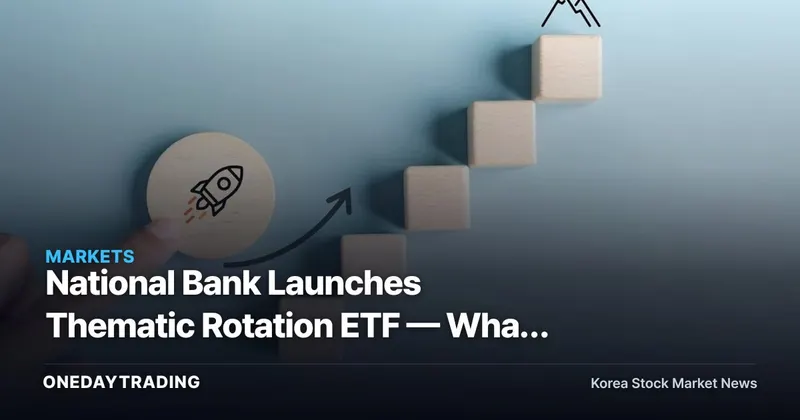
This news is best read not as an earnings event for a single stock (ticker), but as a signal that the global asset management industry is shifting its center of gravity from single-theme bets toward a theme-rotation strategy that moves from one theme to another. The asset management arm of Canada's National Bank (NBI) has unveiled a thematic rotation ETF that dynamically adjusts its weightings across multiple growth themes. This is a structural change worth noting both for the ETF lineup strategies of Korean asset managers and brokerages and for how investors approach thematic investing.
Why It Matters Now
Over the past few years, thematic ETFs have mostly concentrated on a single theme such as AI, secondary batteries, or clean energy. The problem is that these single-theme products absorb the full brunt of volatility as a given theme overheats and then cools. A thematic rotation ETF is designed to address this weakness by shifting into themes with stronger momentum, based on momentum and macro indicators.
From an asset manager's perspective, the key point is that this is an active product that can command higher fees. As fee-cutting competition among passive index ETFs intensifies, the industry is clearly leaning toward active and thematic products that emphasize added value in order to defend profitability. This launch is part of that trend, and it ties into the backdrop of Korean managers building out the active ETF market.
Frequently Asked Questions
- What is a thematic rotation ETF? Rather than staying fixed to one theme, it is an automatic or semi-automatic allocation product that shifts weightings toward stronger themes depending on the market environment.
- How does it differ from a single-theme ETF? Instead of absorbing the full loss when a particular theme suffers a sharp drop (plunge), it aims to reduce volatility through diversification and rotation — but if the rotation comes too late, it can miss the upside.
- Is this a product Korean investors can buy directly? Because it is listed in Canada, direct purchase access is limited, so it is more realistic to view it as a reference case for reading the shift in industry strategy.
- Are the fees higher? Active products generally tend to carry higher management fees than passive index funds, so the cost burden on long-term returns should be examined.
Impact on Related Stocks and Sectors
- Domestic ETF managers (Mirae Asset, Samsung, KB, etc.): Broadening demand for active and thematic ETFs is favorable for defending fee income and stimulates competition to diversify lineups.
- Brokerages (Mirae Asset Securities, Kiwoom Securities, etc.): There is an indirect benefit channel through increased ETF trading and a broader base of wealth management fees.
- Financial data and index businesses: Rotation strategies increase demand for theme classification and index calculation, which is favorable for index and data providers.
- Sectors that may be included as themes (AI, semiconductors, secondary batteries): This is a double-edged sword, as supply-demand (order flow) volatility can rise with the inflows and outflows of rotation capital.
Points to Watch When Investing
- If the rotation strategy switches too late, it risks the late-switching problem of missing the rally while still bearing the downside.
- Active management fees can erode long-term compounded returns, so it is important to confirm whether the excess returns justify the costs.
- For products listed overseas with currency (Canadian dollar) exposure, the exchange rate is a variable that directly affects returns.
- The impact on domestic asset management and brokerage stocks is closer to an industry signal than something direct, so it needs to be confirmed with actual fund-flow data.
Overall Outlook
On the optimistic side, the spread of theme-rotation products is evidence of growth in the active ETF market and could open a new avenue for asset managers whose profitability has been squeezed by fee competition. In Korea, too, as approvals and listings of active ETFs increase, there is room for similar products to expand. That said, the success or failure of a rotation strategy ultimately hinges on the sophistication of its switching rules, and in phases of heightened theme volatility, frequent turnover could actually increase costs and tracking error. As checkpoints, it makes sense to watch the trend in net assets of domestic active and thematic ETFs, the number of new listings, and managers' quarterly fee income together.
This article is content automatically summarized and analyzed based on the original news report. View original (Yahoo Finance)