
At a Glance
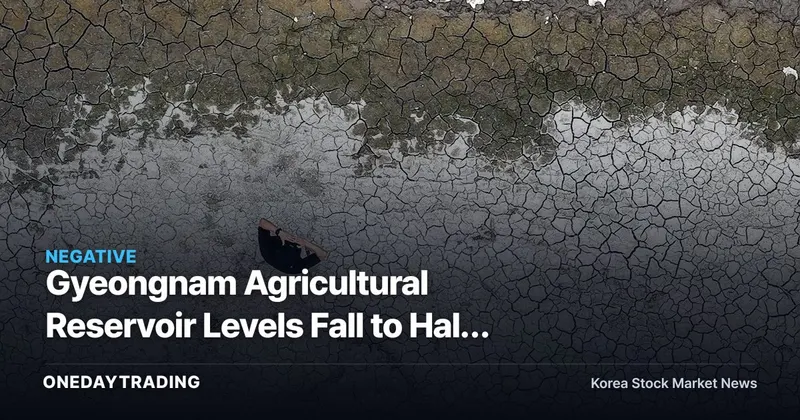
Agricultural water reservoir levels in the Gyeongnam region have fallen to less than half of the normal average. This is the result of a combination of record-breaking heat and drought this summer, and the Miryang area has already entered the severe drought stage. Ripple effects are expected on summer crop conditions, inflation, and the cost structure of related industry sectors.
Why It Matters Now
A single reservoir-level figure signals more than just a simple water shortage. Agricultural water is a key variable governing the growth of summer crops, including rice, and a reservoir level falling below half the normal average means irrigation schedules themselves are already being disrupted. What the market has yet to price in is the probability of whether this water shortage will actually translate into reduced harvest yields, or whether it will be offset by subsequent rainfall. If rainfall in August and September returns to normal levels, the reservoir-level shock will remain merely a statistic; if not, it will resurface as agricultural commodity price volatility around the time of the autumn harvest report.
The fact that Miryang has reached the severe stage highlights regional disparities. Even within Gyeongnam, the capacity to cope varies depending on reservoir size and rainfall variation by area — a warning that relying solely on province-wide average reservoir figures can obscure these regional gaps when assessing drought risk. Short-term government responses, such as support for well drilling and pumping, are likely to follow, and such fiscal spending typically translates into demand for related equipment and services.
Frequently Asked Questions
- How serious is it that the reservoir level is at half the normal average? — It is at a level requiring adjustments to the order in which irrigation water is supplied, and if rainfall is not sufficiently replenished, there is a growing risk of missing the timing for flooding paddy fields.
- What does Miryang's "severe" stage mean? — It is one of the upper tiers in the drought advisory system, indicating a state that requires actual water-supply measures such as well drilling or pumping operations.
- Does this directly affect stock prices? — No. Rather than a short-term stock price variable, this is an issue that gets reflected with a time lag through the autumn crop report, agricultural commodity prices, and food cost trends.
- Are other regions similarly affected? — This summer's heat wave and drought are not confined to Gyeongnam, so reservoir-level reports from other major grain-producing regions should also be monitored.
Related Stocks (Tickers) and Sector Impact
- Farm machinery / well-drilling industry sector — Demand for groundwater development and pumping equipment to cope with the drought could rise in the short term.
- Food processing / distribution industry sector — Weaker summer crop conditions could push up raw material procurement costs, potentially adding to cost burdens.
- Fertilizer / pesticide industry sector — Demand for crop management to withstand drought stress could increase, but conversely, if planted and cultivated acreage itself shrinks, demand could decline as well, making the direction uncertain.
- Local government / public-finance-related water infrastructure and construction industry sector — Budget allocations for reservoir dredging or well development would generate demand for related construction work.
Investment Considerations
- It is premature to conclude that any specific stock's (ticker's) earnings will improve based on the reservoir-level figure alone. Confirming the next steps — government budget execution and contract finalization — is necessary before this translates into actual revenue.
- The drought theme is a variable that could ease within days depending on rainfall. August and September rainfall reports should be monitored alongside this.
- There is typically a lag of more than one season before deteriorating crop conditions translate into actual increases in agricultural commodity prices, making a short-term trading approach highly risky.
- Given the significant regional disparities, it is more accurate to check both province-wide Gyeongnam figures and individual regional data, such as Miryang's, together.
Overall Outlook
The optimistic scenario is one in which typhoons or concentrated rainfall in August and September quickly restore reservoir levels, leaving this drought as nothing more than a statistic. In that case, the impact on agricultural commodity prices and food industry sector costs would be limited. Conversely, if the recovery in rainfall is delayed, signs of reduced output could be confirmed in the autumn harvest report, which could then be sequentially reflected in food inflation and related industry sector costs. The next indicators to watch are the Korea Meteorological Administration's August–September rainfall outlook, the Ministry of Agriculture, Food and Rural Affairs' drought countermeasure budget execution schedule, and the autumn crop condition survey results.
This article was automatically summarized and analyzed based on the original news report. View original (Yonhap News Industry)