
Key Takeaways
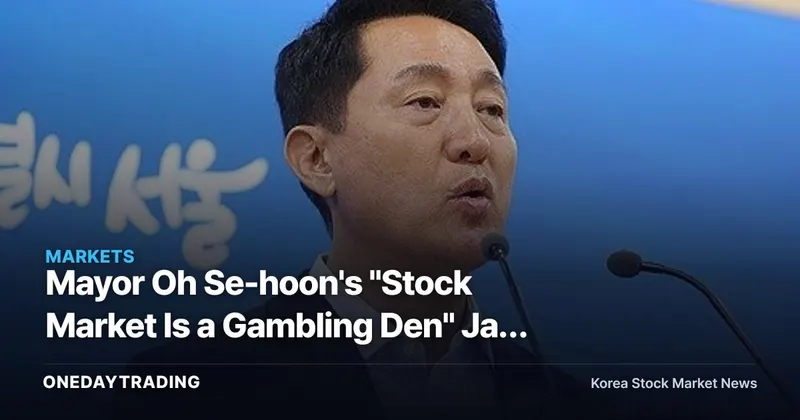
Seoul Mayor Oh Se-hoon has taken aim at both the government's handling of the stock market and its youth debt policy. His core criticism: leverage derivatives have amplified volatility in the domestic stock market, and the debt-restructuring policy ordered by President Lee Jae-myung fails to address the root causes of youth insolvency. For investors, what matters more than the remarks themselves is whether they translate into actual regulation of margin and short-margin (misu) trading.
What Happened
Mayor Oh argued that the government has effectively neglected oversight of the stock market, allowing leverage derivatives to fuel volatility. At the same time, he criticized the youth debt-restructuring measures ordered by President Lee Jae-myung, saying that superficial debt-forgiveness gestures alone cannot resolve the underlying risk of insolvency facing young people.
The two issues may appear unrelated, but they are connected. Losses among retail investors using leverage products, which in turn feed into deteriorating household debt and credit loan quality, form one strand of the youth debt problem. The fact that this link has been raised publicly in political circles could itself be an early signal of upcoming regulatory discussion.
Background and Context
Criticism of lax oversight of leverage derivatives echoes a recurring theme in Korean politics: calls for tighter regulation of retail credit exposure, including margin trading, short-margin (misu) trading, and CFD-type products. The youth debt-restructuring policy, too, emerged as part of the new administration's broader push for a soft landing on household debt, and has drawn ongoing debate between the ruling and opposition parties over its target scope and actual effectiveness.
Market and Stock (Ticker) Impact
- Brokerage industry sector: If regulation of margin loans and short-margin trading translates into actual legislation or tighter supervision, it could pressure the earnings structure of retail-focused brokerages that rely heavily on interest income.
- Savings banks and consumer lenders: An expanded youth debt-restructuring policy could weigh on recovery rates for delinquent loans, though this may be partially offset by reduced burden from clearing non-performing loans.
- Asset managers and brokerages tied to derivatives: Firms with significant exposure to CFDs and leveraged ETPs could be highly sensitive to any tightening of product-sale regulations.
- Consumer stocks tied to household debt: If the real repayment burden on young people eases, improved spending capacity could provide a mild tailwind for the retail and consumer goods sector.
Investor Checkpoints
- Whether the Financial Services Commission and Financial Supervisory Service actually roll out concrete regulations on margin trading and leverage products.
- The timing of a detailed government announcement on the youth debt-restructuring plan, including its scale and eligibility criteria.
- Actual leverage exposure data, such as trends in brokerages' margin loan balances and short-margin (misu) amounts.
- Whether the issue actually leads to bill proposals during parliamentary audits or standing committee sessions.
Outlook
Whether these remarks will directly lead to regulatory legislation remains uncertain for now. Given their strongly political tone, there is a real chance they fade away without producing any actual policy change. Still, given that leverage-driven volatility and the youth debt problem have simultaneously risen to the political agenda, it is worth watching for follow-up action from the relevant supervisory authorities. Conversely, if the government moves to substantiate its debt-restructuring measures while emphasizing their effectiveness, expectations of eased household debt risk could provide a limited but positive lift to financial stocks broadly.
This article was automatically summarized and analyzed based on the original news source. View original (Yonhap News Securities)