
Summary
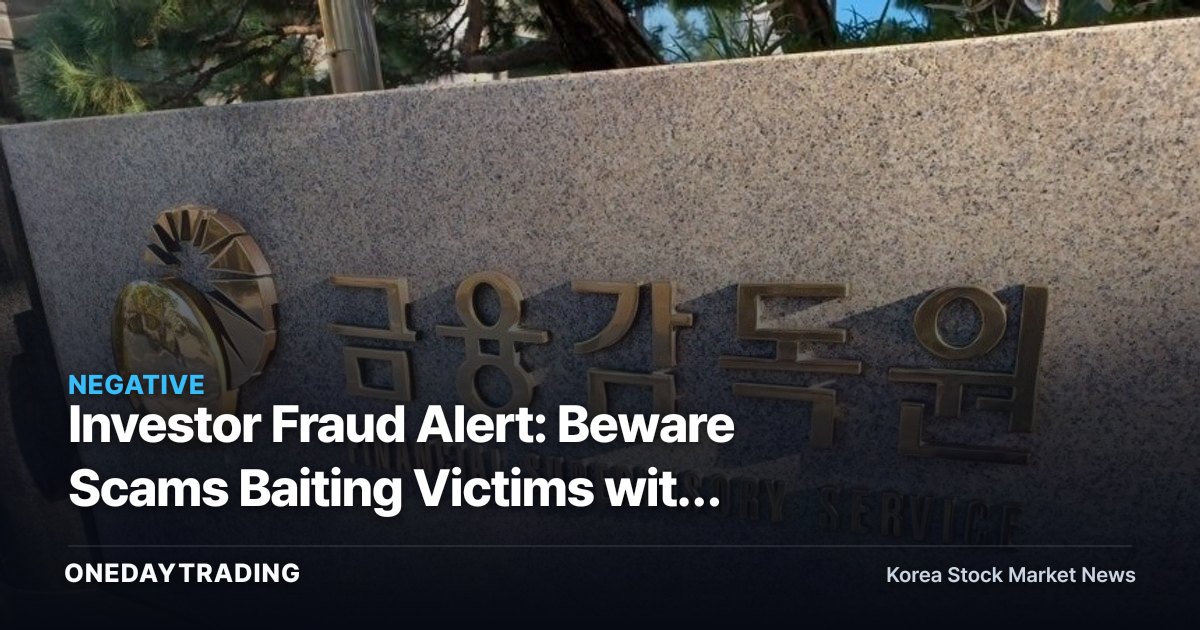
As damage spreads from advisory and asset-management firms that raise funds by baiting investors with overseas pre-IPO shares and proxy IPO subscription services, then fail to return principal and profits, the Financial Supervisory Service (FSS) has issued a consumer alert. Beginning next month, regulators will launch on-site inspections of firms showing signs of illegal conduct. The key line of defense is investors' ability to distinguish legitimate subscription and brokerage channels through licensed securities firms from private solicitations.
How It Unfolded
At the core of this alert is a scheme that exploits the information asymmetry in two areas: unlisted shares and IPOs. The perpetrating firms approach victims by claiming they can allocate high-quality overseas shares at the pre-IPO stage at a discount, or that they can secure larger volumes of popular IPO stocks than a regular subscription would allow. They lure in large sums by stirring expectations of major gains once the company lists, after which the promised allocation or buyback never materializes — or the firm itself vanishes.
The problem is that these operators dress themselves up in the credibility of investment-advisory and asset-management firm labels. Even for registered advisory and asset-management firms, directly brokering unlisted shares or handling proxy IPO subscriptions often falls outside their licensed scope of business. Legitimate IPO subscriptions can only be made through the accounts of the underwriting and lead-managing securities firms, and the very proposition that a third-party firm can handle a subscription on your behalf and guarantee a larger allocation is institutionally untenable.
Structural Background
Unlisted shares do not transparently disclose their market price, trading volume, or financials, making their fair value hard to verify and their liquidity poor. On top of this, the more buoyant the IPO market, the higher subscription competition ratios climb, shrinking the volume that ordinary investors receive. This creates fertile ground in which a promise of a larger allocation sounds enticing. The fact that the stocks (tickers) are overseas makes it even harder for investors to verify the facts firsthand, amplifying the fraud risk.
Stock and Sector Ripple Effects
- Licensed securities firms (IPO underwriting and retail): The more the fact is highlighted that legitimate subscriptions are possible only through underwriting-syndicate securities firms' accounts, the more the trust advantage of large securities firms with subscription channels is relatively emphasized. That said, this is an indirect reputational and trust-side effect rather than a direct earnings variable.
- Unlisted-share trading platforms: Licensed unlisted-share brokerage platforms benefit from a halo effect as their differentiation from private solicitation is highlighted, but they also share the burden of stricter regulation and scrutiny of unlisted trading as a whole.
- Asset-management and investment-advisory industry: The misconduct of a few firms can damage trust across the entire sector, leaving even legitimately operating advisory and asset-management firms to bear shrinking business and the burden of inspections.
- Fintech and investment-information services: As demand grows to verify whether the soliciting party is licensed, the incentive to use licensed information-provision channels increases.
Bullish vs. Bearish Scenarios
On the positive side, the authorities' preemptive alert and inspections could strengthen the deterrence of fraud, and if demand returns to licensed subscription and brokerage channels, the trust premium of legitimate operators could come to the fore. Conversely, in the negative scenario, market sentiment toward unlisted and IPO investments as a whole could weaken, and tighter inspections could raise the operating costs and compliance burden of the advisory and asset-management sector, weighing on industry conditions in the short term. Moreover, the more fraud is uncovered, the greater the risk that trust in the unlisted-shares investment category itself retreats.
Investor Action Points
- Directly cross-check whether the soliciting party is a firm licensed and registered by the Financial Services Commission via the Financial Consumer Information Portal and FSS disclosures, and confirm that the business in question falls within its licensed scope.
- Conduct IPO subscriptions only through an account in your own name at the underwriting or lead-managing securities firm, and screen out third-party proxy or volume-guarantee proposals.
- Treat expressions such as guaranteed principal, high returns, or non-public priority allocation as warning signs, and verify buyback and settlement terms in writing before transferring any funds.
- Monitor the results of the authorities' inspections beginning next month and trends in additional alerts, and re-examine your own transactions against the firms and scheme types cited.
This article is content automatically summarized and analyzed based on the original news report. View original (Maeil Business Newspaper, Securities)