
Summary
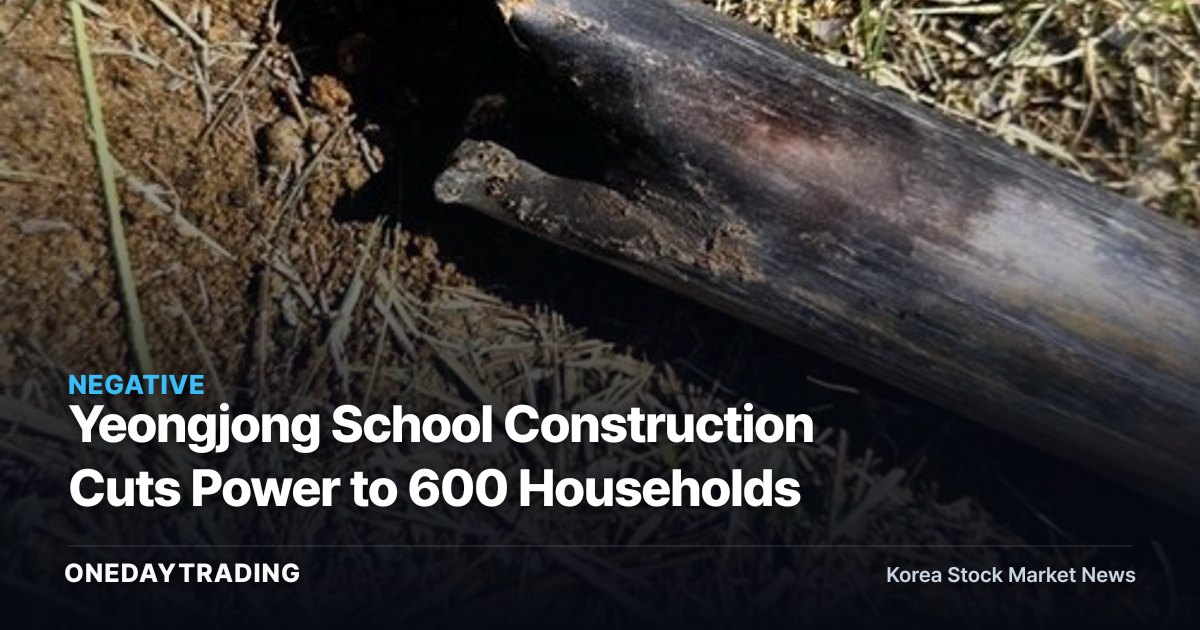
The investment implications of the damaged KEPCO underground cable lie less in the outage itself than in the still-unresolved allocation of liability and compensation costs at the construction site. According to Yonhap News Agency’s industry desk, a power cable was severed during excavation work at a special-needs school construction site in Unseo-dong, Yeongjong-gu, at around 10:07 a.m. on the 12th of last month, leaving 600 households in a nearby apartment complex without electricity for 4 hours and 23 minutes.
The contractor’s name, the final amount of damages, and the agreed compensation have not been confirmed. Rather than estimating the impact on a particular listed company’s earnings, investors should watch how costs are ultimately allocated among the contractor, project owner, and electricity supplier.
What Happened
Yonhap News Agency’s industry desk reported that the accident occurred at the construction site of Yeongjong International City’s first public special-needs school, which is scheduled to open in March 2028. The school is planned to have 35 classes, with the Incheon Metropolitan Office of Education overseeing the project as the contracting authority. The damaged line was an underground cable used by KEPCO to supply electricity.
Residents were unable to use air conditioners or household appliances during the outage. According to claims filed with the residents’ representative council, 15 households suffered property damage, including failures of electrical systems and appliances. An official said temperatures approached 32°C at the time, exposing elderly residents and newborns to potential danger.
The contractor apologized and promised partial compensation for damaged electronic devices, spoiled frozen food, and expenses incurred by the property management office. However, it resisted calls for an official compensation package covering all residents. The contractor argued that the power cable should not have been buried within the construction site and that KEPCO had confirmed excavation was permissible before pipes for fence posts were driven into the ground.
How the Liability Dispute Could Drive Up Costs
KEPCO acknowledges that the outage was caused by damage to the underground cable but maintains that the contractor was directly responsible for the incident. A KEPCO official said excavation workers are responsible for operating safely and that compensation should be negotiated between the contractor and residents. The contractor, however, disputes the extent of its liability, citing its advance confirmation that excavation could proceed.
If the disagreement persists, costs could extend beyond basic repairs to damage verification, compensation negotiations, and construction schedule management. A key issue is whether records concerning the accident’s cause and the cable’s location support either party’s account. The ultimately liable party and the timing of any payment have yet to be determined.
Impact on Stocks and Industry Sectors
- Construction: The contractor’s name has not been disclosed, leaving no basis to identify a specific stock (ticker). Nevertheless, the importance of verifying underground utilities and following safety procedures before excavation remains a site-management issue across the construction industry sector, affecting both costs and project timelines.
- Power infrastructure: Although KEPCO is the electricity supplier, it stated in this report that it bears no responsibility for compensation. It is difficult to determine the direction of any earnings impact until further details emerge regarding restoration costs and supply reliability.
- Public procurement: The Incheon Metropolitan Office of Education said it is mediating discussions between residents and the contractor as the contracting authority but has limited ability to intervene in the specific compensation amount. Its role centers on dispute resolution and construction progress management rather than direct financial losses.
Bullish vs. Bearish Scenarios
If compensation negotiations conclude quickly and the scope of damages remains limited to the claims from 15 households, the contractor’s additional costs and the risk of construction delays would be contained. Successful mediation by the education office could also help restore confidence in public construction projects.
Conversely, demands for compensation covering all residents could prolong both cost assessments and the payment timetable. If the dispute continues amid conflicting interpretations of cable-location data and excavation-approval records, the contractor could face higher provisions and site-management costs. The bearish scenario would strengthen if further damage is confirmed or negotiations break down two or more times.
Investor Action Points
- Watch for confirmation of the contractor’s identity and, if disclosed, whether the company mentions accident-related costs or provisions in its filings.
- Check whether the claims filed by 15 households become the confirmed final scope of damages and whether the parties agree on each category of compensation.
- Monitor whether the outcome of mediation between the Incheon Metropolitan Office of Education and the contractor, the compensation amount, and the payment date are disclosed.
- Compare follow-up reports to determine which liability claim is supported by records of underground-cable checks and excavation approval at the construction site.
Frequently Asked Questions
When did the outage occur?
According to Yonhap News Agency’s industry desk, a KEPCO underground cable was damaged during excavation at a special-needs school construction site in Unseo-dong, Yeongjong-gu, at around 10:07 a.m. on the 12th of last month. The exact calendar date has not been confirmed.
How many households claimed outage-related damages?
The residents’ representative council said 15 households in the nearby 600-household apartment complex suffered property damage during the outage, including failures of electrical systems and appliances. The final scope of damages has not been confirmed.
Who is responsible for compensation?
KEPCO maintains that it is not liable for compensation because the contractor was directly responsible for the incident. The contractor claims KEPCO inspected the site before excavation, so the ultimately liable party and the agreed compensation amount have yet to be determined.
This article was automatically summarized and analyzed based on the original news report. View the original article (Yonhap News Agency Industry)