
Key Takeaways
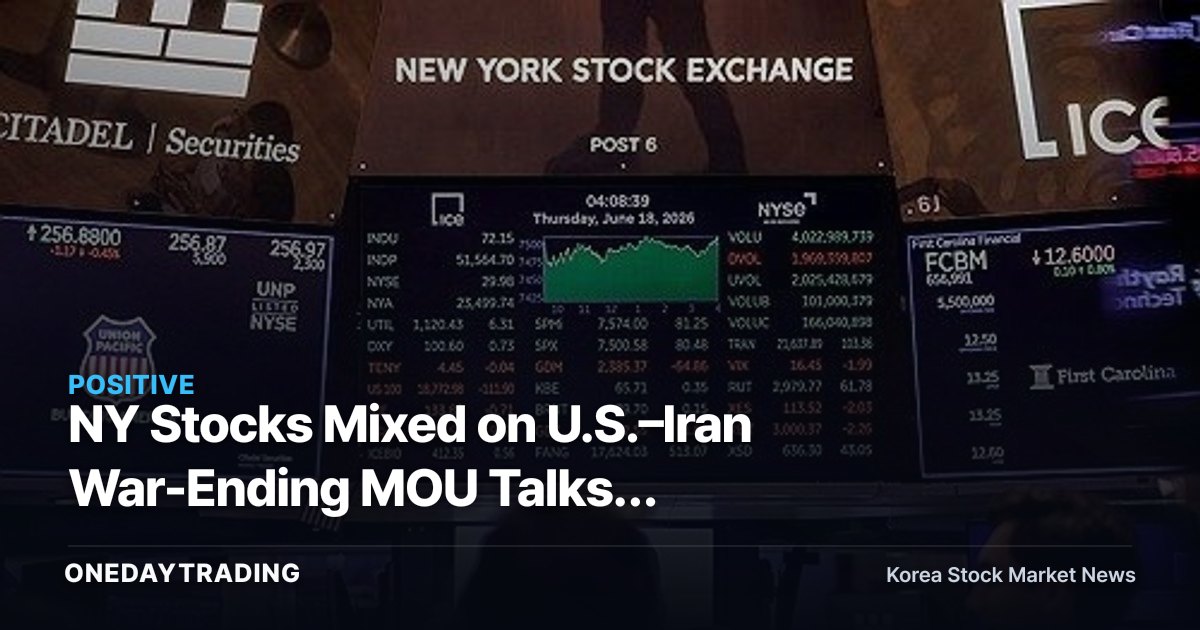
Wall Street's three major indexes opened mixed in trading as progress emerged in U.S.–Iran negotiations toward a memorandum of understanding (MOU) to end hostilities. Rather than treating this as a clear positive catalyst, the market is in a wait-and-see mode, weighing how effective the talks will ultimately prove.
The essence of this issue is less about the indexes themselves than about whether the geopolitical risk premium will shrink, a path that flows through international oil prices and feeds through differently into the domestic refining, airline, and defense sectors.
What Happened
According to foreign media and Yonhap Infomax reports, signals that the U.S. and Iran had made progress in talks toward a war-ending MOU improved risk-asset sentiment somewhat, but profit-taking pressure also came into play, leaving the indexes without a clear direction.
The reason the indexes ended up mixed is simple. Because an MOU is an agreement stage with weak legal binding force, uncertainty remains over whether it will actually lead to a ceasefire being implemented and to changes in sanctions. Investors are waiting for the follow-up schedule and verifiable measures rather than the announcement itself.
Background and Context
Middle East tensions have long added a risk premium to oil prices through concerns over crude supply disruptions. The more the war-ending talks progress, the greater the likelihood this premium will unwind, delivering opposite-direction shocks to oil-producing nations, crude-importing nations, and industries that use crude as a cost input.
Impact on the Market and Stocks
- Airline and transport stocks: Lower oil prices directly reduce costs for airlines, where jet fuel is a large component. For carriers such as Korean Air, fuel accounts for a large share of operating costs, leaving significant room for margin improvement when oil prices stabilize.
- Refining stocks: For names such as S-Oil, SK Innovation, and GS, the effect cuts both ways. A sharp drop (plunge) in oil prices widens inventory valuation losses, while a demand recovery and stable refining margins are positive, so the direction is not straightforward.
- Defense stocks: For names such as Hanwha Aerospace, easing geopolitical tensions could be read as a drag on medium- to long-term order momentum.
- Large-cap exporters: Stable oil prices and exchange rates ease cost burdens, creating a favorable macro environment for manufacturing exporters such as Samsung Electronics.
Investor Checkpoints
- Check whether WTI and Brent crude prices settle into a sustained downtrend after the talks progress, or whether the move is merely short-term volatility.
- Track the schedule and announcements for whether the MOU translates into concrete follow-up actions such as actual ceasefire implementation and sanctions adjustments.
- For airlines, watch fuel unit costs and changes in operating profit margins in the next quarter's earnings; for refiners, watch inventory valuation gains/losses and refining margins.
- Review the won-dollar exchange rate level alongside the trend in U.S. government bond yields to gauge the durability of the recovery in risk appetite.
Outlook
If the talks lead to an actual ceasefire and a normalization of supply, downward stabilization in oil prices combined with a recovery in risk appetite could create a favorable environment for airline, domestic-demand, and export stocks. However, if the MOU-stage agreement is reversed or its implementation is delayed, oil prices could reflect a risk premium again and pull back, and some stocks that have already rebounded would carry valuation burdens. It is reasonable to weight verifiable follow-up actions more heavily than announcement headlines.
This article is content automatically summarized and analyzed based on the original news report. View Original (Yonhap News Securities)