
At a Glance
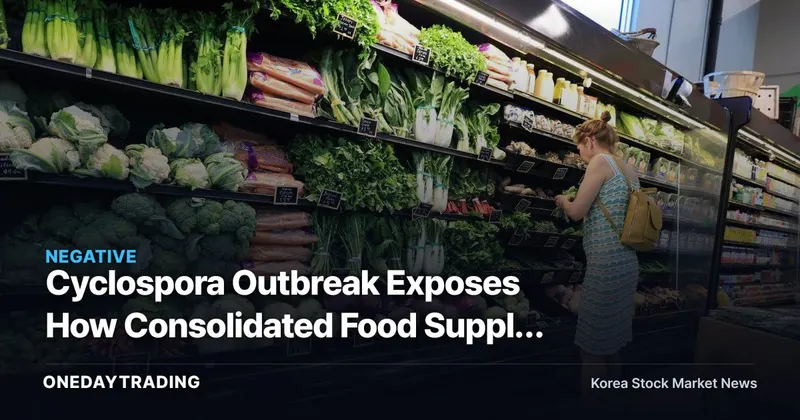
Sera Park's Analysis The bigger a food supply chain gets, the lower unit costs fall—but once contamination slips in, the damage radius grows right along with it. The cyclospora outbreak covered by CNBC illustrates how the efficiency that defines the U.S. fresh produce industry can boomerang into a hidden cost for restaurant and retail stocks (ticker).
For investors, the real story isn't the infection itself but what follows: recalls, product disposal, slower store traffic, and the cost of re-vetting suppliers. Restaurant chains that lean heavily on fresh vegetables, along with large retailers, need to price in the cost of rebuilding consumer trust before they worry about near-term revenue.
Why It Matters Now
Cyclospora is a parasitic foodborne illness that spreads through contaminated produce or water. The focus of this report isn't the pathogen—it's the structure behind it. As food industry consolidation has progressed, a single supplier now ships to more regions, more stores, and more brands than ever, meaning the same contamination source can now travel much farther than it once could.
Under normal conditions, large-scale supply chains deliver pricing power and logistical efficiency. But when a food-safety incident hits, those same advantages work in reverse. The wider a supplier's distribution footprint, the larger the traceback effort—and until the recall scope is clearly defined, consumers tend to avoid the entire category, not just the specific item in question. That means the damage isn't confined to one packaged vegetable line; sentiment can spill over into salads, burger toppings, Mexican-style dining, and ready-to-eat meals alike.
It's also worth noting how few hard numbers the reporting includes so far. The less data available, the more conservatively the market tends to price the risk. Until the responsible farm, processing line, or distribution channel is identified, companies must simultaneously write off inventory and scramble for alternative sourcing—costs that typically show up in consumer-stock earnings only with a lag.
FAQ
- Why is supply chain consolidation a problem here? When a single supplier ships to multiple regions and brands, contaminated produce doesn't stay confined to one area. The wider the spread, the higher the recall costs and reputational damage.
- Why are restaurant stocks (ticker) affected? Fresh vegetables may not carry a huge share of overall cost, but they're central to menu trust. When consumers start avoiding raw produce, both customer traffic and sales of specific menu items take a hit at the same time.
- Are retail stocks (ticker) any safer? No. Big-box retailers and warehouse chains have to handle supplier verification, pulling products from shelves, and processing refunds. The larger the scale, the higher the operational cost.
- What should Korean investors watch for? Traffic trends and food-safety-related cost disclosures at U.S.-listed restaurant and retail chains. For domestic food stocks, the more relevant variable is tighter quarantine inspection on imported produce rather than direct exposure.
Related Stocks (ticker) and Sector Impact
- Yum Brands. The parent of Taco Bell is a major restaurant name. If fresh-vegetable safety concerns spread into store visits and menu choices, the cost of restoring brand trust could weigh more heavily than any near-term dip in revenue.
- Chipotle Mexican Grill. This chain's core brand asset is its fresh-ingredients image. Even if the contamination source isn't traced to its own supply chain, consumers tend to lump similar categories together when making decisions.
- Walmart. Large retailers are the ones on the hook for executing recalls, refunds, and supplier checks. If food-safety incidents keep recurring, investment in traceability systems becomes more important than the efficiency of low-cost sourcing.
- Costco. With a high share of sales coming from bulk fresh food, consumer trust is central to defending revenue. The membership model builds strong loyalty, but response speed to recall issues gets scrutinized even more closely.
- Food inspection and traceability solutions. This is more of a long-term demand driver than a short-term theme. As supply chains consolidate further, the need for origin tracing, sanitation inspection, and data-sharing systems only grows.
Investment Considerations
- Until the contamination source is pinpointed, it's hard to definitively identify which companies are hurt. Stock prices tend to react to headlines first, while the actual earnings impact only becomes clear through recall scope and store traffic data.
- Food-safety issues carry a cost-recognition lag. Disposal costs, alternative-sourcing premiums, legal costs, and promotional spending may not all show up in a single quarter.
- Supply chain consolidation isn't always a negative catalyst. Once verification systems are strengthened in the aftermath of an incident, it can actually help larger players push out smaller suppliers.
- Korean companies should watch the ripple effects of tighter quarantine and origin-management requirements more than any slowdown in U.S. consumer sentiment. Firms involved in fresh-food import, processing, or food service could see rising compliance costs.
Overall Outlook
This cyclospora issue isn't a single negative catalyst that will directly crater restaurant stocks' earnings—it's more of an event that puts a price tag back on the hidden costs of consolidated supply chains. In the optimistic scenario, the cause is identified quickly and the recall stays limited. In that case, the dip in consumption would be short-lived, and large chains could use their verification systems to defend market share.
The downside scenario is one where the contamination pathway takes longer to pin down. In that case, consumers would avoid the entire fresh-vegetable category rather than any single brand. Investors should watch next quarter's same-store sales at restaurant chains, any mention of recall-related costs, and announcements of supplier diversification. The line items in the income statement will tell a more honest story than the apology in any press release.
This article is auto-summarized and analyzed based on original news reporting. Read the original (CNBC)