
Summary
The reason Transocean (RIG), trading below $10, is being floated as a value-recovery candidate is the expectation of a cyclical turn in the deepwater drilling sector. More than the simple fact that the stock is cheap, the essential driver of the share price is how far rig utilization rates and daily charter rates (dayrates) can recover. This is, at the same time, a signal directly tied to Korea's offshore plant order cycle.
The Full Story
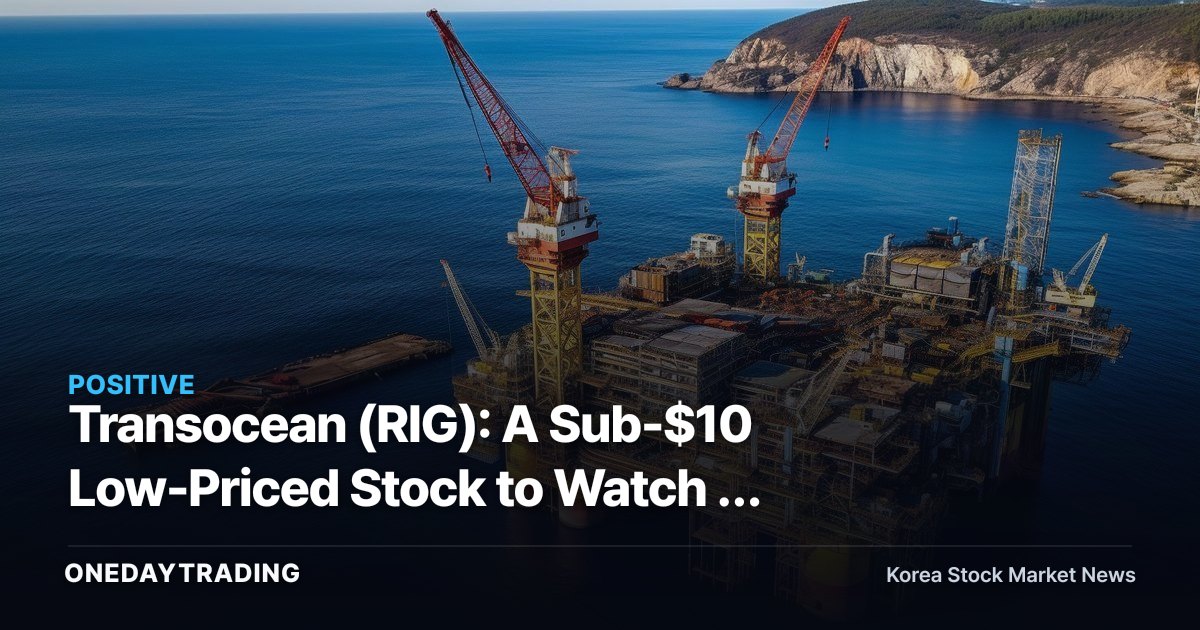
Transocean is a global drilling-services company that operates deepwater and ultra-deepwater drilling rigs and leases them to oil and gas companies. Its inclusion on lists of sub-$10 low-priced stocks reflects the view that a share price once heavily depressed by debt and low utilization during past oil-price plunges has room to recover as the industry cycle rebounds.
The key is not mere price appeal. Deepwater drilling is a high-cost area that becomes economically viable only when oil prices are sustained above a certain level. Accordingly, the oil-price level, the resumption of exploration and production (E&P) investment by major oil companies, and the direction of new drilling contracts and daily charter rates determine Transocean's revenue and cash flow.
In addition, the company's heavy debt burden, which swelled during the downturn, has long been cited as a persistent weakness. In an improving cycle, a recovery in cash flow can lead to debt reduction, so the same increase in revenue can deliver outsized leverage to the share price.
Structural Background
Supply in the deepwater drilling market is inelastic. Building new drilling rigs requires years and enormous capital, so even when demand revives, supply cannot expand immediately. This structure makes charter rates rise quickly during a recovery and gives rig owners operating leverage. Conversely, during a downturn, the burden of fixed costs translates directly into losses.
Stock and Sector Ripple Effects
- Transocean (RIG): The central subject of the article. The recovery of deepwater rig utilization and charter rates is a direct driver of earnings and the share price, and whether its debt structure improves will determine its valuation.
- Samsung Heavy Industries: With deep experience in building drillships and offshore plants, it stands in the path of benefiting from new offshore equipment orders should global drilling investment resume.
- Hanwha Ocean: With offshore plant and specialized-vessel capabilities, it can expect order momentum if investment in deepwater development expands.
- HD Hyundai Heavy Industries: With a combined offshore-equipment and shipbuilding portfolio, it is linked to the offshore order cycle driven by firmer oil prices.
- S-Oil and SK Innovation: Not direct drilling plays, but they share the same macro variables in oil prices and refining margins.
Bullish vs. Bearish Scenarios
The bull case is clear. If oil prices hold at favorable levels and majors increase deepwater exploration investment, then on top of an inelastic supply structure, charter rates rise and utilization climbs, improving cash flow and debt metrics at the same time. In this case, the upside elasticity of a low-priced entry grows larger.
The bear-side risks are also heavy. If oil prices turn weak again, the economics of deepwater drilling are impaired and contracts may be delayed or canceled, while high debt leverage amplifies losses during a downturn. Sub-$10 low-priced stocks are inherently highly volatile, and investors should also check the possibility that sector optimism has already been priced into the shares.
Investor Action Points
- In quarterly earnings, check the trend in rig utilization rates, daily charter rates, and contract backlog.
- Track WTI and Brent oil-price levels and changes in the E&P investment guidance of global majors.
- Examine the pace of improvement in financial-health metrics such as net debt and the interest-coverage ratio.
- Korean investors can reference offshore plant order disclosures from companies like Samsung Heavy Industries and Hanwha Ocean as a co-moving indicator.
This article is content automatically summarized and analyzed based on the original news report. View original (Yahoo Finance)