
3-Line Briefing
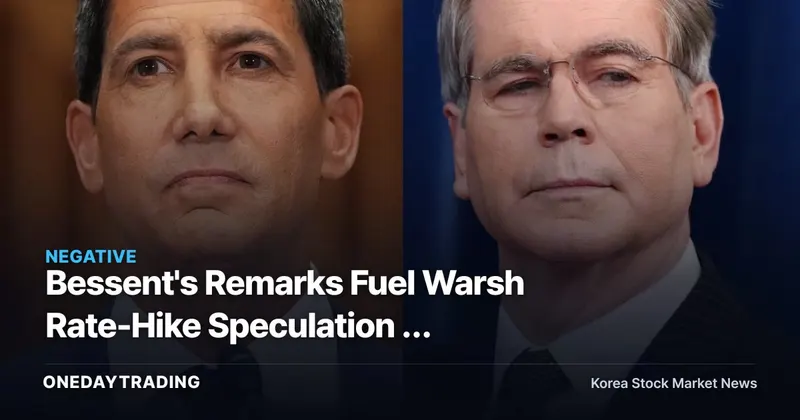
- US Treasury Secretary Scott Bessent raised the possibility of a one-off rate hike — essentially tapping the brakes once — suggesting a direction that runs counter to the market's prevailing consensus.
- One analyst interpreted this as a signal that the White House has effectively cleared the path for the hawkish policy stance of Kevin Warsh, who is being floated as a candidate for the next Federal Reserve chair.
- If the trajectory of US interest rates tilts upward again, it raises the risk of a higher won-dollar exchange rate and mounting valuation pressure on Korean growth stocks.
What's Changing
Until now, markets have been pricing in the Fed's next move as a rate cut. The key shift here is that the Treasury chief himself has directly floated the possibility of a hike. While the Treasury Secretary has no formal say over monetary policy, his remarks take on political significance as a signal about policy direction when read alongside the process of selecting the next Fed chair.
Kevin Warsh in particular has long been categorized as a hawkish figure who places heavy emphasis on controlling inflation. If the White House's stance leans toward tolerating a hike, there is room for policy under a new Fed chair to be reset in a more restrictive direction than the market currently expects. That, in turn, would tend to push up bond yields and the value of the dollar.
What matters for Korean investors is that this signal represents a recalibration of expectations rather than a confirmed policy shift. Even the mere possibility of a one-off hike can dampen risk appetite and increase pressure on foreign investors to trim their emerging-market allocations.
Numbers and Context
The key context is that what Bessent referenced was not a series of consecutive hikes but a single, one-off increase — akin to tapping the brakes once. In other words, it looks more like a fine-tuning move to cool overheating than the resumption of a tightening cycle. Still, because the market had treated a rate cut as a foregone conclusion, any signal that flips the direction outright becomes a catalyst for greater price volatility.
Winners and Losers
- Bank stocks (KB Financial Group, Shinhan Financial Group, Hana Financial Group): If the upper bound on interest rates stays elevated, there is greater room for improvement in the loan-deposit margin and net interest income, making this a relative beneficiary sector.
- Insurance stocks (Samsung Life, Samsung Fire & Marine Insurance): Higher yields on invested assets translate into eased negative-spread burdens and improved returns on newly acquired bonds.
- Large-cap exporters (Samsung Electronics, Hyundai Motor): A weaker won is positive for translation gains, but the effect cuts both ways, as it could be offset if accompanied by a slowdown in global demand.
- Growth and high-valuation tech stocks: A higher discount rate erodes the present value of future cash flows, exposing stocks with the heaviest valuation burdens to greater downside pressure.
Risk Check
- The Treasury Secretary's remarks are a mention of possibility, not confirmed policy, and remain a step removed from an actual Fed decision.
- If rates rise again, it could trigger an exodus of foreign investors' capital and greater volatility in the KOSPI and KOSDAQ.
- A higher won-dollar exchange rate would raise import prices and foreign-currency debt burdens, weighing negatively on domestic-demand-focused and highly leveraged companies.
- Even the benefit to bank stocks could be offset by rising loan-loss provisions if an economic slowdown pushes up delinquency rates.
Bottom Line
The rate-hike signal is a double-edged variable, offering banks and insurers a margin-improvement opportunity while simultaneously weighing on high-valuation growth stocks and emerging-market fund flows — investors should track the actual chair appointment and the outcome of the next Fed meeting alongside exchange-rate levels.
This article is automatically summarized and analyzed content based on the original news report. View Original (MarketWatch)