
Three-Line Briefing
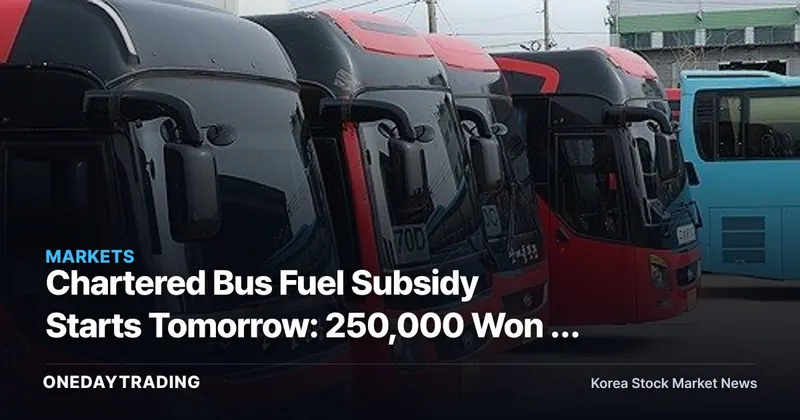
- Starting July 16, the Ministry of Land, Infrastructure and Transport will pay a fuel subsidy to diesel-powered chartered buses, with support set at around 250,000 won per month
- City buses and taxis have received fuel subsidies for a long time, but chartered buses were left out — this measure is designed to fill that gap
- Because the subsidy is small relative to the potential swing in diesel prices, its real-world impact will shrink if global oil prices or the exchange rate rise
What Changes
In the cost structure of chartered bus fares, diesel is the second-largest expense after labor costs. Unlike city buses or taxis, this industry sector has had to absorb fuel-cost swings directly into its charter fares. Behind the Ministry's decision to broaden the scope of support lies a structure in which chartered bus operators have individually shouldered rising cost pressure every time diesel prices climbed.
The 250,000 won is a fixed monthly payment. The amount stays the same regardless of whether global oil prices rise or fall. This structure works as a stable buffer when oil prices move gradually, but its cushioning effect diminishes relatively when diesel prices see a sharp gain (surge). Conversely, if diesel prices fall, the subsidy becomes a pure margin improvement for the industry.
Numbers in Context
What the market has priced in for now is the fact that the fuel subsidy has begun, not the size of its impact. Since the 250,000 won is a standardized amount applied nationwide, it cannot precisely reflect the actual differences in fuel costs between Seoul and the regions, or between large tour buses and smaller vehicles. Ultimately, how much operators feel this measure will inevitably vary depending on each operator's mileage and diesel consumption.
Winners and Losers
- There is no dedicated listed pure-play chartered bus company, so there is little way for the stock market to directly confirm the benefit of this subsidy through share prices
- For the refining industry, this is a structure in which the cost burden shifts from users to the government budget rather than actual diesel demand increasing, so the impact on revenue is limited
- Package and group-tour travel agencies that rely heavily on chartered buses may see some modest easing of cost burden, but the extent will be limited
- The party that ultimately bears the real cost of this policy is the fiscal authorities, and expanding the funding could lead to competition with other budget items
Risk Check
- Because this is a fixed-amount subsidy, a sharp gain (surge) in global oil prices would dilute its effect — which is why Brent and WTI trends need to be watched together
- If the KRW/USD exchange rate rises, the won-denominated import price of diesel rises as well, reducing the real purchasing power of the subsidy
- If other industry sectors in the fuel-subsidy blind spot, such as cargo trucks, raise fairness concerns, it could lead to additional fiscal spending
- If the subsidy ends up merely preserving operator margins rather than leading to lower charter fares, consumers may not feel much of an effect
Bottom Line
The chartered bus fuel subsidy is a policy that fills a long-standing equity gap, not one that creates new demand. Whether this money stays as industry margin or flows through to lower fares can only be judged by watching diesel prices, exchange rate levels, and whether the Ministry allocates additional budget going forward.
This article is automatically summarized and analyzed content based on the original news report. View original (Yonhap News Securities)