
Key Takeaways
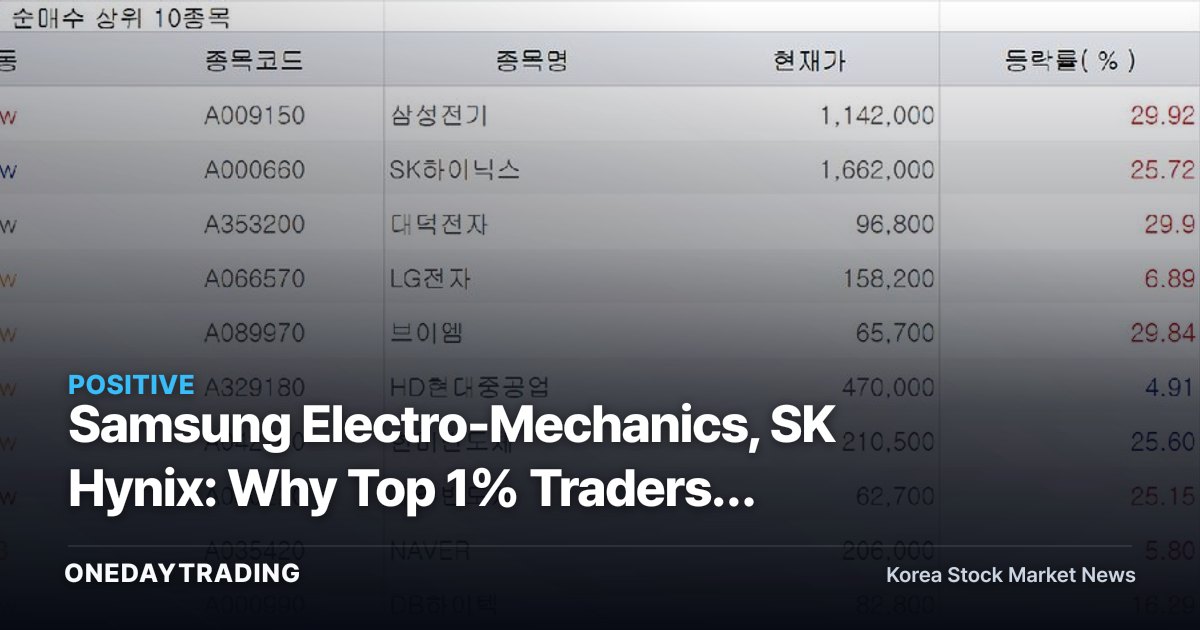
At 9:30 a.m., buying from the top 1% of investors by returns concentrated in semiconductors and electronic components. The key point is that rebounding stocks like Samsung Electro-Mechanics and SK Hynix were picked up alongside semiconductor supply-chain names such as Daeduck Electronics, VM, and Hanmi Semiconductor.
This is not simple thematic buying. It's an early supply-demand (order flow) signal testing whether the AI semiconductor narrative is filtering back down into packaging, substrates, equipment, and memory.
What Happened
Elite traders jumped on stocks already in motion. According to a Maeil Business Newspaper (MK) securities report, the 9:30 a.m. trading activity of the top 1% of investors by stock investment returns showed heavy buying in rebound names like Samsung Electro-Mechanics and SK Hynix. Buying also concentrated in semiconductor-related stocks such as Daeduck Electronics, VM, and Hanmi Semiconductor.
What investors should look at first isn't who bought, but where the money went. Samsung Electro-Mechanics is not just an MLCC and camera-module maker — it's an electronic components stock carrying expectations for high-value-added package substrates. SK Hynix, centered on HBM, serves as the benchmark for the AI memory cycle. Daeduck Electronics is grouped under substrates, Hanmi Semiconductor under back-end equipment, and VM under semiconductor equipment.
In other words, the money went into process bottlenecks rather than finished products. If AI server demand is real, the first beneficiaries won't be a single chipmaker but the substrate, back-end, equipment, and memory supply chain as a whole. That's exactly where the significance of this elite-buying trend lies.
Background and Context
Semiconductor share prices always react to numbers later than to technology. HBM isn't just about how many layers are stacked — it's about maintaining yield while meeting customer-required volumes. In this process, back-end equipment and package substrates become not mere components but the key to resolving production bottlenecks.
That said, 9:30 a.m. order flow reflects the hottest window of the trading day. Early-session buying shows direction but doesn't prove earnings. If a gap opens up between the narrative and actual shipments, orders, and utilization rates, the same stocks could trade at entirely different prices by the afternoon.
Market and Stock Impact
- Samsung Electro-Mechanics: The first electronic components stock called on whenever expectations build around semiconductor package substrates. If AI server and high-performance chip demand translates into higher-value-added substrates, expectations for an improved product mix follow.
- SK Hynix: Represents the HBM-driven memory rebound. The elite buying can be read as a supply-demand judgment that the AI memory cycle isn't over yet.
- Daeduck Electronics: Directly tied to semiconductor substrate demand. The more customer capacity expansion and high-performance packaging growth are confirmed, the greater its sensitivity to utilization rates.
- Hanmi Semiconductor: Strongly characterized as a back-end equipment stock. Its earnings leverage grows once expanded HBM investment translates into actual equipment orders.
- VM: Classified as a semiconductor equipment stock, it responds to expectations of a recovery in equipment investment. However, equipment stocks can see share-price volatility rise quickly if there's a gap in order intake.
Investor Checkpoints
- Persistence of early-session buying: Watch whether the 9:30 a.m. order flow holds through to the closing price. If early strength ends up as an upper wick, the quality of short-term chasing buys deteriorates.
- HBM customer orders: Customer orders are the core driver for SK Hynix and back-end equipment stocks. What matters is whether shipment and capacity-expansion commentary continues into the next earnings release.
- Substrate utilization rates: For Samsung Electro-Mechanics and Daeduck Electronics, watch how quickly a recovery in substrate demand feeds through into earnings. Volume matters more than price, and mix matters more than volume.
- Valuation burden: In semiconductor stocks, expectations rise first and earnings follow. If multiples expand before orders and margins are confirmed, the eventual correction could also be larger.
Outlook
The optimistic scenario is clear. If AI memory demand holds up and HBM investment translates into back-end equipment and substrate orders, the rebound in Samsung Electro-Mechanics, SK Hynix, Daeduck Electronics, and Hanmi Semiconductor could reflect earnings expectations rather than just short-term order flow.
The opposite scenario must also stay on the table. Elite buying can be the result of rapid turnover in ownership. If next quarter's shipments, yields, equipment orders, and substrate utilization fail to keep pace, what the market bought won't be earnings — just the phrase "semiconductor rebound." The test of this move will come with the next earnings release and major customers' capex commentary.
Samsung Electro-Mechanics in Real-Time Data
Samsung Electro-Mechanics's most recent closing price was 1,142,000 won (+29.92% versus the prior day), and the composite signal — combining foreign investor/institutional investor order flow with news and momentum — is 🟡 Neutral / Wait-and-see. With positive and negative signals mixed, this is a segment to watch.
- ▼ Dual-side selling — foreign investors −88.8 billion won and institutional investors −57.6 billion won selling together
Recent related news shows 1 positive catalyst and 0 negative catalysts, a favorable mix.
※ Price and foreign/institutional investor order-flow data are provided by Korea Investment & Securities (KIS) and are as of the time of publication.
This article is automatically summarized and analyzed content based on the original news report. View original (Maeil Business Newspaper Securities)