
Key Takeaways
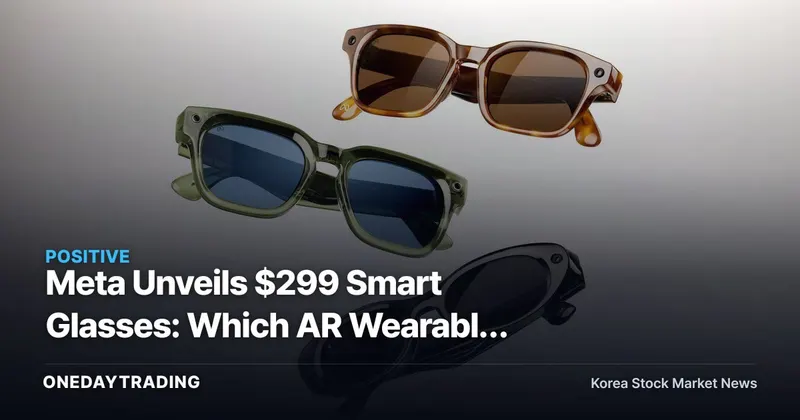
Meta has unveiled a new line of smart glasses starting at $299, accelerating its wearable strategy once again. The price cut signals a push toward wider adoption, and as a stepping stone toward next-generation devices that embed a display in the lens, it represents a medium-to-long-term opportunity for the Korean component supply chain spanning displays, camera modules, and semiconductors.
That said, the smart glasses market is still in its early stages, and until actual sales volumes and the extent of Korean suppliers' direct shipments are confirmed, there is also a risk that expectations get priced into shares prematurely.
What Happened
Meta announced its new smart glasses at an entry price of $299. As an extension of the wearable lineup that Mark Zuckerberg has consistently championed, the move reflects an intent to broaden the user base by rolling out lightweight, glasses-style devices as a mass-market product.
Meta's executives positioned these lightweight smart glasses as one step in the journey toward more advanced devices that embed a display inside the lens. In other words, while the current product centers on cameras, voice, and an AI assistant, the company has made clear its roadmap to ultimately evolve toward display-integrated devices that project information into the user's field of view.
Background and Context
Until now, smart glasses have failed to go mainstream due to high prices and awkward designs. Meta's decision to bring the price down to $299 aligns with a platform strategy of growing the installed base—even at the cost of giving up some hardware margin—and monetizing through advertising and AI services. Big Tech's bet on glasses-style devices as the computing platform after the smartphone is now entering full swing.
Impact on the Market and Stocks
- Meta (the主체): The key is expanding the user base and linking AI assistant and advertising services, rather than the hardware itself. The price cut is a near-term margin burden but a strategic move aimed at platform lock-in.
- LG Innotek: Glasses-style devices drive demand for compact, low-power camera modules and optical components. From a customer-diversification standpoint, whether its modules get adopted for glasses is the point to watch.
- Samsung Electronics / Samsung Display, LG Display: As devices evolve toward in-lens integration, micro OLED and micro displays become core components. The panel supply structure for future display-integrated models is an earnings variable going forward.
- Qualcomm: As the de facto standard supplier of low-power chipsets for smart glasses, it is a direct beneficiary candidate of rising wearable shipments.
- EssilorLuxottica: As Meta's eyewear design and distribution partner, it is tied in on the sales-channel side as mass-market sales expand.
Investor Checkpoints
- In Meta's next quarterly earnings, watch the size of the Reality Labs segment's losses and management's commentary on device shipments.
- Distinguish whether Korean component makers issue actual order disclosures for glasses modules and panels, or whether it remains mere expectation.
- Track the launch timing of next-generation display-integrated models and the schedule for any micro-display adoption announcements.
- Watch demand-durability indicators for the $299 model, such as initial sales data, return rates, and repurchase rates.
Outlook
In the optimistic scenario, the lower price barrier pushes smart glasses into meaningful shipment volumes, and as the market transitions toward display-integrated devices, Korean optics, display, and module makers secure a new source of downstream demand. Conversely, if mass-market sales fall short of expectations or Korean suppliers' share of shipments remains limited, component stocks that have risen on AR-theme expectations alone could be exposed to valuation pressure. Ultimately, the key will be closing the gap between thematic expectations and actual order and shipment data.
This article is auto-summarized and analyzed content based on the original news. View original (CNBC)