
Key Takeaways
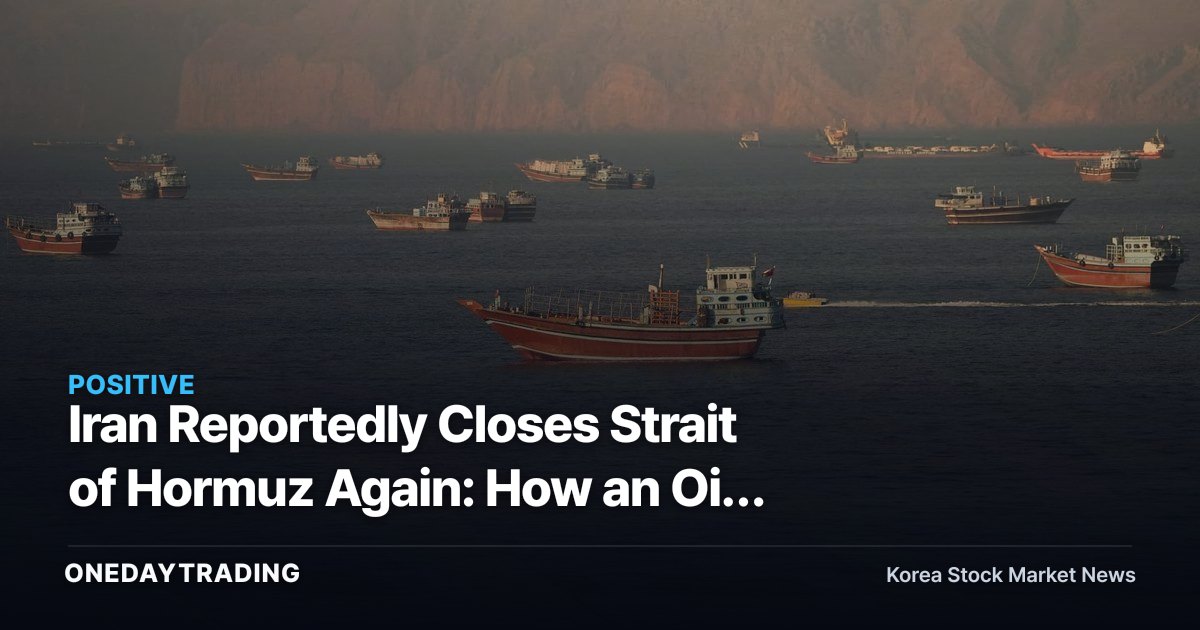
Reports indicate that Iran has once again closed the Strait of Hormuz in response to Israeli military operations in Lebanon. If this chokepoint—through which a substantial share of the world's seaborne crude oil flows—is blocked, fears of supply disruptions tend to amplify oil price volatility. In Korea's stock market, this creates short-term upward pressure on refiner and energy stocks, while simultaneously exerting downward pressure on cost-sensitive sectors such as airlines, shipping, and chemicals.
What Happened
Iran's Joint Armed Forces Command reportedly stated that the closure is a response to Israel's continued military operations in Lebanon. The Strait of Hormuz is effectively the only maritime passage for crude oil and liquefied natural gas produced in the Persian Gulf, with exports from major oil-producing nations such as Saudi Arabia, Iraq, Kuwait, the United Arab Emirates, and Qatar concentrated through this narrow corridor.
It remains uncertain whether the closure will actually be prolonged or prove to be a short-lived pressure tactic for negotiations. That said, the report comes amid ongoing Iranian nuclear talks, making it a variable that heightens uncertainty around the Middle East diplomatic track itself. Markets tend to price in risk ahead of any actual disruption to shipping traffic, so oil prices may react even before the facts are confirmed.
Background and Context
The threat of a Hormuz closure is a card that has resurfaced repeatedly whenever tensions in the Middle East escalate. Historically, full-scale closures have rarely materialized, with most cases amounting to temporary tension—yet in the interim, oil prices have shown a pattern of rapidly pricing in a geopolitical premium before unwinding it. Given that Korea's dependence on crude oil imports is overwhelmingly high and the share sourced from the Middle East is large, the stability of this passage is a structural variable directly tied to the trade balance, inflation, and corporate costs.
Impact on the Market and Specific Stocks
- Refiners: In the early stages of an oil price rally, valuation gains on existing inventories and expectations of wider refining margins may come to the fore. However, given that the business model involves purchasing and refining crude, prolonged high oil prices can conversely squeeze margins through rising costs and weakening demand, so the direction does not necessarily run one way.
- Energy and Gas: Since liquefied natural gas passes through the same passage, companies with businesses linked to gas prices face greater volatility in profitability and procurement costs.
- Airlines: Jet fuel accounts for a large share of operating costs, so a sharp gain (surge) in oil prices is a direct cost-side negative catalyst. If the exchange rate rises in tandem, the burden of foreign-currency fuel costs and lease payments intensifies.
- Shipping and Logistics: Disruptions to shipping traffic and detour routes are variables that push freight rates higher, but they cut both ways through rising fuel costs and shrinking trade volumes.
- Petrochemicals: With feedstock prices such as naphtha linked to oil prices, this acts as upward cost pressure, and in a phase of weak downstream demand, passing those costs through is not easy.
Investor Checkpoints
- Confirmation of the closure reports and whether shipping traffic is actually disrupted: use foreign press and shipping data to distinguish temporary pressure from a structural blockade.
- The combined movement of international oil prices (Brent and WTI) and the won-dollar exchange rate: track how much of the geopolitical premium is being priced in versus unwound.
- Refiners' next-quarter refining margins and inventory-related earnings disclosures: confirm whether oil price moves actually translate into earnings.
- The Iranian nuclear talks schedule and Middle East diplomatic headlines: signals of de-escalation or escalation will drive short-term volatility.
Outlook
If the closure proves to be only short-term pressure and negotiations resume, oil's geopolitical premium could unwind relatively quickly, in which case the short-term strength in refiner and energy stocks also carries the risk of a pullback. Conversely, if shipping disruptions materialize or the conflict spreads, high oil prices could become entrenched, allowing inflation and cost pressures to spill over into broad risk aversion across the market. Ultimately, it is more reasonable to read this issue not as a sustained positive catalyst for any particular stock, but as a volatile phase that calls for assessing the winners and losers sector by sector while keeping an eye on oil prices, the exchange rate, and the Middle East diplomatic calendar together.
S-Oil Through Real-Time Data
S-Oil's latest closing price is 105,300 won (+0.19% from the previous day), and the signal that combines foreign and institutional investor order flow with news and momentum is 🟢 Buy Bias. With foreign investors and news both positive, this stock is worth watching.
- ▲ Order-flow continuity — Foreign investors net buyers for 6 consecutive days (+9.5 billion won)
- ▲ News flow — 13 positive catalysts vs. 2 negative catalysts — positive bias
Recent related news is favorable, with 13 positive catalysts and 2 negative catalysts.
※ Price and foreign/institutional investor order-flow data are provided by Korea Investment & Securities (KIS), as of the time of publication.
This article is content automatically summarized and analyzed based on the original news. View Original (CNBC)