
3-Line Briefing
- Tumor Treating Fields (TTFields) device maker NovoCure (NVCR) failed to demonstrate an improvement in overall survival (OS) — the primary endpoint — in the topline results of its Phase 3 TRIDENT trial in newly diagnosed glioblastoma.
- The comparison between the Early Start (concurrent) and Maintenance Start (delayed) arms failed to reach statistical significance, and shares saw a sharp drop (plunge) of roughly 18% immediately following the announcement.
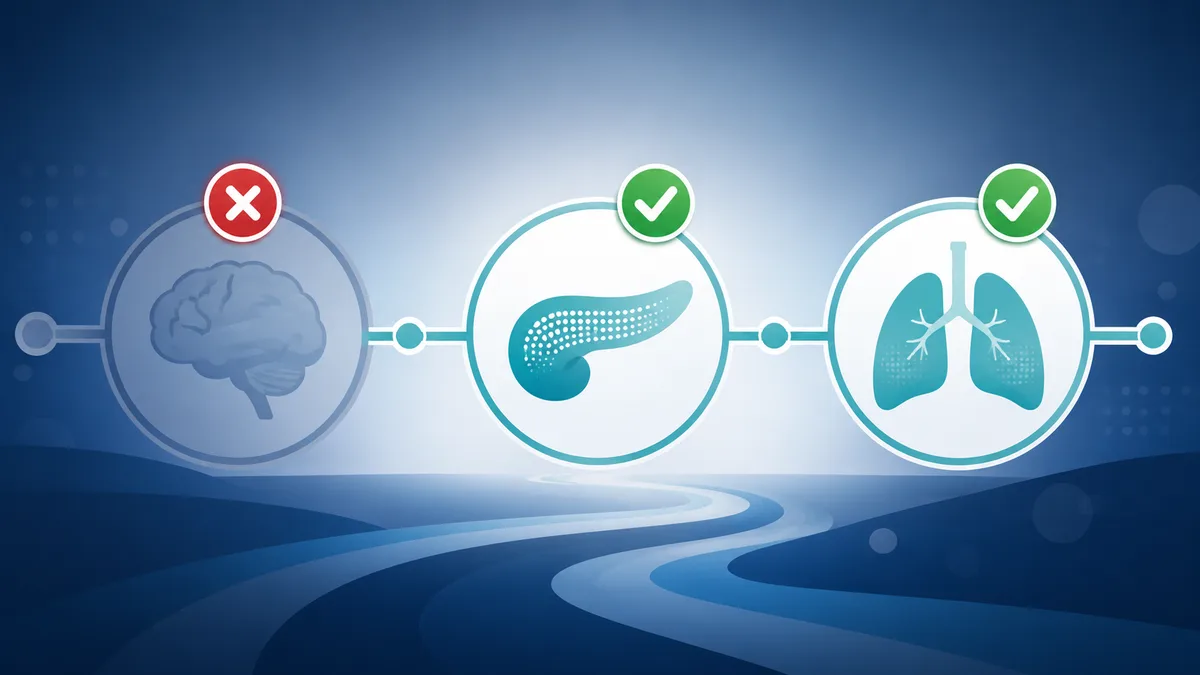
- Still, the pancreatic cancer (PANOVA-3) and lung-cancer brain metastases (METIS) indications remain alive, which is the key point separating this setback from an existential threat to the company.
What Happened
TRIDENT was the pivotal trial behind NovoCure's expansion strategy of combining radiation therapy with concurrent TTFields in patients with newly diagnosed glioblastoma (the most common malignant brain tumor). The failure to show a statistically significant improvement in overall survival — the primary endpoint — is a direct blow to the "expanding brain-tumor indications" growth narrative NovoCure had been building. Because the market had already priced in a good deal of trial success, confirmation of the failure immediately triggered a valuation pullback.

Numbers and Context
NovoCure makes TTFields devices that disrupt cancer cell division using electric fields, and has already secured regulatory approval in glioblastoma and mesothelioma. More recently, the company reported positive Phase 3 results in pancreatic cancer (PANOVA-3) and filed a Premarket Approval (PMA) application with the FDA, while its Phase 3 METIS trial in lung cancer brain metastases also met its primary endpoint, broadening its indication base. However, with Q1 2026 losses widening (driven by higher stock-based compensation) and short selling interest already elevated, the failure of this pivotal expansion trial has added further pressure.
Investor Checkpoints
- Cards still in play: The FDA's PMA review outcome for PANOVA-3 (pancreatic cancer), PANOVA-4 (metastatic pancreatic cancer) data, and the METIS (lung brain metastases) approval process.
- Detailed data: Whether the full TRIDENT results (to be presented at a medical conference) reveal subgroup effects or room for further analysis.
- Financial resilience: The widening-loss trend and cash burn rate — the possibility of new financing (a capital raise) is a key stock variable.
Risk Check
- Given the nature of clinical-stage medical device stocks, failure of a pivotal Phase 3 trial causes significant near-term damage to investor confidence. A rebound would require a concrete catalyst such as an approval or a swing to profitability.
- Watch for continued volatility from the unwinding of previously priced-in expectations, as well as additional supply-demand (order flow) pressure stemming from the elevated short selling interest.
- The remaining indications (pancreatic and lung) could still see different outcomes depending on regulatory review and real-world data.
Bottom Line
The TRIDENT failure has broken one pillar of NovoCure's brain-tumor expansion story, but with the pancreatic and lung indications still standing, the company's overall fundamentals haven't collapsed. This is a period of heightened near-term volatility, so a conservative approach is reasonable until a confidence-restoring catalyst materializes.
This article is a market analysis based on NovoCure's TRIDENT Phase 3 topline results announcement disclosed on 2026-06-17, and does not constitute investment advice. Investment decisions are the sole responsibility of the reader.