
At a Glance
A higher margin ratio is not a signal predicting the direction of stock prices. What it actually says is that the cash collateral the market demands to withstand the same level of volatility has increased.
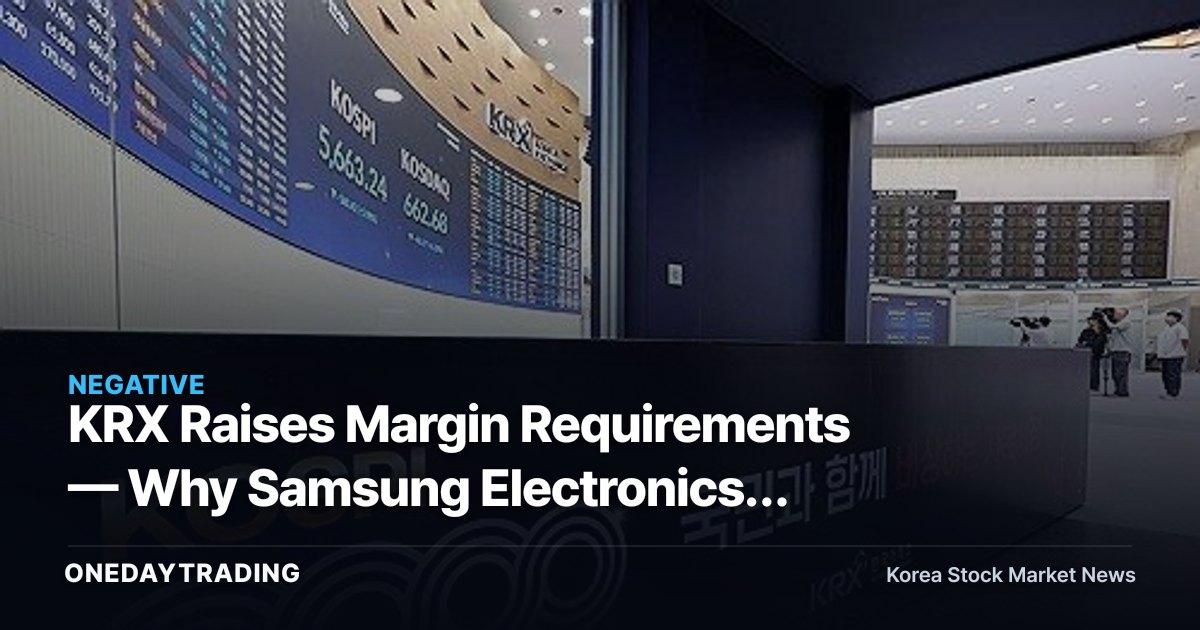
This latest adjustment by the Korea Exchange (KRX) directly affects derivatives on the KOSPI 200, KOSDAQ 150, Samsung Electronics, SK Hynix, LG Energy Solution, Alteogen, and the TIGER Nasdaq 100 ETF. Before price moved, the cost of leverage moved first.
Why It Matters Now
A margin rate hike acts as a brake on the market. The KOSPI 200 initial margin ratio rose 2.40 percentage points, from 9.15% to 11.55%, while the maintenance margin ratio climbed to 7.70% from 6.10%. Even holding a single futures contract in the same direction now requires more cash. With expected returns unchanged, the internal rate of return on leveraged buying declines.
The impact on individual stocks (tickers) is more direct. Samsung Electronics (005930)'s derivatives initial margin ratio jumped 4.65 percentage points, from 14.25% to 18.90%. SK Hynix rose from 24.45% to 27.15%, LG Energy Solution from 21.75% to 23.55%, and Alteogen from 35.40% to 37.65%. The more volatile a stock, the heavier the cost of maintaining the same position becomes.
What the market has already priced in here is volatility itself. What isn't yet fully priced in is the channel through which collateral burden spreads into cash-market supply-demand (order flow). As derivatives positions are unwound, the unwinding of spot hedges could dull intraday momentum in large-cap and KOSDAQ growth names. Stocks with both margin lending and futures buying stacked together are likely to see buying power cool first as margin requirements rise.
On the other hand, this shouldn't be read purely as a negative catalyst. The Exchange's purpose in raising margin ratios is to reduce the chain reaction of forced liquidations. Short-term liquidity thins out, but the probability that margin-loan and derivatives losses cascade into spot sell-offs during a sharp drop (plunge) can be lowered. This is a phase where a market stabilization mechanism demands its cost.
FAQ
- Does a margin rate hike signal a stock price decline? It's more a risk-management signal than a directional one. Still, because it increases the funding burden on leveraged traders, it can act as downward pressure on short-term supply-demand (order flow).
- Why do Samsung Electronics and SK Hynix matter here? Both stocks (tickers) carry heavy index weight and see active stock futures and options trading. If derivatives-position unwinding leads to spot-hedge adjustments, it can even affect KOSPI 200 supply-demand (order flow).
- What does this mean for the KOSDAQ 150? The KOSDAQ 150 initial margin ratio rose from 13.20% to 15.00%. As an index heavy in biotech and growth names, it reflects both interest-rate sensitivity and volatility burden at once.
- What should retail investors check? Look at whether additional margin calls occur on accounts before and after implementation, changes in margin-loan balances, and any decline in futures open interest.
Related Stocks (Tickers) and Sector Impact
- Samsung Electronics (005930) Its initial margin ratio rose by a larger 4.65 percentage points. This creates more pressure on short-term leveraged supply-demand (order flow) than on spot fundamentals.
- SK Hynix With strong AI-chip expectations, its derivatives positions are also sensitive. The 27.15% margin ratio serves as a brake on chasing rallies during overheated phases.
- LG Energy Solution Expectations of a battery-sector recovery haven't been fully confirmed by earnings yet. Rising collateral costs could reduce turnover during any rebound.
- Alteogen Its initial margin ratio is high at 37.65%. Since biotech stocks (tickers) move on event expectations alongside volatility, the margin burden is felt more heavily.
- Brokerage sector This is a short-term drag on trading value. However, if it reduces margin-loan losses during extreme volatility, the cost from a risk-management standpoint falls.
Investment Considerations
- Right after a margin rate hike, watch trading volume and the decline in open interest before price action.
- Stocks (tickers) with rapidly rising margin-loan balances may see selling pressure emerge even ahead of positive catalyst news.
- Until a reduction in volatility is confirmed, leveraged ETFs and individual stock futures will see wider swings in profit and loss.
- The priority is checking for additional margin call notices and forced-liquidation windows after the close of the next trading session.
Overall Outlook
This margin rate hike isn't a factor that predicts whether the market will rise or fall — it's a measure that makes both rallies and declines more expensive. The optimistic scenario is clear. Thicker collateral reduces the risk of chain liquidations during sharp swings, allowing foreign investors and institutional investors to re-rate large-cap stocks (tickers) at more stable prices.
The risk lies on the other side. If the margin burden rises before volatility actually subsides, it could dampen retail investors' leveraged buying and turnover in KOSDAQ growth names. The next indicators to watch are KOSPI 200 and KOSDAQ 150 futures open interest, margin-loan balances for Samsung Electronics and SK Hynix, and the won-dollar exchange rate. If the exchange rate becomes unstable again, the margin rate hike is more likely to be read not as a stabilizing measure but as a reduction in buying power.
This article is auto-summarized and analyzed content based on the original news report. View original (Yonhap Infomax)