
At a Glance
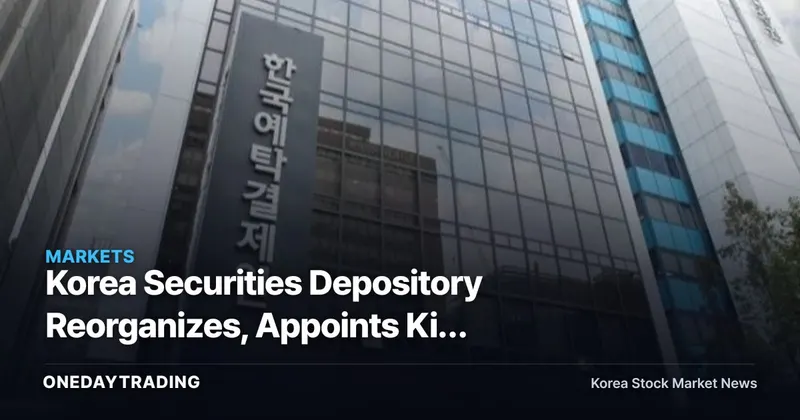
The Korea Securities Depository (KSD) carried out an organizational restructuring and executive personnel changes on July 3, appointing Kim Min-su as its new managing director. On the surface, this looks like a routine executive reshuffle, but KSD has framed it around two goals: strengthening the reliability and stability of capital market infrastructure, and accelerating digital transformation. The direction is to expand core functions while consolidating similar or overlapping ones — the kind of reshuffle that typically precedes the introduction of a new system or institutional framework.
Why It Matters Now
KSD is the plumbing of Korea's capital market, responsible for the depository, settlement, and registration of transfer for all listed stocks (tickers) and bonds nationwide. What matters more than the trading that brokerages and investors experience day to day is how tightly this behind-the-scenes plumbing holds together to close out transactions without settlement failures. It's worth noting that the stated rationale for this reorganization is digital transformation. A string of infrastructure-level agenda items — institutionalizing tokenized securities, legalizing fractional investment, and shortening the settlement cycle — are currently queued up in the capital market. Restructuring the organization first is reasonably read as a signal that KSD is now building the execution framework needed to respond to these upcoming institutional changes.
That said, this is not yet news that should be priced in. KSD itself is an unlisted special-purpose entity, so this personnel and organizational reshuffle is not a direct catalyst for the share price of any particular stock (ticker). The point the market should watch is not the announcement of the reshuffle itself, but the moment it becomes clear what concrete institutional changes actually follow — for example, approval of a tokenized securities distribution platform or an overhaul of settlement infrastructure. Only then does this become an actionable catalyst. Right now, the conditions have simply been put in place; the results have not yet materialized.
The implications of the personnel change itself also deserve attention. What role the new managing director takes on will reveal where KSD's priorities actually lie. The combination of a digital-transformation mandate with simultaneous expansion of core functions and consolidation of overlapping ones suggests a balance point: reallocating manpower and budget toward new business areas while leaving the stability of existing depository and settlement operations untouched.
Frequently Asked Questions
- What does the Korea Securities Depository do? — It is the statutory central depository overseeing back-office capital market infrastructure, including the depository of listed securities, settlement of trades, and registration of transfer.
- What is the core of this reorganization? — Expanding core functions while consolidating similar or overlapping ones to improve organizational efficiency, while also strengthening the framework for responding to digital transformation.
- Will investors notice any immediate change? — No. This is a back-office reorganization, so there is no immediate change to trading or settlement procedures; the ripple effects will emerge gradually as follow-up policy announcements are made.
- What is the connection to tokenized securities? — It is not directly mentioned, but the digital transformation of depository and settlement infrastructure is closely tied to building out a tokenized securities distribution system, so the direction of this reorganization could serve as a reference point when related policy is announced going forward.
Related Stocks (Tickers) and Sector Impact
- Brokerage sector overall — The stability of KSD's settlement infrastructure is directly tied to back-office risk at brokerages, so improved infrastructure reliability has an indirect effect of lowering systemic risk across the industry.
- Capital market IT solution providers — If KSD accelerates its digital transformation, related system-build and security service contracts could follow, though no concrete business plan or contract schedule has been disclosed at this time.
- Discussion around tokenized securities and digital asset custody — The digital transformation moves of a capital market infrastructure institution could serve as a reference case cited in future discussions on bringing tokenized securities into the regulatory framework.
Investment Considerations
- KSD is an unlisted institution, so this personnel and organizational reshuffle is not, by itself, a catalyst directly tied to the earnings or share price of any specific listed company.
- Reading the phrase "digital transformation" as an immediate link to a specific theme stock (ticker) may be an overinterpretation. This is not confirmed fact until follow-up policy or contract details emerge.
- Whether the reorganization proves effective can only be judged once concrete business outcomes or institutional changes are confirmed in the coming quarters.
Overall Outlook
On the optimistic side, the fact that a central capital market infrastructure institution has framed digital transformation as the rationale for its reorganization is itself evidence that discussions on institutionalizing tokenized securities and modernizing settlement systems could gain momentum. However, such infrastructure changes typically must pass through National Assembly legislation or detailed financial regulatory guidelines before completion, so there is likely to be a considerable lag before any real market impact. The risk is that the reorganization remains merely declarative and follow-up institutional discussions get delayed. The next indicators to watch are the legislative timeline for tokenized securities at the Financial Services Commission and the Financial Supervisory Service, and whether KSD discloses follow-up system investment plans.
This article is automatically summarized and analyzed based on the original news report. View Original (Maeil Business Newspaper, Securities)