
Summary
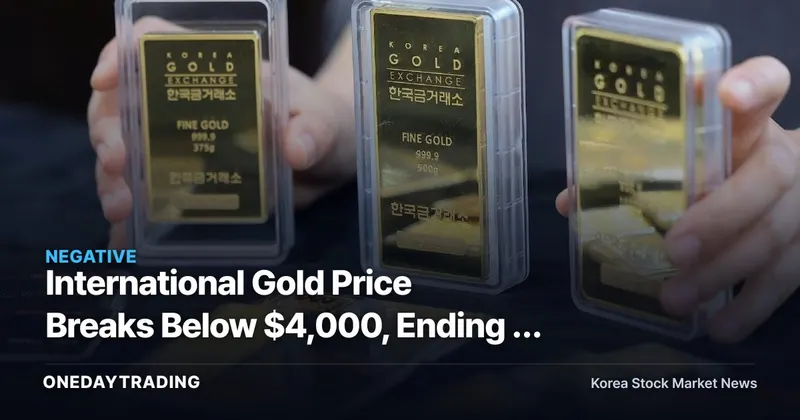
International spot gold prices have fallen below $4,000 per ounce, dropping more than 3% in a single day. Down 28% from this year's January peak, gold has entered a technical bear market, and Goldman Sachs lowered its target from $4,900. The crux of the matter is a regime shift in which rising rates and a stronger dollar are weighing on gold's appeal as a safe-haven asset.
How It Unfolded
The trigger for gold's sharp drop (plunge) was the possibility of further rate hikes by the U.S. Federal Reserve, accompanied by a strengthening dollar. Because gold is a non-interest-bearing asset, a rise in real interest rates increases the cost of holding it (the opportunity cost). As the relative appeal of interest-bearing assets such as bonds and deposits rises, investment capital structurally flows out of gold.
This was compounded by dollar strength. Since international gold is traded in dollars, a rise in the dollar's value makes gold more expensive for holders of non-dollar currencies, reducing demand and exerting downward pressure on prices. The 28% decline from the January high exceeds the threshold of a 20%-plus correction that typically defines a bear market, signaling a trend reversal in a bull market that had run for nearly three years.
Goldman Sachs lowering its $4,900 target also weighed on market sentiment. When an institution that had been leading the bullish case lowers its outlook, chasing buy interest tends to shrink while profit-taking supply increases.
Structural Background
The recent bull market was the result of central bank gold purchases, geopolitical instability, and inflation-hedge demand all working simultaneously. However, with inflation slowing only gradually and expectations of rate cuts receding, the very rationale of an inflation hedge has weakened. In a phase where the safe-haven premium drains away, gold can quickly surrender the price gains it had enjoyed.
Impact on Stocks and Industry Sectors
- Korea Zinc: It recovers gold and silver as by-products during the zinc and lead smelting process, so its precious-metals sales are reflected in earnings. A decline in gold prices is a direct drag on margins in its precious-metals segment.
- Hyundai Motor and Kia: The dollar strength that pulled gold prices down tends to come with a weaker won, which can work favorably for auto export stocks in terms of export pricing and translation gains.
- Samsung Electronics and SK Hynix: Semiconductor exporters with a large share of dollar-denominated settlements are also classified as beneficiaries on the opposite side of gold's weakness, thanks to the exchange rate effect.
- Gold-linked ETFs and physical investment: For products that track the gold price, a decline in the underlying asset translates directly into valuation losses, carrying a high risk of heightened short-term volatility.
Bullish vs. Bearish Scenarios
The bearish scenario is one in which the Fed maintains its tightening stance and the dollar strengthens further. If real interest rates keep rising, gold could face additional downward pressure — let alone a recovery back to $4,000.
Conversely, variables for a bullish reversal remain. If an economic slowdown or financial instability comes to the fore and safe-haven demand revives, or if central bank purchases resume, a perception of an oversold decline could trigger a rebound. It is also hard to rule out that Goldman Sachs' target cut could stir short-term bottom-fishing sentiment. That said, given that this is a correction following a steep rally, valuation burden remains a variable.
Investor Action Points
- Treat the rate decision, dot plot, and the tightening tone of Powell's remarks at the next Fed meeting as the primary indicators to watch.
- Track the dollar index alongside the won-dollar exchange rate to check whether gold's weakness translates into gains for export stocks.
- For companies with a share of precious-metals revenue, such as Korea Zinc, watch for changes in precious-metals segment margins at the next earnings release.
- Holders of gold ETFs and physical gold should use whether prices recover $4,000 and whether a rebound is accompanied by trading volume as benchmarks for a phased response.
This article is content automatically summarized and analyzed based on the original news report. View original (Maeil Business Newspaper, Securities)