
What Investor A’s Case Reveals About Wrap Accounts
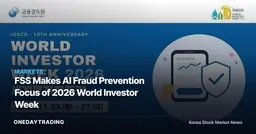
On 2026-11-16, the Financial Supervisory Service outlined major wrap-account dispute cases and precautions for investors. The message from Investor A’s case is straightforward: once investors transfer shares they own into a wrap account, they also entrust the brokerage with deciding whether to retain or sell them.
In the guidance reported by Yonhap News securities reporter Kang Su-ryun, brokerages’ internally established allocation limits for each stock (ticker) ranged from 20∼80%. This means that even identically named products do not necessarily have the same investment scope. Investors must check the actual limit for each wrap account, as the materials did not specify limits for individual products.
Transferring Existing Shares Is Not Simply a Change of Custody
A wrap account is a discretionary investment-management agreement under which an investor delegates all or part of the investment decision-making process. When investors transfer existing shares into a wrap account, the assets are not merely held separately while ownership is retained; investment decisions concerning those shares also fall within the delegated authority. A stock (ticker) that the investor intended to keep may therefore be sold during portfolio management.
An easily overlooked distinction is the difference between transferring assets and giving management instructions. Simply placing existing shares in the account does not automatically guarantee that a particular stock (ticker) will continue to be held. To prevent an unwanted sale, investors should confirm during the contracting process what restrictions may be placed on the acquisition and disposal of specific securities.
20∼80% Allocation Limits Are Brokerage Policies, Not Legal Rules
Separately from Investor A’s case, the 20∼80% range reported by Yonhap News represents allocation limits established independently by brokerages for risk management. As wrap accounts are not subject to statutory limits on exposure to each stock (ticker), this range should not be understood as a uniform legal standard. Investors need to verify the actual criteria applicable to the product they plan to purchase.
Management restrictions can help control concentration in a particular stock (ticker). Removing or broadening those restrictions gives the manager greater discretion but also increases the potential for investment decisions to become concentrated in a specific stock (ticker). The guidance also noted that branch-managed wrap accounts carry greater investment risk because they concentrate investments in a small number of stocks.
Account Termination and Liquidation May Take Longer Than a Sale
If products held in a wrap account cannot readily be sold in real time, terminating or liquidating the account may also be delayed. Giving notice of termination and completing liquidation by disposing of the underlying assets are not the same process. If those assets remain difficult to sell, the account may not be closed when the investor wants.
Under this structure, the terms governing asset disposal are as important as returns. Before signing up, investors should check which products may be included and how termination and liquidation are handled when the account contains difficult-to-sell assets. Because the materials did not provide liquidation terms for individual wrap accounts, investors must review their contracts directly.
Fees and Taxes Are Separate Costs
Wrap-account fees typically include upfront or deferred fees, performance fees, and early-termination fees. Although trades in Korean stocks do not incur brokerage commissions, this does not mean wrap-account management is entirely free of charge. As no product-specific fee rates were provided, investors should separately verify each fee component and the conditions under which it applies.
Wrap accounts investing in overseas stocks may incur capital gains tax on trading profits and dividend income tax for each stock (ticker), among other taxes. Assuming that the absence of brokerage commissions on Korean stocks also applies to tax liabilities on overseas stocks will produce an inaccurate cost assessment. The cost items requiring review differ between Korean and overseas stocks.
Contract Terms Matter More Than the Impact on the Financial Industry Sector
- Brokerages: This guidance alone provides no basis for assessing any particular brokerage’s earnings or share-price outlook. The brokerages involved and the total number of dispute complaints were not disclosed.
- Wrap-account investors: Authority to sell existing shares, allocation limits for each stock (ticker), and termination and liquidation terms are contractual factors that directly affect investment outcomes.
- Overseas-stock investors: Taxes on trading gains and dividends should be assessed separately from brokerage commissions on Korean stocks.
Wrap-Account Terms to Check Before Investing
- Confirm who decides whether existing shares transferred into the account may be sold.
- Review the brokerage’s allocation limit for each stock (ticker) and the scope of restrictions an investor may request.
- Distinguish the conditions applying to upfront or deferred fees, performance fees, and early-termination fees.
- Confirm the procedures for termination and liquidation if products held in the account are difficult to sell.
The Key Variable Is the Scope of Management Discretion
Maintaining management restrictions gives investors some ability to limit unwanted concentration. Removing or broadening those restrictions expands the brokerage’s discretion but also increases investment risk. The difference becomes more pronounced in structures such as branch-managed accounts that concentrate holdings in a small number of stocks.
The next thing to examine is not the market outlook but the contract’s actual wording. Investors should review restrictions on selling existing shares, allocation limits for each stock (ticker), fee structures, taxes on overseas stocks, and termination and liquidation terms. The FSS guidance is essentially a warning to focus less on the wrap account’s name and more on the scope of decision-making authority being delegated.
This article was automatically summarized and analyzed from the original news report. View the original article (Yonhap News)