What Changes
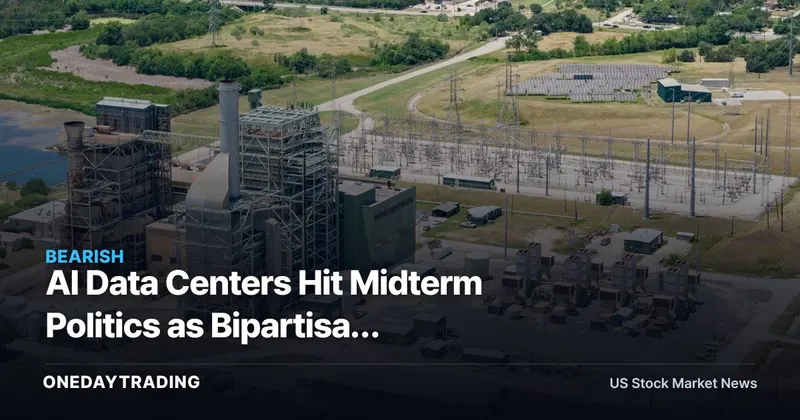
The AI trade has treated data center expansion as a capacity race. This report says the constraint is becoming political. When opposition to AI data centers turns into a campaign message, the risk shifts from abstract community resistance to a formal election issue that can affect zoning, permitting and utility approvals.
That matters because AI infrastructure is a chain, not a single stock story. GPU demand depends on data center deployment. Data center deployment depends on sites. Sites depend on state and local tolerance. A bipartisan rallying cry in a growing number of states tells investors that resistance is not confined to one party or one geography.
The tape has already priced a long runway for artificial intelligence capex. What it has less room for is friction that slows the physical buildout. Ads and elections do not cancel demand, but they can extend approval cycles and raise the political cost of aggressive expansion.
By the Numbers
The hard number in the report is the calendar: less than three months remain before the midterm elections. That compresses the window for AI data center opposition to become campaign material before voters go to the polls.
The other measurable signal is breadth. CNBC says the backlash is showing up in a growing number of states and has become bipartisan. For a market accustomed to treating AI as a national growth story, state-level resistance is the channel investors need to track.
Winners & Losers
- AI infrastructure developers: the direct risk is slower site approval, which can delay revenue tied to new data center capacity.
- Chip and hardware suppliers: demand remains tied to AI buildout, but political delays can shift shipment timing even if end demand stays intact.
- Utilities and power-exposed infrastructure: local election pressure can complicate the approval path for projects connected to data center expansion.
- Communities and political challengers: opposition gains leverage when it moves from complaints into campaign ads and midterm races.
Risk Check
- Fact base: the report identifies political backlash but does not name affected companies, states or project sizes.
- Counter-scenario: bipartisan concern can also force clearer standards, allowing compliant projects to proceed with less uncertainty.
- Market risk: AI-linked valuations are more exposed if investors start discounting longer buildout timelines.
- Key checkpoint: track midterm campaign messaging and state-level policy proposals before the election.
Bottom Line
AI data center demand is not the issue; political permission is. If the backlash remains campaign rhetoric, the sector can absorb it. If ads turn into state restrictions after the midterms, the AI infrastructure story becomes less about who can buy chips and more about who can get capacity approved.
📊 Analysis
Signal Bearish
Why Bipartisan election-season opposition creates policy and permitting risk for AI data center expansion, a negative catalyst for the broader AI infrastructure chain.
This article was independently written by OneDayTrading from public reporting. Read the original (CNBC)