At a Glance
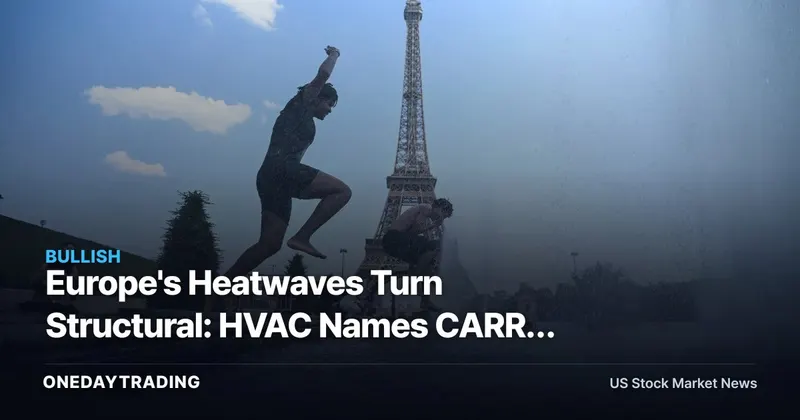
Temperature records fell across Europe this week, with several countries issuing high-level danger-to-life warnings. The investable read is not the weather — it is the shift from one-off event to recurring baseline, which converts cooling, grid and insurance exposure from seasonal noise into a structural demand and cost theme.
Why It Matters Now
When extreme heat stops being an anomaly and becomes an expected annual condition, capital allocation follows. A continent that historically under-installed air conditioning — residential AC penetration in much of Europe sits far below U.S. or Asian levels — faces a multi-year retrofit cycle. That is order backlog, not a headline. Cooling equipment makers sell into both replacement demand and new climate-adaptation building codes, a durable mix that smooths the cyclicality industrial investors usually penalize.
The cost side is the mirror image. Heat stresses power grids at peak demand, raising utility load and the risk of curtailment, while crop and wildfire damage flows straight into property-and-casualty loss ratios. Insurers reprice premiums upward in response, but repricing lags the claims, compressing near-term combined ratios. The same heat that lifts an HVAC order book pressures a reinsurer's underwriting margin.
For investors, the danger is paying a thematic premium for what is still weather-dependent revenue. A mild summer resets the order pipeline, and adaptation spending competes with tight European fiscal budgets.
FAQ
- Why does heat help HVAC stocks specifically? Low European AC penetration plus mandated cooling in new construction creates a long replacement-and-install runway, not a single-season spike.
- Who is on the losing side? Property and casualty insurers and reinsurers absorb heat-linked crop, fire and infrastructure claims before premium repricing catches up.
- Is this priced in? Partly — but recurring records argue the demand is structural rather than a transient summer trade.
- What could break the thesis? A cool summer or stalled adaptation budgets would deflate order momentum quickly.
Related Stocks & Sectors
- Carrier (CARR) — pure-play cooling exposure leveraged to European retrofit demand.
- Trane Technologies (TT) — commercial HVAC and climate systems with backlog visibility.
- Johnson Controls (JCI) — building-efficiency and cooling systems tied to adaptation spend.
- Insurers and reinsurers — rising heat-linked catastrophe losses pressure underwriting margins.
- European utilities — peak cooling load lifts demand but strains grid reliability.
What to Watch
- Next HVAC earnings: European order growth and backlog commentary, not just headline revenue.
- Reinsurer combined ratios and any mid-year heat-related loss disclosures.
- EU building-code and cooling-mandate policy moves that fund the retrofit cycle.
- Summer temperature trajectory — a mild season is the fastest way to reset demand.
Overall Outlook
The bull case rests on recurrence: each record summer hardens the argument that European cooling demand is a multi-year capital cycle, favoring HVAC makers with backlog and pricing power. The risk is timing and weather dependence — order books that swell on a heatwave can flatten on a cool year, and adaptation budgets are not guaranteed. Treat this as a structural tilt to monitor through order data, not a one-summer trade.
Market data check: CARR
CARR last traded near $73.59 (-3.17%). Our composite signal — blending price momentum and news flow — reads 🟡 neutral. Price momentum scores 25/100 (soft).
Data as of publication. Price via market feeds; for reference only, not investment advice.
📊 Analysis
Signal Bullish
Why Recurring record heat creates a structural multi-year cooling and climate-adaptation demand cycle that favors HVAC equipment makers.
This article was independently written by OneDayTrading from public reporting. Read the original (CNBC)