Summary
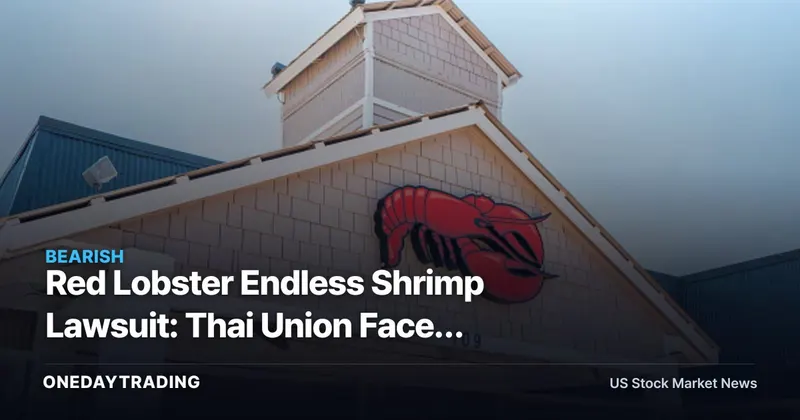
A creditor lawsuit targeting Thai Union — Red Lobster's controlling shareholder and primary shrimp supplier — alleges the seafood conglomerate treated the Endless Shrimp promotion as a value-extraction mechanism rather than a customer traffic driver, accelerating the chain's 2024 bankruptcy. The case reframes what looked like a marketing blunder into a potential governance failure, and the distinction matters for anyone holding equity in casual dining operators where major suppliers sit on the cap table.
The Full Story
The Ultimate Endless Shrimp promotion became a recurring liability because Red Lobster moved it from a limited-time offer to a permanent menu fixture in 2023 — precisely when shrimp input costs were rising and the chain's traffic mix was shifting toward value-seeking diners who lingered longest and consumed the most. That cost structure mismatch is the core of casual dining's promotional trap: margin compression accelerates when an unlimited-consumption offer meets an inflationary commodity cycle. Creditors now allege that Thai Union, which supplied that shrimp and simultaneously held a controlling ownership stake, had full visibility into the unit economics and chose to push volume rather than pull the promotion.
The lawsuit's language — describing the promotion as a car crash and alleging Thai Union doubled down on a campaign to squeeze out every drop of value — signals that creditors are pursuing a dual-role conflict-of-interest theory. As both supplier and controlling shareholder, Thai Union stood to benefit on the procurement side even as the restaurant bled cash on the retail side. That is a structurally different allegation from ordinary mismanagement, and if creditors can demonstrate Thai Union prioritized supplier revenue over restaurant viability, the litigation exposure extends well beyond standard bankruptcy clawback territory.
Structural Background
Red Lobster had been a private-equity and then Thai Union-controlled entity for years before the bankruptcy filing, meaning its governance disclosures were thin relative to a publicly traded peer. Casual dining chains operating under supplier-shareholder ownership structures are not unique — similar arrangements exist across food-service, where protein producers, distributors or franchise operators accumulate equity stakes in restaurant brands. The Red Lobster case is emerging as a template for creditor litigation strategy in those situations, particularly as post-pandemic casual dining traffic has proven structurally weaker than pre-2020 baselines, leaving less margin cushion to absorb promotional errors.
Stock & Sector Ripple
- DRI (Darden Restaurants): As the largest publicly traded casual dining operator — Olive Garden, LongHorn Steakhouse — Darden benefits directly from Red Lobster's ongoing retrenchment. Restaurant closures and brand damage remove a seafood-focused competitor for the tourist and family-occasion dining occasion. Darden's own promotions are strictly time-limited with disciplined cost modeling, which the litigation implicitly validates as the correct framework.
- EAT (Brinker International): Chili's has staged a notable turnaround in recent quarters partly by attracting former casual dining customers displaced by chain closures. The Red Lobster bankruptcy reinforces the traffic redistribution thesis that has driven Brinker's comparable-restaurant sales improvement.
- TXRH (Texas Roadhouse): Texas Roadhouse's full-service, fixed-price model with tight operational discipline stands in contrast to unlimited-consumption structures. The litigation narrative reinforces investor preference for operators with predictable ticket averages and no commodity supplier governance entanglement.
- Casual Dining Sector — Governance Discount: Any chain where a major ingredient supplier holds an equity stake now carries a litigation-precedent overhang. Investors should scrutinize ownership structures and whether promotional decisions align with the interests of restaurant-level profitability or upstream supplier volume.
Bull vs Bear Scenarios
Bull case for sector: The Red Lobster collapse is idiosyncratic — a private company with a conflicted ownership structure, not representative of well-governed public operators. If the litigation resolves quickly and confirms this as a one-off governance failure, it actually clarifies the moat that disciplined public operators like Darden and Texas Roadhouse hold over poorly structured private peers. Traffic redistribution to surviving chains compounds over 12-18 months.
Bear case: The lawsuit surfaces a broader casual dining industry risk: commodity cost volatility interacting with promotional frequency in a traffic environment that remains below 2019 visit counts for the segment. If the litigation drags, it keeps the Red Lobster brand in restructuring limbo rather than either relaunching or fully exiting — leaving market share ambiguous. Separately, if courts establish precedent that supplier-shareholders have special fiduciary exposure during distress, it could chill M&A structures across the food-service supply chain and tighten credit terms for leveraged restaurant operators.
Investor Action Points
- Track the litigation schedule for any Thai Union response or preliminary ruling — the court's framing of the dual-role conflict theory will set the precedent that matters for sector governance analysis.
- Watch Darden's next same-restaurant sales print (fiscal Q1 2027 expected late September) for explicit Red Lobster displacement commentary; management has previously flagged competitive market share gains from Red Lobster store closures.
- Audit any casual dining or food-service holding for supplier equity crossover — screen 10-K ownership disclosures and related-party transaction footnotes before the litigation accelerates investor scrutiny.
- Monitor shrimp commodity futures and Thai Union public filings (Thai SET disclosure) for any signals on legal reserve provisioning, which would quantify creditor expectations of recovery and the lawsuit's perceived strength.
Market data check: DRI
DRI last traded near $213.25 (+0.23%). Our composite signal — blending price momentum and news flow — reads 🟡 neutral. Price momentum scores 52/100.
Data as of publication. Price via market feeds; for reference only, not investment advice.
📊 Analysis
Signal Bearish
Why The lawsuit frames the Endless Shrimp promotion as deliberate value extraction by a conflicted controlling shareholder, compounding governance and sector-confidence risk for casual dining chains with supplier-equity entanglements.
This article was independently written by OneDayTrading from public reporting. Read the original (CNBC)