At a Glance
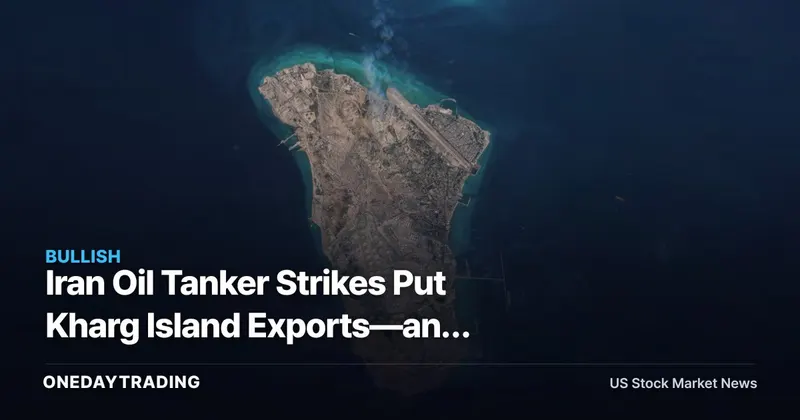
Three Iranian crude oil carriers were hit by U.S. forces on Saturday near Kharg Island, Iran’s key oil-export hub, after missiles targeted U.S. Navy warships. The immediate investor read-through is a higher geopolitical risk premium for crude, with Exxon Mobil and Chevron better positioned than transport or fuel-sensitive industries if supply disruption widens.
Kharg Island matters because the attacks occurred beside a central export point, not in an isolated maritime corridor. The event does not establish that Iranian exports have stopped, but it raises the probability that shipping, insurance and production flows become the next market variables.
Why It Matters Now
Iranian crude carriers are the direct physical link between the incident and oil pricing. Damage to three vessels near Kharg Island increases uncertainty over loading schedules, vessel availability and the willingness of operators to enter the Gulf. Those effects can lift freight and insurance costs before a measurable decline in barrels reaches refinery balance sheets.
For Exxon Mobil and Chevron, a higher crude price would generally support upstream revenue and cash generation, although the benefit depends on how much production is exposed to the price move and whether escalation damages broader demand. Refiners and airlines face the opposite mechanism: crude is an input cost, so a sustained spike would pressure margins unless fuel prices adjust quickly.
The market has already learned to distinguish a headline shock from a lasting supply loss. Saturday’s strikes confirm military action near an export hub; they do not, by themselves, quantify lost Iranian production or establish a blockade. That gap between perceived risk and verified barrels will determine whether the move becomes a brief premium or a broader repricing of energy equities.
Key Debates
- Supply disruption: The central question is whether damage remains limited to three carriers or interrupts loading and export operations at Kharg Island.
- Escalation path: Further attacks on Navy ships, tankers or port infrastructure would increase the risk premium; a pause in hostilities would compress it.
- Margin transmission: Integrated producers can benefit from higher upstream prices, while refiners, airlines and other fuel buyers absorb the first cost shock.
- Valuation: Energy stocks may discount part of the geopolitical risk quickly, leaving less upside if physical flows remain intact.
Related Stocks & Sectors
- Exxon Mobil (XOM): Upstream exposure gives earnings leverage to higher crude prices, while its integrated model provides some insulation if refining conditions weaken.
- Chevron (CVX): Chevron’s oil and gas portfolio can gain from a supply-risk premium, but the stock remains sensitive to whether the disruption produces actual lost barrels.
- U.S. integrated oil: Producers could outperform fuel-consuming sectors if crude rises without a comparable collapse in demand.
- Refiners and airlines: Higher feedstock and jet-fuel costs create margin pressure unless wholesale prices pass through rapidly.
What to Watch
- U.S. Central Command updates on the three vessels and any additional strikes near Kharg Island.
- Evidence of delayed Iranian loadings, disrupted port activity or tighter tanker availability.
- Crude futures’ response relative to energy equities: a widening oil-stock gap would signal that investors doubt the disruption’s duration.
- Insurance and freight-cost changes for Gulf shipping, which can reveal stress before official export data.
Overall Outlook
The bullish case for oil producers is straightforward: military action near a major Iranian export hub raises the chance of tighter supply and higher crude prices. The risk is equally concrete: if the three-ship strike does not impair exports, the premium can fade while energy valuations retain the escalation risk. Investors should treat the event as a live test of physical flows, not as proof of a sustained production outage.
FAQ
Why did the U.S. attack Iranian oil tankers?
Per CNBC’s report, U.S. forces hit three Iranian crude oil carriers on Saturday near Kharg Island after missiles targeted U.S. Navy warships. The report identifies the military action and location but does not provide a broader operational explanation.
What happens to oil prices after Iranian tanker strikes?
Iranian tanker strikes can raise oil prices by increasing perceived risks to exports, shipping and insurance. The lasting effect depends on whether Kharg Island loading operations or Iranian production actually lose barrels.
Which stocks benefit from higher oil prices?
Exxon Mobil (XOM) and Chevron (CVX) are direct U.S.-listed beneficiaries when higher crude prices expand upstream revenue. Refiners and airlines face the countervailing risk of higher fuel and feedstock costs.
📊 Analysis
Signal Bullish
Why Strikes near Iran’s key export hub increase the probability of a crude-supply risk premium that can support U.S. integrated oil producers, although the duration depends on verified export disruption.
This article was independently written by OneDayTrading from public reporting. Read the original (CNBC)