Oil’s Six-Week High Prices Escalation, Not Yet an Outage
Oil prices now carry a larger conflict premium, giving Exxon Mobil and Chevron a favorable crude-price backdrop while raising costs for fuel consumers. Brent crude rose 1.5% to $97.73 per barrel on Monday and briefly reached $97.93, its highest level since July 23. West Texas Intermediate, the U.S. benchmark, climbed 1.8% to $93.10, also its highest since late July.
A supply-risk premium is the extra value traders assign to oil when conflict threatens future production, processing or transportation. Monday’s move reflects that risk: U.S.-Iran attacks have reached tankers, while Saudi Aramco facilities were reportedly struck. The critical limitation is that the reporting does not quantify any resulting loss of crude supply or refinery throughput.
The distinction determines where the next move comes from. Threats can lift futures quickly, but a lasting repricing requires evidence that the physical system cannot produce, refine or move the same volume of oil. Investors therefore have two separate questions: how far the military exchange spreads, and whether it removes measurable capacity.
Tanker Strikes Put the Oil Chain Inside the Conflict
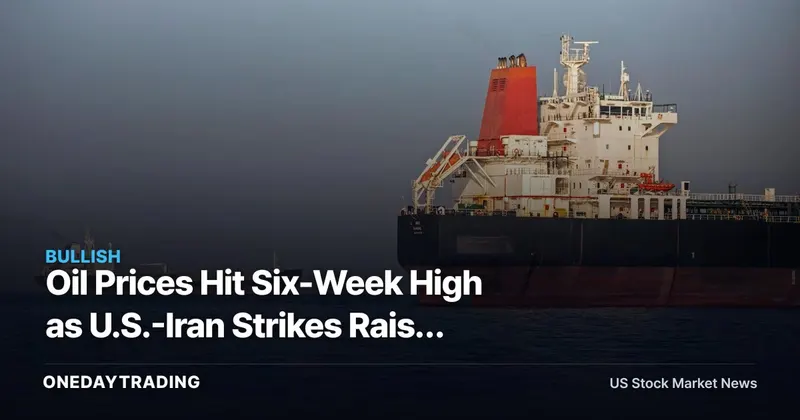
The weekend exchange directly involved both military and commercial assets. U.S. Central Command said the American military struck three Iranian oil tankers on Saturday after Iran launched ballistic missiles at two U.S. Navy warships. CENTCOM described the vessels as part of a multibillion-dollar network financing Iran’s Revolutionary Guard and its regional proxies.
Iran’s Foreign Ministry called the attacks on commercial vessels a war crime and an act of economic warfare. The rhetoric escalated again Monday after Defense Secretary Pete Hegseth wrote that the U.S. would destroy and sink Iranian oil tankers if Iran fired on American vessels. Iranian Parliament Speaker Mohammad Baqer Qalibaf responded that attacks on Iranian assets would be answered in kind.
The exchange matters because an oil barrel passes through several physical stages before it generates revenue: production, loading, shipping, refining and product distribution. Damage at any one point can tighten a different part of the chain. Tanker losses primarily threaten transportation; refinery disruption affects the conversion of crude into gasoline and diesel.
That distinction is central to the reported attack in Saudi Arabia. CNBC, citing the Financial Times, said Saudi Aramco facilities were hit Monday and that damage was being assessed at a facility in Jizan. Jizan is home to a 400,000-barrel-per-day refinery, but the reporting does not establish that the refinery itself was the damaged facility, confirm a shutdown or identify who carried out the attack.
Investors should not count the refinery’s full capacity as unavailable without an operating update. The more defensible reading is that the attack has moved infrastructure risk closer to a large refining location. Confirmation that refinery runs were reduced would turn a geographic fact into a fuel-supply event; confirmation of continued operations would remove that specific concern without ending the wider conflict risk.
The confrontation also has duration. Fighting resumed about a week before Monday’s report following roughly one month of relative calm, and the conflict had passed the six-month mark in August. A prolonged conflict increases the opportunities for new attacks, but its market impact still depends on which assets are hit and how quickly damaged capacity can operate again.
Higher Crude Helps Producers but Complicates Refining and Consumption
For upstream producers, the earnings mechanism is straightforward: a higher benchmark can increase the realized price received for unhedged barrels, lifting revenue before changes in production costs. That makes the crude move directionally supportive for U.S.-listed integrated oil companies Exxon Mobil and Chevron. The source, however, supplies no company-specific production volumes, hedging positions, operating costs or guidance, so it cannot establish the size of any earnings benefit.
Integrated companies also own refining operations, where the calculation differs. Refiners buy crude and sell products, so profitability depends on the spread between feedstock costs and prices for gasoline, diesel and other outputs rather than on crude alone. An interruption at a refining facility can reduce product supply and support fuel prices, while a crude spike that outruns product prices can compress refining economics.
The pressure is already visible to consumers. According to the source, elevated oil prices have increased the cost of gasoline and diesel, and both fuels reached record highs for a Labor Day weekend. That transmission matters beyond the energy sector because households pay more at the pump and businesses that consume fuel face higher operating expenses.
The evidence does not provide inflation, spending or corporate-margin figures, so the downstream burden cannot be quantified from this report. Still, the mechanism is concrete: sustained increases in crude and refined products redirect cash toward energy expenditure. The longer those prices remain elevated, the harder it becomes to treat the move as a short-lived trading response.
For energy equities, investors should separate price exposure from operational exposure. Higher Brent and WTI can improve the revenue environment for producers, but escalating attacks may also raise security, logistics and interruption risks across the physical oil network. A bullish commodity signal does not automatically translate into an equal stock-price benefit when the source provides no information about each company’s asset locations, cost structure or valuation.
- Exxon Mobil: The higher crude benchmarks create a potentially positive upstream revenue channel. The report contains no Exxon-specific update, so the relevance is sectoral rather than evidence of a change in company guidance.
- Chevron: Chevron receives the same directional support from stronger benchmark prices, subject to its realized pricing, production mix and costs. None of those company metrics is supplied in the reporting.
- Fuel consumers: Record Labor Day weekend gasoline and diesel prices show that the conflict premium is reaching refined products. Further increases would intensify the cost burden on households and fuel-dependent businesses.
The Next Evidence Must Come From Operations and Prices
The bullish oil case requires the conflict to keep a credible constraint on supply, refining or transportation. Further tanker attacks, verified damage that reduces operating capacity, or a broader pattern of strikes on energy infrastructure could preserve or enlarge the premium in Brent and WTI. Producers with market-linked crude exposure could benefit, while consumers would face additional fuel pressure.
The counter-scenario is de-escalation without a material operational loss. If Jizan-area facilities continue operating, no additional commercial vessels are hit and the exchange stops broadening, some of the premium could retreat even though the underlying political conflict remains unresolved. That would test how much of the six-week high reflected physical scarcity and how much reflected the probability of future disruption.
- Jizan operating updates: Check the next Saudi Aramco or official statement for the identity of the damaged facility, its operating status and any change in throughput. The relevant metric is verified capacity unavailable, not the nearby refinery’s 400,000-barrel-per-day nameplate capacity.
- Commercial-vessel attacks: Monitor whether the confrontation remains limited to the three Iranian tankers identified by CENTCOM or reaches additional vessels. The number of affected ships and any resulting transport interruption would sharpen the supply assessment.
- Benchmark follow-through: Use Brent’s $97.93 intraday high and WTI’s reported $93.10 level as immediate reference points. Sustained strength around or above them would show that traders continue to assign a substantial premium to escalation.
- Gasoline and diesel: Examine the next fuel-price readings after their record Labor Day weekend levels. Continued increases would confirm that elevated crude and refining risk are still passing through to end users.
Why did oil prices rise to a six-week high?
Brent and WTI advanced after the U.S. and Iran exchanged attacks involving naval vessels and Iranian oil tankers, while Saudi Aramco facilities were reportedly hit. The events increased the perceived probability of disruption across oil transportation and processing.
Was the 400,000-barrel-per-day Jizan refinery hit?
The supplied reporting does not establish that. It says damage was being assessed at a facility in Jizan and separately notes that the Saudi city is home to a 400,000-barrel-per-day refinery.
Which U.S. stocks could benefit from higher oil prices?
Exxon Mobil and Chevron could benefit through higher realized crude prices if elevated benchmarks persist. The report contains no company-specific operating or financial data, so the magnitude of that benefit must be tested against their next earnings results and guidance rather than inferred from Monday’s futures move alone.
📊 Analysis
Signal Bullish
Why Higher crude prices and rising supply risk can support U.S. oil producers, though no volume of disrupted production or refining throughput has been confirmed.
This article was independently written by OneDayTrading from public reporting. Read the original (CNBC)