What Changes
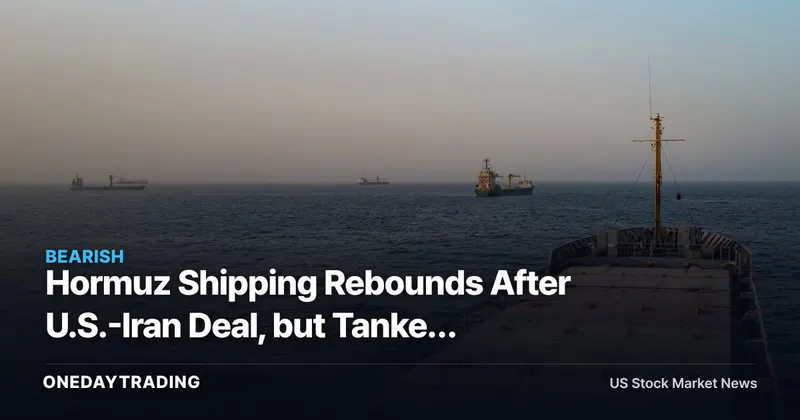
The interim deal removes the acute diversion trigger that had forced vessels around the Cape of Good Hope, a reroute that extends voyage times materially and mechanically shrinks effective fleet supply. As ships return through Hormuz, per-voyage costs fall and tonne-mile demand contracts — a direct rate headwind for tanker owners whose recent earnings power was built on exactly that supply tightness. The capital-cycle math is straightforward: fleet capacity was never physically destroyed, only displaced; displacement ends, and the rate premium with it.
The operative word in the CNBC framing is fragile, and it belongs in every valuation model. Interim agreements with Iran have a poor durability record — the geopolitical architecture required to make this one stick involves verification mechanisms, sanctions sequencing, and regional stakeholder alignment that a one-week-old deal has not yet demonstrated. Until war-risk underwriters — not diplomats — reduce their surcharges, the physical economy of Hormuz transit has not actually normalized. Major oil buyers with Gulf exposure, including integrated majors with refining operations tied to Hormuz crude flows, will maintain contingency routing plans that add cost and complexity.
By the Numbers
The source does not publish specific freight-rate figures, but the directional logic is well-defined by the underlying capacity math: every additional voyage routed through Hormuz rather than around Africa eliminates weeks of transit time and releases effective vessel supply back into the market. Tanker companies currently trading at multiples reflecting crisis-era day rates carry the most mean-reversion risk in a genuine normalization. The pace is everything — gradual if confidence remains fragile, sharp if a durable framework hardens — and that pace is the variable FRO, STNG, DHT, and INSW investors need to price over the next two to three quarters.
Winners & Losers
- XOM, CVX: Lower Hormuz transit risk modestly reduces logistics cost and supply uncertainty for Gulf-exposed upstream and refining operations — a directional positive, though not a primary earnings driver at current scale.
- FRO, Frontline: As the largest crude tanker operator by fleet value, Frontline carries the most concentrated exposure to rate normalization; crisis-era earnings reset lower if diversion unwinds faster than the market expects.
- STNG, Scorpio Tankers: Product tanker rates track crude dynamics with a lag; a sustained Hormuz reopening eases refined-product shipping tightness across the Middle East corridor.
- DHT, INSW: Smaller-float pure-play tanker names with high earnings beta to rate moves — upside in a deal collapse, maximum pain in a clean normalization.
- Oil-price complex (XOM, CVX as proxy): Reduced Hormuz risk gently softens the geopolitical supply-fear premium embedded in crude, a secondary headwind for upstream revenue per barrel.
Risk Check
- Interim-deal fragility: Any Iranian escalation — enrichment violations, proxy-force activity, sanctions breach — reignites the crisis premium overnight; the deal has no track record yet.
- Insurance lag: War-risk underwriters adjust surcharges slowly and conservatively; elevated insurance costs persist even after political signals improve, compressing carrier net margins longer than spot rates suggest.
- Fleet repositioning delay: Vessels that diverted to avoid Hormuz take weeks to redeploy commercially; supply normalization is not instantaneous, which limits near-term rate downside and may give tanker bulls a false sense of security.
- Valuation compression risk: If tanker stocks are priced for sustained elevated rates and Hormuz traffic normalizes durably, earnings-multiple contraction arrives before the next catalyst — a painful sequence for momentum holders.
Bottom Line
The Hormuz recovery is a genuine de-escalation signal, but it is priced more optimistically in political headlines than in physical shipping economics. Tanker investors should treat the current lull as a rate-compression risk in progress rather than an all-clear. The upside case — deal breakdown, rerouting resumes, rates spike — is only partially embedded in current valuations. The concrete checkpoints: whether war-risk insurance surcharges actually decline over the next four to six weeks (the underwriter verdict, not the diplomatic one), and whether the interim deal advances toward a verifiable permanent framework before the next IAEA inspection cycle. Until insurers move, the freight-market recovery remains a headline, not a balance sheet.
Market data check: FRO
FRO last traded near $37.63 (-2.18%). Our composite signal — blending price momentum and news flow — reads 🟡 neutral. Price momentum scores 33/100 (soft).
Data as of publication. Price via market feeds; for reference only, not investment advice.
📊 Analysis
Signal Bearish
Why Hormuz shipping recovery expands effective tanker supply and compresses the crisis-rate premium that drove tanker-stock earnings, with fragile confidence preventing a clean all-clear for oil supply chains.
Tickers$FRO$STNG$DHT$INSW$XOM$CVX
This article was independently written by OneDayTrading from public reporting. Read the original (CNBC Markets)