What Changes
The headline figure is eye-catching, but the deeper signal for investors is about how modern fortunes are built. Musk's valuation is overwhelmingly a function of his ownership stakes in Tesla, SpaceX and xAI, not liquid assets. That means his net worth rises and falls with market sentiment, growth expectations and, in Tesla's case, the success of robotaxi, energy storage and AI-driven autonomy narratives.
When a single person's equity-linked wealth dwarfs that of the next-richest founder, it underscores how concentrated value creation has become around a handful of technology and AI platforms. For retail investors, the practical takeaway is that the same forces inflating founder wealth — premium valuations on future AI and automation cash flows — also drive the volatility in the stocks they may hold.
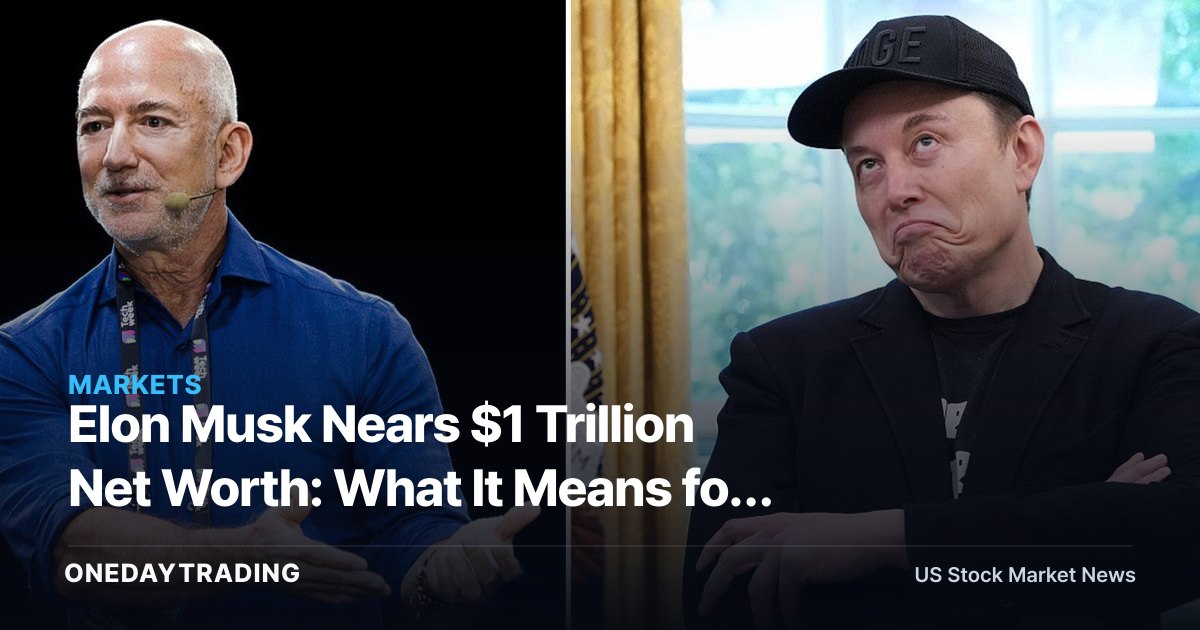
It also reframes the Bezos comparison: Amazon built its founder's fortune over decades of e-commerce and cloud dominance, yet that base now trails Musk's multi-company, AI-tilted portfolio. The shift highlights where the market is currently assigning the richest growth multiples.
By the Numbers
A roughly $1 trillion valuation for one individual is a first in recorded wealth history, and the point that Bezos is closer in dollar terms to the average American than to Musk illustrates the scale of the gap. Because these figures are mark-to-market estimates, a sharp move in Tesla shares can add or erase tens of billions in a single session — a reminder that headline wealth is a valuation, not a guarantee.
Winners & Losers
- TSLA — Core driver of Musk's wealth; upside tied to AI, autonomy and energy, but exposed to valuation and demand risk.
- AMZN — Bezos's anchor asset; steady cloud and retail engine, though growth multiple now trails AI-centric peers.
- NVDA — Benefits from the AI-platform premium fueling these founder fortunes.
- Broad tech/AI sector — Wealth concentration mirrors capital crowding into a narrow group of mega-cap names.
Risk Check
- Paper wealth is volatile — a Tesla drawdown could shrink the figure rapidly.
- Concentration risk: market leadership resting on few stocks raises index fragility.
- Regulatory and political scrutiny of extreme wealth and big tech could intensify.
- AI and autonomy growth assumptions may prove optimistic, pressuring premium valuations.
Bottom Line
Musk's near-trillion-dollar fortune is a striking symbol of how AI and automation are concentrating market value, offering upside for believers in his platforms — but the same equity dependence that built it makes it, and the stocks behind it, vulnerable to a sentiment reversal.
📊 Analysis
Signal Neutral
Why The story is about wealth ranking and valuation, not a specific catalyst that clearly moves Tesla shares up or down.
This article was independently written by OneDayTrading from public reporting. Read the original (Yahoo Finance)