What Changes
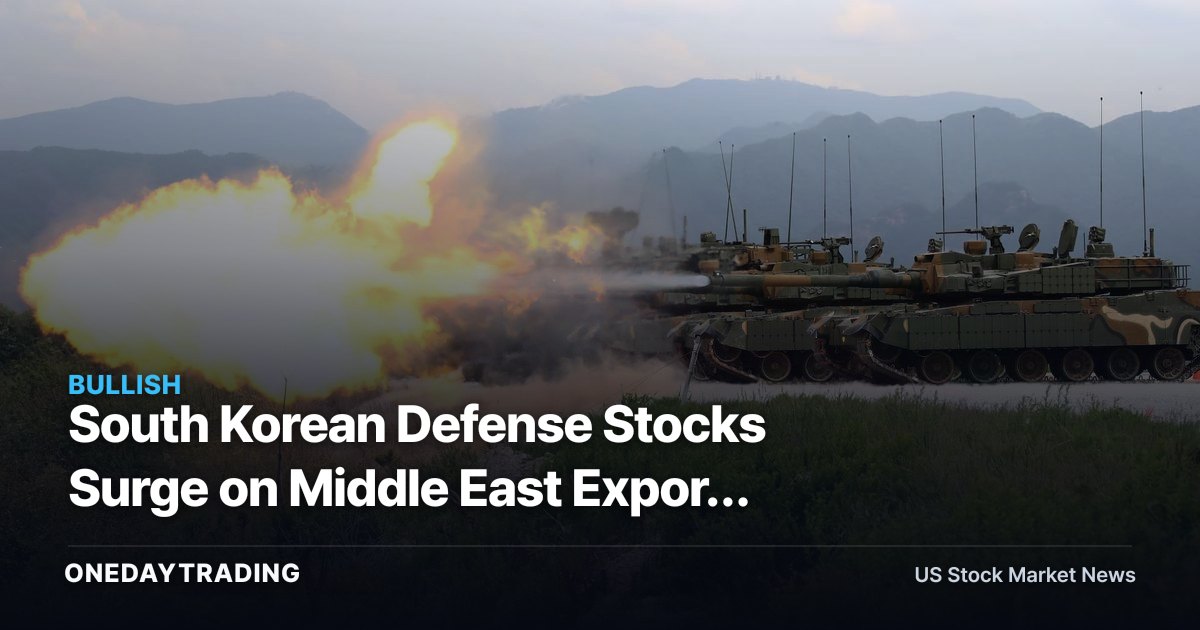
The core shift here is about who fills a sudden, war-driven demand gap. When a regional conflict exposes shortfalls in air and missile defense, ammunition depth and artillery, buyers move toward suppliers who can deliver at scale and on a short timeline. South Korea has built exactly that reputation, with a defense industrial base geared for volume production and rapid fulfillment rather than the multi-year backlogs that constrain many Western primes.
For investors, the read-through is that Middle East procurement budgets are likely to rise, and Korean exporters are positioned as price-competitive, quick-turnaround alternatives. That is a structural tailwind layered on top of an already strong export cycle, and it broadens the customer base beyond Korea earlier wins in Eastern Europe.
The important nuance is that a stock surge on export prospects is a re-rating of expectations, not yet of earnings. The gap between a pipeline of opportunities and booked, financed, deliverable orders is where the risk sits.
By the Numbers
The source frames the catalyst qualitatively — numerous export pipelines into the Middle East — rather than with a specific contract value or backlog figure, so the move is sentiment and expectation driven. That makes the next hard data points the ones that matter: signed memoranda, firm order values, and updated backlog disclosures in upcoming Korean defense earnings will determine whether the rally is justified.
Winners and Losers
- Korean defense exporters — direct beneficiaries; revenue mix is increasingly export-weighted, and Middle East demand expands the addressable market for artillery, missiles and munitions.
- Korea equity proxies (EWY) — broad exposure to the theme for international investors without single-name access to Seoul-listed defense shares.
- U.S. defense primes (LMT, RTX, NOC) — mixed: higher global defense budgets lift demand overall, but Korean competitors increasingly undercut them on price and delivery speed in contested export tenders.
- Munitions and air-defense suppliers — favored end-markets, since the conflict highlighted interceptor and shell consumption rates.
Risk Check
- Pipeline-to-contract conversion can be slow or partial; geopolitics and financing can stall deals after headlines fade.
- The rally prices in optimism, leaving valuations exposed if order news disappoints.
- A durable Middle East de-escalation would cool the urgency behind new procurement.
- Currency and input-cost swings can compress export margins even on rising volumes.
Bottom Line
The demand logic is credible — conflict-driven restocking favors suppliers who deliver fast and cheap, and Korea fits that profile — but the shares are moving on expected pipelines rather than confirmed contracts. The signal to track is conversion: firm order values and backlog updates in the next earnings cycle, not the headline surge itself.
Market data check: EWY
EWY last traded near $211.45 (+7.09%). Our composite signal — blending price momentum and news flow — reads 🟡 neutral. Price momentum scores 95/100 (firm).
Data as of publication. Price via market feeds; for reference only, not investment advice.
📊 Analysis
Signal Bullish
Why Post-Iran-war Middle East restocking opens new export pipelines for South Korean arms makers, a demand-led catalyst for defense shares.
This article was independently written by OneDayTrading from public reporting. Read the original (CNBC)