Key Takeaways
SpaceX converting its Colossus data center into a rentable compute platform turns a captive AI cluster into a merchant supplier, validating the thesis that GPU capacity is the scarce input of the AI build-out. The headline beneficiary is the chip supply chain, while incumbent GPU landlords face a deep-pocketed new competitor.
What Happened
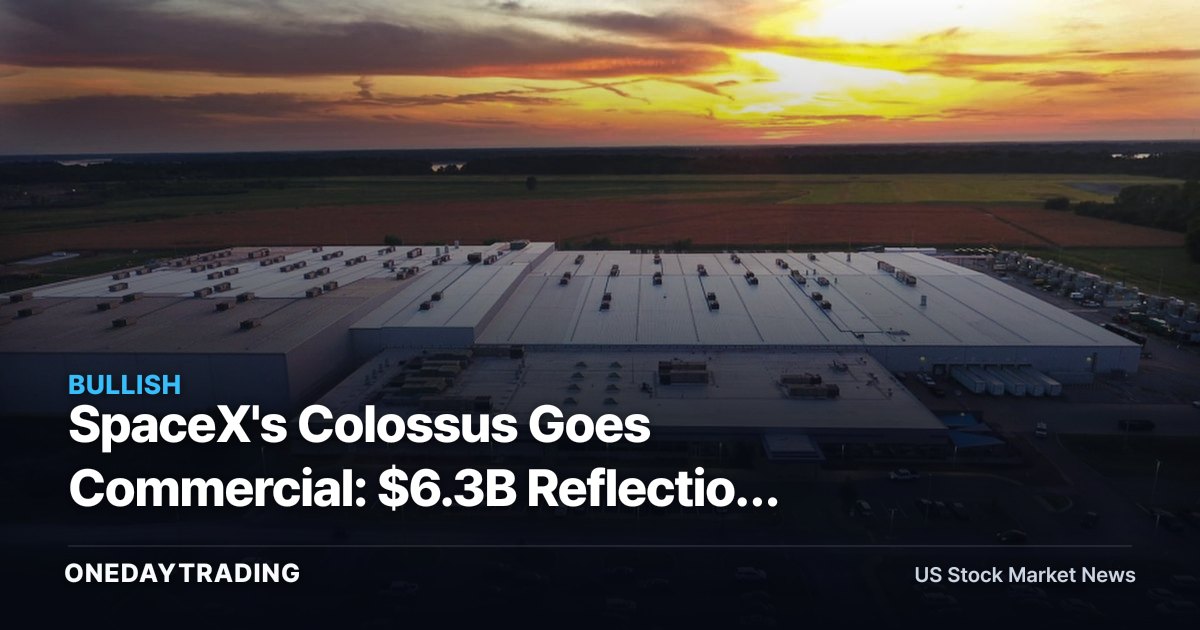
SpaceX has begun selling computing capacity from its Colossus data center, landing a contract with open-source AI startup Reflection valued at up to $6.3 billion. The same platform has recently signed deals with Anthropic, Google and the coding-tool company Cursor.
The move reframes Colossus from an internal asset into a commercial neocloud — a provider that rents raw GPU compute to model developers rather than selling finished software. A single multi-year contract reaching $6.3 billion underlines how large training and inference workloads have become, and how willing well-funded startups are to lock in capacity years ahead of demand.
Background and Context
Frontier model training is bottlenecked less by ideas than by access to clustered accelerators, power and networking. That scarcity has spawned a wave of specialized GPU-rental businesses competing with the hyperscalers. When an operator with one of the largest installed clusters opens its doors commercially, it expands industry supply while intensifying price and utilization competition among existing landlords.
Market and Stock Impact
- NVDA — More commercial buyers of Colossus capacity means more sustained utilization of Nvidia accelerators and a fresh channel pulling through future GPU orders; merchant compute deepens, rather than dilutes, end demand for the chips.
- CRWV — A direct neocloud competitor; a new large-scale supplier signing Anthropic, Google, Reflection and Cursor raises the competitive bar and could pressure pricing and contract win rates over time.
- GOOGL — Named as a counterparty; sourcing external capacity signals demand outpacing internal supply, while Google also backs Anthropic, a Colossus customer, tightening its exposure to third-party compute.
- AMD — Any expansion of merchant AI compute widens the addressable market for alternative accelerators as buyers seek second-source supply and better cost-per-token.
Investor Checkpoints
- Watch Nvidia's next data-center revenue and any commentary on neocloud and merchant-compute demand as a leading indicator.
- Track CoreWeave bookings, backlog and gross-margin trends for early signs of pricing pressure from new entrants.
- Monitor whether the $6.3 billion figure reflects committed take-or-pay capacity or an upper-bound option, which changes the revenue quality.
- Follow further customer announcements from Colossus as proof of repeatable commercial traction.
Outlook
The bull case is straightforward: every new merchant compute platform converts AI ambition into hardware orders, reinforcing the accelerator supply chain. The risk is concentration and circularity — large forward commitments among a tight cluster of AI startups depend on those firms securing continued funding and translating compute into revenue. If model economics disappoint or financing tightens, multi-billion-dollar capacity contracts could prove harder to honor than to sign.
Market data check: NVDA
NVDA last traded near $209.35 (-0.64%). Our composite signal — blending price momentum and news flow — reads 🟡 neutral. Price momentum scores 45/100.
Data as of publication. Price via market feeds; for reference only, not investment advice.
📊 Analysis
Signal Bullish
Why A multi-billion-dollar commercial compute deal signals durable AI infrastructure demand that pulls through GPU and neocloud spending, even as it adds competition for incumbent landlords.
Tickers$NVDA$CRWV$GOOGL$AMD
This article was independently written by OneDayTrading from public reporting. Read the original (CNBC)