What Changes
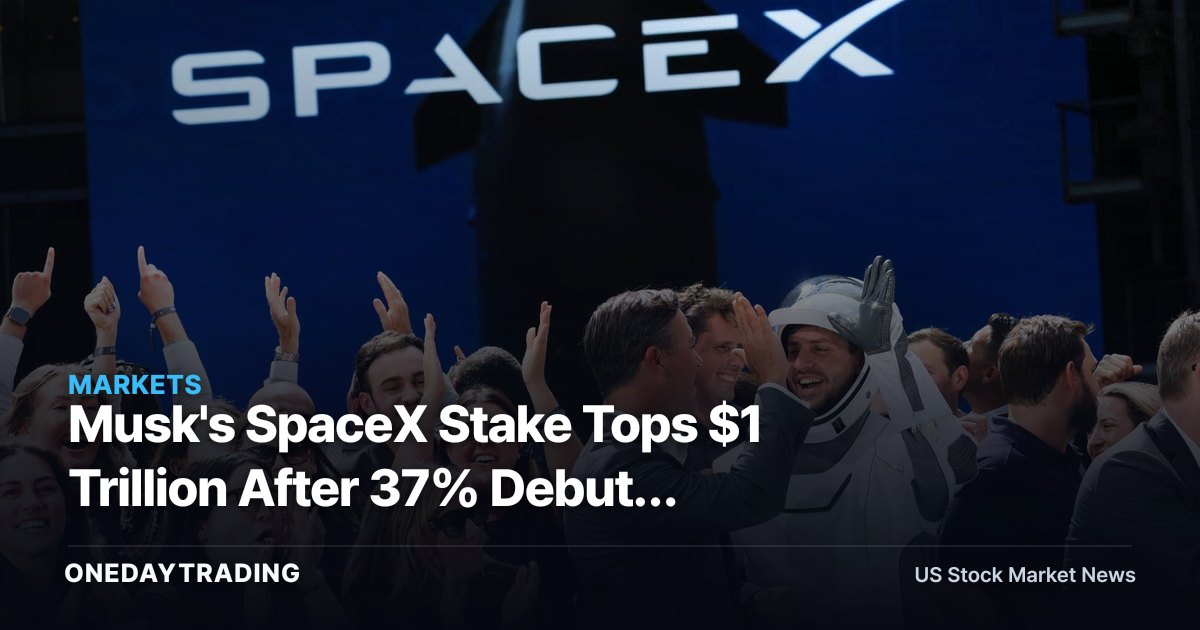
The headline number is about paper wealth, not a public listing. SpaceX is still privately held, which means retail investors cannot buy the 135 dollar shares directly. The signal that matters is repricing: a 37 percent step-up in a controlled debut tells the market that demand for exposure to launch and Starlink connectivity remains intense even at a stretched valuation.
For Tesla holders, the channel is sentiment and capital concentration. Musk's net worth is now anchored far more in an unlisted asset, which can cut both ways. A richer SpaceX strengthens the perception that Musk is a serial value creator, supporting the Tesla narrative premium. It also concentrates his borrowing capacity and attention across multiple ventures, a governance variable Tesla shareholders have flagged before.
For Alphabet and other institutional backers, the gain is a quiet mark-to-market win that sits inside far larger balance sheets, so the per-share impact on the public stock is modest rather than transformational.
By the Numbers
The two hard figures are a 135 dollar set debut price and a 37 percent advance, which together imply a roughly 185 dollar level after the move. The third is the threshold that makes the story: Musk's personal stake crossing 1 trillion dollars. Everything beyond those points is inference, and investors should treat unconfirmed total-company valuations with caution.
Winners and Losers
- Early billionaire and institutional shareholders — direct beneficiaries; their entry cost sits well below the debut price, so the step-up is realized upside on paper.
- Alphabet (GOOGL, GOOG) — a known SpaceX backer; a higher carrying value is incremental, not material to its core search and cloud earnings.
- Tesla (TSLA) — indirect; benefits from the Musk halo but carries concentration and attention risk tied to one founder across several firms.
- Listed space peers (RKLB) — sentiment tailwind as a richer SpaceX validates the launch and satellite-connectivity total addressable market.
- Legacy launch and defense names — competitive pressure intensifies as SpaceX's funding edge widens the cost gap in launch economics.
Risk Check
- Private-market marks are not liquid; a controlled debut price may not survive a broad secondary sale.
- Valuation is rich and leans on Starlink growth that is not yet a public, audited earnings stream.
- Key-person concentration: Musk's wealth and focus now span Tesla, SpaceX and other ventures.
- Read-through to listed stocks is indirect; do not treat SpaceX gains as a direct catalyst for any ticker.
Bottom Line
A 37 percent debut pop and a trillion-dollar founder stake confirm that capital still chases launch and connectivity exposure, a modest sentiment positive for Tesla and a marginal mark for backers like Alphabet. The counterweight is that none of this is directly investable, and the valuation rests on growth assumptions a private structure does not have to disclose. Track Tesla guidance and any reported SpaceX secondary-sale pricing for the next real datapoint.
Market data check: TSLA
TSLA last traded near $400.49 (+1.04%). Our composite signal — blending price momentum and news flow — reads 🟡 neutral. Price momentum scores 58/100.
Data as of publication. Price via market feeds; for reference only, not investment advice.
📊 Analysis
Signal Neutral
Why SpaceX is privately held, so the trillion-dollar stake and 37% debut create only indirect, modest sentiment read-through for listed names like TSLA and GOOGL rather than a direct tradable catalyst.
Tickers$TSLA$GOOGL$GOOG$RKLB
This article was independently written by OneDayTrading from public reporting. Read the original (CNBC)