At a Glance
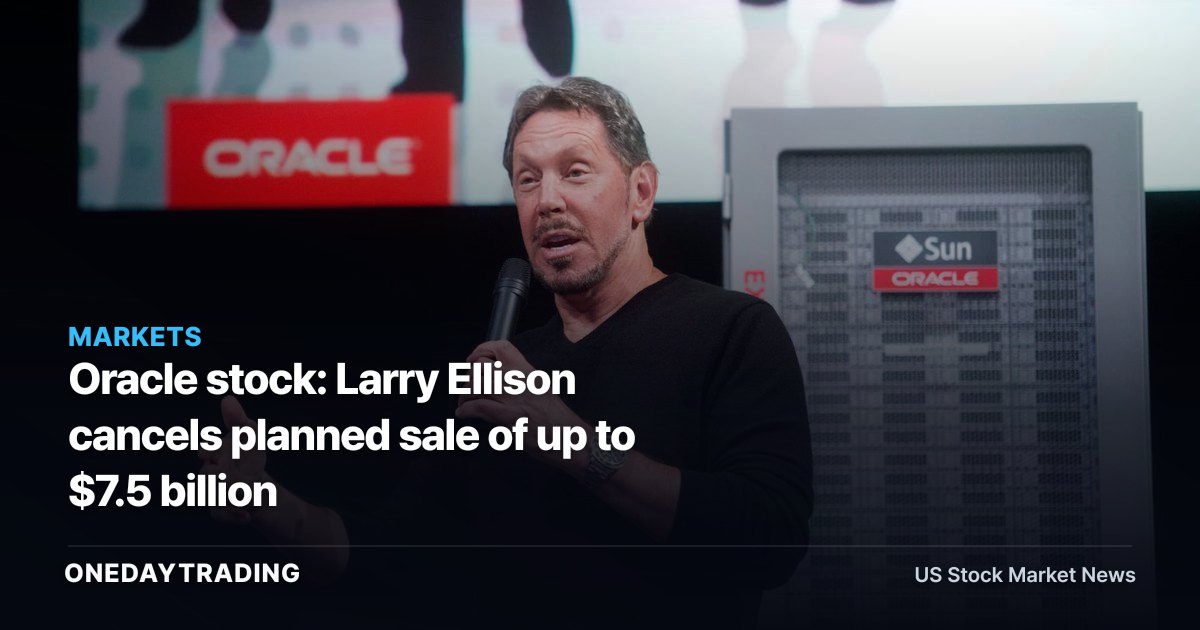
Oracle founder Larry Ellison canceled a plan to sell up to 50 million Oracle shares, valued at $7.5 billion at the current price, according to CNBC. The trading plan was adopted on June 22 and was scheduled to end on Oct. 24; no Oracle stock had been sold under the plan before it was canceled. Ellison, who is 82 years old, continues to control more than 40% of Oracle.
For investors, the immediate read-through is about share supply and control, not a newly disclosed operating result. The cancellation removes a planned source of potential selling, while leaving unanswered why the plan was withdrawn and how Oracle’s artificial-intelligence infrastructure expansion will develop against the financial pressures described in the report.
Why Ellison’s Decision Matters for Oracle Investors
A 50-million-share sale could have added a significant block of stock to the market. Its cancellation means that this specific supply event will not occur under the disclosed plan. That can change trading expectations at the margin, but it does not by itself establish a forecast for Oracle’s revenue, earnings or valuation.
CNBC reports that Ellison has no other plans to sell any of his shares, according to the Saturday news release. Because he controls more than 40% of Oracle, his stated intention keeps the company’s ownership structure and founder exposure central to the equity story. Investors can treat that statement as information about disclosed selling intentions, while recognizing that the source gives no reason for the reversal.
Oracle was founded in 1977, and CNBC describes Ellison as having helped shift the company from a legacy software maker toward artificial-intelligence infrastructure. That transition creates the core analytical tension: the strategic direction is established in the supplied evidence, but the article provides no operating metrics with which to test execution, demand or returns on investment.
The Financial and Governance Questions the Facts Leave Open
- Supply relief versus fundamentals: The canceled plan eliminates a potential sale of up to 50 million shares, but the facts do not show that this changes Oracle’s underlying business performance.
- Price pressure already visible: CNBC reports that Oracle’s stock has dropped roughly 23% this year. The decline is a confirmed market outcome, not proof of a single cause, and the supplied material does not identify what portion reflects debt, strategy or broader market conditions.
- Debt is a material unknown: The report says Oracle has amassed a hefty debt load during its AI-infrastructure pivot, but the amount of that debt is not provided. Investors therefore cannot quantify leverage, interest burden or refinancing exposure from this evidence alone.
- Control and disclosure: Ellison’s more-than-40% control means his capital-allocation decisions carry governance significance. The cancellation clarifies the status of one 10b5-1 plan, while the reason for ending it remains unknown.
What to Watch Next
- Future filings and releases: Check whether Oracle discloses another trading plan, any share sale, or additional explanation for canceling the plan that was adopted June 22 and set to end Oct. 24.
- Operating evidence for the AI pivot: At Oracle’s next company update, look for reported measures that show how the move into AI infrastructure is translating into business performance. The supplied source does not provide a date or specific metric, so those details must come from subsequent company disclosures.
- Balance-sheet detail: Investors need the debt amount and related financial information before judging whether the AI expansion improves or strains Oracle’s equity case. Those figures are explicitly absent from the current evidence.
- Ellison-linked media exposure: Ellison is the father of David Ellison, the current CEO of Paramount Skydance. Larry Ellison helped finance the initial merger between Skydance Media and Paramount and backs the proposed acquisition of Warner Bros. Discovery; that proposed deal is being held up by a state attorneys general lawsuit over antitrust concerns. The outcome is unknown, so investors should separate this unresolved media transaction from the confirmed Oracle share-plan cancellation.
The balanced view is narrow but clear. Oracle avoids the specific selling event that had been disclosed, and Ellison says he has no other plans to sell shares. At the same time, Oracle’s stock is down roughly 23% this year, the company’s debt load is not quantified in the available facts, and the reason for the cancellation is undisclosed. The next decisive information will come from filings and company reporting that can connect Ellison’s ownership decision with measurable evidence on Oracle’s AI-infrastructure execution and finances.
📊 Analysis
Signal Neutral
Why The canceled sale removes a potential supply overhang, but the facts provide no reason for the decision or confirmed change in Oracle's operating outlook.
This article was independently written by OneDayTrading from public reporting. Read the original (CNBC)