What Changes
Budget travel demand is surviving rising prices because consumers are substituting cheaper accommodation and flexible mystery itineraries for abandoning vacations altogether, according to CNBC Markets. For travel investors, that supports booking activity while challenging businesses whose earnings depend on premium room rates, upgrades and discretionary add-ons.
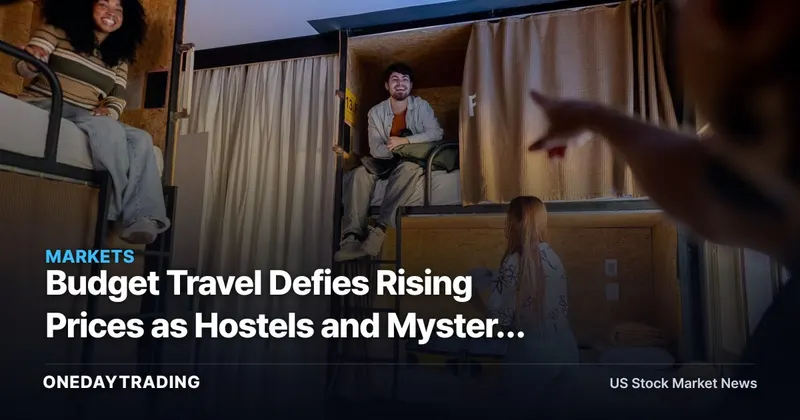
A mystery vacation is a trip whose destination or itinerary is partly concealed until late in the booking process, allowing providers to package available inventory while travelers trade control for affordability. Hostels apply the same bargain through a physical channel: lower-cost lodging preserves the trip by reducing the accommodation bill.
The behavioral shift matters because a traveler can remain active without remaining equally profitable. Higher booking volumes do not guarantee stronger revenue when customers shorten stays, choose shared rooms or surrender destination choice to obtain a lower price.
By the Numbers
The supplied CNBC Markets report provides no prices, growth rates, booking totals or company-level financial figures. That omission limits any claim about the scale of the shift, so the defensible conclusion is about consumer substitution rather than industry growth.
The decisive metrics are average daily rate, occupancy, booking value and ancillary spending. If lower-cost options lift occupancy faster than they reduce realized prices, operators gain volume; if discounting dominates, revenue can hold while margins weaken.
Winners & Losers
- Hostels: Lower accommodation costs directly match the needs of travelers protecting a trip budget.
- Mystery-vacation providers: Flexible customers can absorb unsold travel inventory, improving utilization without requiring a conventional full-price sale.
- Online travel platforms: Persistent trip demand can support transactions, although lower booking values can restrain commission revenue.
- Luxury-focused operators: Wealthier demand may remain attractive, but concentrating on premium travelers leaves less exposure to the budget segment described by CNBC Markets.
Risk Check
- The source gives no company names, preventing a defensible stock-specific revenue or margin conclusion.
- No numerical trend establishes whether hostels and mystery trips represent a broad shift or a limited niche.
- Persistent price increases can eventually exhaust substitution options and reduce trip frequency.
- Lower prices can protect occupancy while compressing revenue per traveler and service margins.
Bottom Line
Budget travelers are adapting rather than capitulating, a constructive signal for travel volumes but not automatically for profits. The bullish case requires occupancy and bookings to offset lower spending per trip; the risk is that thrift preserves customer counts while moving the income statement toward weaker unit economics.
FAQ
Why are budget travelers choosing hostels as travel prices rise?
Hostels reduce the lodging portion of a vacation budget, allowing price-sensitive travelers to keep taking trips. CNBC Markets identifies hostels as one method travelers are using as prices rise.
What are mystery vacations and why can they cost less?
Mystery vacations conceal part of the destination or itinerary, giving travelers less control over the booking. That flexibility can help providers match customers with available inventory while serving budget-conscious demand.
What does thrifty travel demand mean for travel-sector earnings?
Thrifty demand can support bookings and occupancy while lowering average booking value and ancillary spending. The next earnings checkpoint is whether operators report enough transaction or occupancy growth to offset weaker revenue per traveler.
📊 Analysis
Signal Neutral
Why Budget travelers are preserving trip demand through cheaper alternatives, but the source provides no figures showing whether higher volume offsets lower spending and margin pressure.
This article was independently written by OneDayTrading from public reporting. Read the original (CNBC Markets)