At a Glance
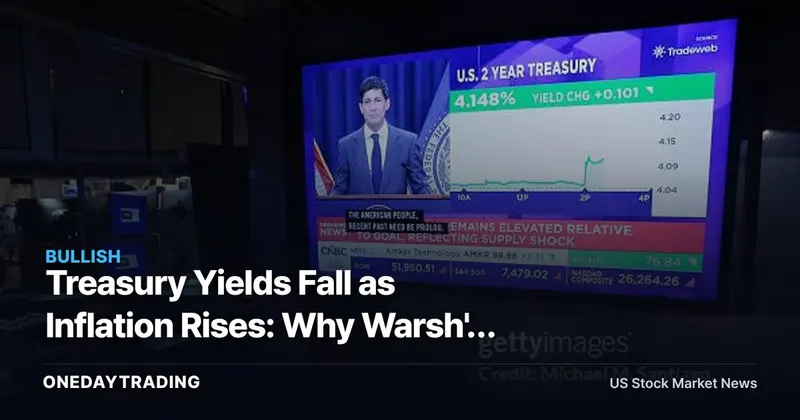
Treasury yields are falling at the same moment inflation is heating up — an inversion of the textbook reaction. The catalyst is Kevin Warsh, the new Federal Reserve chair, whose hawkish rhetoric on inflation is doing work that rate hikes normally do: anchoring long-term inflation expectations and pulling the long end lower.
Why It Matters Now
Normally a hot inflation print pushes yields up, because investors demand more compensation for holding bonds whose future coupons lose purchasing power. The opposite move tells you the bond market is repricing the reaction function, not the data. If markets believe Warsh will lean against inflation harder than the prior regime, the term premium and inflation breakevens compress, and the long end falls even as spot prices rise. That is a credibility trade.
For equities, the channel runs through the discount rate. Long-duration assets — profitless growth, high-multiple software, anything valued on cash flows years out — gain the most when long yields ease, because their present value is most sensitive to the denominator. Rate-sensitive cyclicals tied to borrowing costs, namely homebuilders and REITs, also benefit as mortgage and financing rates track the 10-year lower.
The catch: a tough-talking Fed that keeps policy rates high to defend credibility is not unambiguously bullish. A lower long end paired with a sticky front end flattens the curve, which pressures bank net interest margins and signals the market is pricing slower growth, not just lower inflation.
FAQ
- Why are yields falling if inflation is rising? Because the move reflects confidence in the Fed's resolve, not the inflation data itself — credible hawkishness lowers expected future inflation and the term premium.
- Who benefits from lower long-term yields? Long-duration growth stocks, homebuilders and REITs, whose valuations and end-demand are most rate-sensitive.
- What is the main risk? If the front end stays high while the long end falls, the curve flattens — a classic late-cycle warning that can squeeze bank margins.
- Is this a durable trend? It depends on whether incoming inflation prints validate the Fed's stance; one hot report that breaks the credibility narrative could reverse the move.
Related Stocks & Sectors
- Homebuilders — lower long yields feed into mortgage rates, supporting affordability and order books.
- REITs — financing costs and cap-rate math improve as the 10-year eases.
- Long-duration tech — high-multiple growth names re-rate higher when the discount rate falls.
- Banks — a flatter curve is a headwind to net interest margins, the counterweight to the rate-relief story.
What to Watch
- The next CPI and PCE inflation reports — whether the data validates or undercuts the Fed's tough talk.
- The 10-year Treasury yield level and the 2s10s curve shape for signs of flattening.
- Inflation breakevens and the term premium, the cleanest read on whether this is a credibility move.
- Warsh's first formal guidance and dot-plot tone for the durability of the hawkish signal.
Overall Outlook
The bull case is clean: a credible Fed chair lowers long-term inflation expectations, eases the discount rate, and lifts rate-sensitive equities without the economy taking a hike. The risk is that the same hawkishness keeps real rates restrictive long enough to slow growth, and that a single inflation surprise unwinds the credibility premium. The signal to trust is the data, not the rhetoric — the next print decides which narrative holds.
📊 Analysis
Signal Bullish
Why Falling long-term yields on Fed credibility ease the discount rate, a tailwind for rate-sensitive and long-duration equities, though curve flattening tempers the upside.
This article was independently written by OneDayTrading from public reporting. Read the original (MarketWatch)