At a Glance
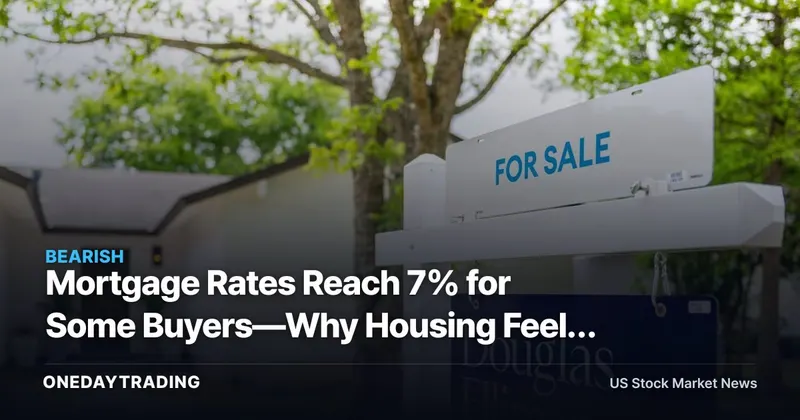
Mortgage rates reaching 7% for some U.S. buyers means housing affordability is tightening again: higher monthly payments reduce purchasing power, weaken transaction demand and pressure the revenue pipelines of mortgage lenders, brokers and other businesses paid when homes change hands.
A mortgage rate is the interest charged on a home loan, and even without a corresponding change in the property price, a higher rate raises the borrower's monthly financing burden.
Why It Matters Now
U.S. mortgage rates rose to a new high for the year, while some buyers and mortgage experts reported that 7% borrowing costs had already arrived, according to MarketWatch. The important signal is not the round number alone; it is the renewed mismatch between what sellers want and what financed buyers can afford.
A household shopping with a fixed monthly budget must respond to a higher mortgage rate by choosing a cheaper property, contributing more cash or leaving the market. Each response carries a balance-sheet consequence: sellers lose negotiating leverage, buyers preserve less liquidity, or the transaction disappears.
That behavior reaches corporate income statements through volume. Mortgage originators earn less when applications and completed loans decline, real-estate brokers lose commissions when closings slow, and home-related retailers face fewer newly moved households purchasing furnishings or renovation materials.
Key Debates
- Affordability versus urgency: Some buyers may accept a 7% mortgage rate when moving is unavoidable, but discretionary buyers have greater reason to delay.
- Price adjustment: Lower property prices or seller concessions can offset part of the financing shock, provided sellers are willing to reset expectations.
- Volume versus margin: Lenders can charge more for credit, but a higher rate does not help if application and closing volumes contract.
- Duration: A brief move near 7% would delay demand; a sustained period would deepen pressure across housing-linked businesses.
Related Stocks & Sectors
- Mortgage lenders: Fewer affordable loans can shrink originations, the operating volume that supports fee revenue.
- Real-estate brokers: Reduced buyer purchasing power threatens transaction counts and commission income.
- Homebuilders: Financing costs can weaken demand unless pricing or buyer incentives absorb the burden.
- Home-improvement and furnishings retailers: Slower household formation and fewer moves can reduce project and replacement spending.
- Residential real estate: The central risk is a frozen market in which buyers cannot stretch and sellers resist cutting prices.
What to Watch
- Whether quoted mortgage rates remain near or above 7% rather than briefly touching the level.
- Mortgage application and completed-loan trends after the year's new rate high.
- Seller price reductions and concessions that restore buyer affordability.
- Housing-company guidance on orders, closings, transaction volume and financing incentives at the next earnings updates.
Overall Outlook
The near-term read-through is bearish for housing activity because a 7% mortgage rate transfers more household cash toward interest and away from purchase price or related spending. The counter-scenario requires either lower borrowing costs or enough seller and builder concessions to revive transactions; without one of those offsets, volume-sensitive housing businesses carry the greater risk.
FAQ
Why are 7% mortgage rates bad for home buyers?
A 7% mortgage rate raises the financing burden attached to a given home price. Buyers must increase monthly spending, provide more cash, target a cheaper property or postpone the purchase.
Why do higher mortgage rates hurt housing stocks?
Higher mortgage rates can reduce applications, closings and home sales, weakening fee and commission revenue across lenders and brokers. Homebuilders and home-related retailers also face softer demand when fewer households can finance a move.
What happens if mortgage rates stay at 7%?
If mortgage rates remain near 7%, affordability pressure persists until incomes, home prices or seller incentives compensate. Investors should test the impact through mortgage applications, completed transactions, builder orders and company guidance rather than the headline rate alone.
📊 Analysis
Signal Bearish
Why Mortgage rates reaching 7% for some buyers raise monthly financing costs and threaten transaction volumes across housing-sensitive businesses.
This article was independently written by OneDayTrading from public reporting. Read the original (MarketWatch)