
3-Point Briefing
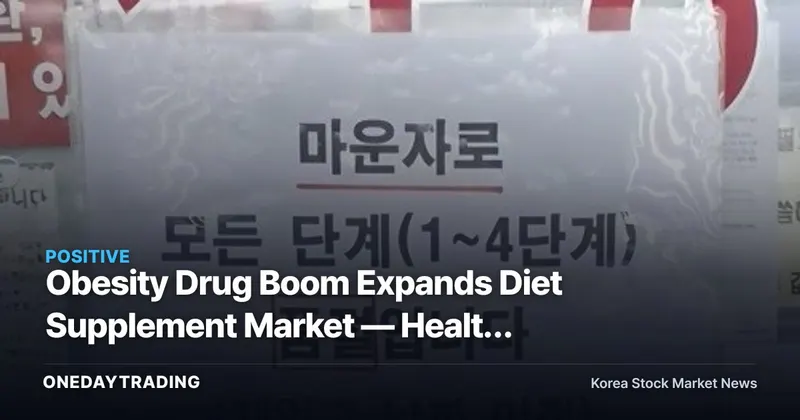
- The popularity of obesity drugs such as Wegovy and Mounjaro is fueling broader interest in weight management, driving concurrent growth in demand for diet health supplements.
- Behind the market's expansion, consumer complaints related to exaggerated advertising and side effects are rising, with harm cases concentrated among older adults who have limited access to reliable information.
- Health-supplement ODM companies and pharma firms with obesity pipelines are gaining demand momentum, while tightening advertising and labeling regulation is emerging as a growing policy variable.
What Is Changing
The core shift is that the keyword "weight loss" is spreading beyond prescription drugs into health-supplement consumption. As prescription obesity drugs have become a social phenomenon, non-prescription diet supplements are absorbing substitute and supplementary demand. This is less a passing trend and more a structural demand shift — the pool of weight-conscious consumers created by obesity drugs is itself expanding the potential customer base for health supplements.
However, as demand accelerates, gaps in product quality and advertising claims are becoming visible. The spike in complaints appears to be a side effect of market growth outpacing oversight — covering exaggerated efficacy claims, adverse effects, and disputes over subscription cancellations. The concentration of harm among older adults, who face greater online information asymmetry, suggests policy will likely move toward stricter labeling, advertising review, and regulation of recurring subscription billing.
From an investment perspective, this shift cuts both ways. Expanding front-end demand is favorable for health-supplement contract development and manufacturing (ODM) companies in terms of utilization rates and new order intake; however, tighter regulation will increase marketing costs and pressure some products off shelves, widening earnings divergence across companies.
Numbers and Context
The source article does not cite specific complaint figures or market-size data, but the key facts are two simultaneous trends: the obesity-drug boom as a demand catalyst, and rising consumer complaints and harm cases. Accordingly, the more important variable is not absolute figures, but whether the rate of consumer disputes is growing faster than the market itself — and whether that gap will act as a regulatory trigger.
Stocks to Watch
- Novarex: A leading health-supplement ODM/OEM company that stands to benefit directly in terms of order intake and utilization rates as diet and weight-management product lines expand.
- Kolmar BNH: With in-house health-supplement manufacturing capabilities, growing demand in the weight-management category could positively shift its revenue mix.
- Hanmi Pharmaceutical: Holds its own obesity drug pipeline, meaning broader interest in the weight-loss theme could translate into momentum on the pharmaceutical side.
- Peptron: A stock with high sensitivity to the obesity treatment theme, given its long-acting obesity and diabetes peptide technology.
- Huons: Exposed to both channels of the weight-management demand wave through its combined health-supplement and pharmaceutical business.
Risk Check
- If advertising and labeling regulations are tightened, rising marketing costs and restrictions on certain products could compress margins for health-supplement companies.
- If consumer complaints and harm cases erode brand trust, there is a risk of growth slowdown across the entire category.
- The obesity drug theme is subject to clinical and approval timelines and global competitive dynamics, leaving stocks where expectations are already priced in with elevated valuation risk.
- Trend-dependent demand is sensitive to shifts in consumer interest — if enthusiasm for weight management cools, earnings visibility could deteriorate rapidly.
Bottom Line
The weight-management demand created by obesity drugs is a clear front-end positive catalyst for health supplement and related pharma stocks, but the prospect of regulatory tightening driven by rising complaints and harm cases carries equal weight as a countervailing risk — this is a phase that warrants monitoring both demand momentum and policy risk in tandem.
Real-Time Data: Novarex
Novarex's most recent closing price was 12,120 won (0.00% vs. prior day). The signal combining foreign investor/institutional supply-demand (order flow), news, and momentum reads 🔴 Caution. Foreign investors and institutional investors are negative — caution is warranted at this time.
- ▼ Dual-sided selling — foreign investors −100 million won · institutional investors −300 million won, both selling
- ▼ Trend alignment — short- and medium-term downtrend aligned (day +0.0% · 1 week −11.3% · 1 month −27.7%)
- ▼ 52-week position — near 52-week low, at 6% above the trough
※ Price and foreign investor/institutional supply-demand (order flow) data are provided by Korea Investment & Securities (KIS) and reflect conditions at the time of publication.
This content was automatically summarized and analyzed based on the original news article. View original article (Yonhap News — Industry)