
Key Takeaways
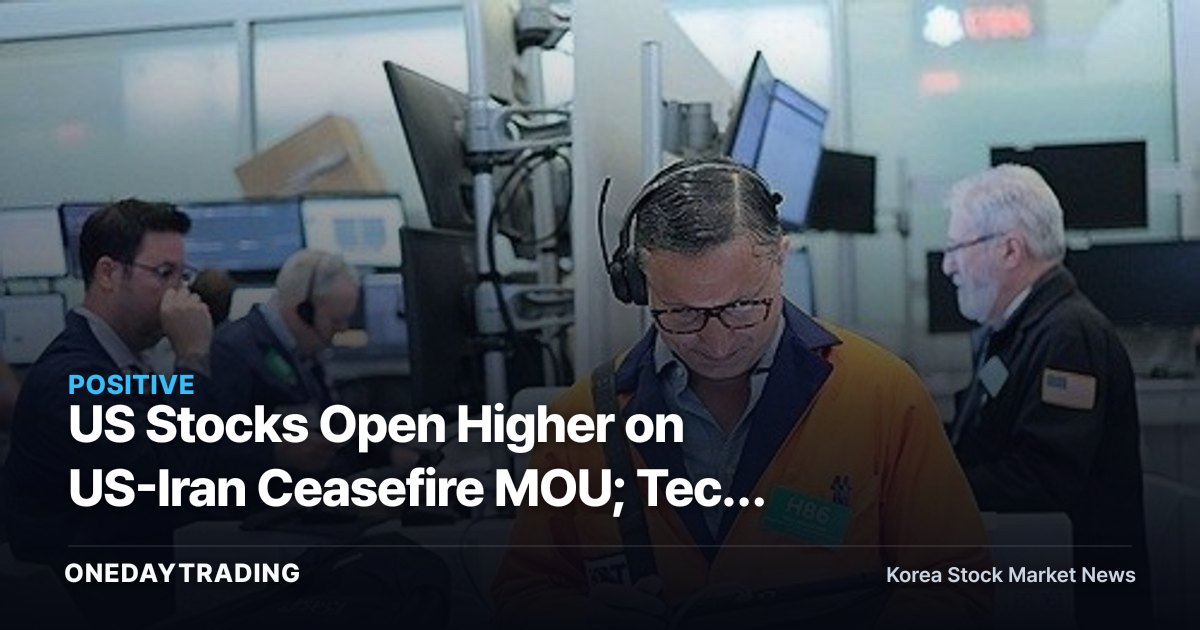
Wall Street's three major indexes opened higher as news that the US and Iran signed a ceasefire memorandum of understanding combined with strength in tech stocks. When a layer of geopolitical risk peels away, appetite for risk assets revives and the safe-haven premium drains out. This can be transmitted to Korean equities through two channels: downward pressure on global oil prices and improving investor sentiment toward export stocks.
What Happened
The primary driver of this rally is the signing of the US-Iran ceasefire MOU. The Middle East is a region where crude oil supply chains and the Strait of Hormuz shipping lane are concentrated, and whenever military tensions escalate, a war premium is added to oil prices while risk assets are discounted. A signal of de-escalation works in the opposite direction, easing the oil-price burden and widening room to raise equity allocations.
The second driver is strength in tech stocks. The fact that large-cap tech names—sensitive to interest rates, earnings, and the AI investment cycle—led the index higher suggests that this rebound goes beyond a simple relief rally and that bets on growth stocks are resuming. When geopolitical stability and a preference for growth stocks appear at the same time, the strength of the return of risk appetite grows even larger.
Background and Context
Middle East risk has been an exogenous variable weighing on the ceiling of the stock market. If the agreement progresses to an actual implementation stage, the supply-disruption concerns priced into oil could be reversed. However, an MOU is different from a final agreement with strong legal binding force, and whether the agreement is implemented and sustained remains the key variable for future volatility.
Impact on the Market and Stocks
- Semiconductor and IT export stocks (Samsung Electronics, SK Hynix): Strength in US tech stocks is typically linked directly to investor sentiment toward Korea's large-cap semiconductor and IT names. In a phase where risk appetite returns, foreign order flow tends to flow first into top export stocks by market capitalization.
- Airlines and transportation (Korean Air, etc.): Falling oil prices are a margin-improvement factor for airlines, where fuel costs make up a large share of total costs. Reduced uncertainty over Middle East flight routes is also positive for operational stability.
- Refining and energy (S-Oil, SK Innovation): Conversely, falling oil prices can weigh on refining margins and inventory valuations, so investors should note that the same news works in opposite directions across sectors.
- Index and risk assets (KOSPI): A reduction in the geopolitical premium acts as a macro positive catalyst that narrows the overall valuation discount on the KOSPI.
Investor Checkpoints
- Track whether the MOU advances into a binding final agreement, along with the implementation timeline and follow-up announcements.
- Check global oil price (WTI, Brent) levels and direction daily to gauge the strength of the tailwind for airline stocks versus the burden on refiners.
- Monitor moves in US tech stocks and the Philadelphia Semiconductor Index, and whether they are linked to foreign net buying of Korean semiconductor stocks.
- Because the next round of US inflation and employment data and the interest-rate path will determine whether tech strength can be sustained, keep the release schedule on your calendar.
Outlook
In the optimistic scenario, easing geopolitical risk combines with tech strength to sustain risk appetite, and foreign capital flows back into Korean export stocks, supporting the downside of the KOSPI. On the other hand, if the MOU goes off track in actual implementation or Middle East tensions reignite, oil prices and volatility could reverse quickly. Moreover, given that the tech rally is vulnerable to interest-rate factors, a reasonable approach is to judge in stages—confirming the three axes of geopolitics, interest rates, and earnings—rather than concluding that this rally marks a trend reversal.
This article is content automatically summarized and analyzed based on the original news. View original (Yonhap News Securities)