
3-Line Briefing
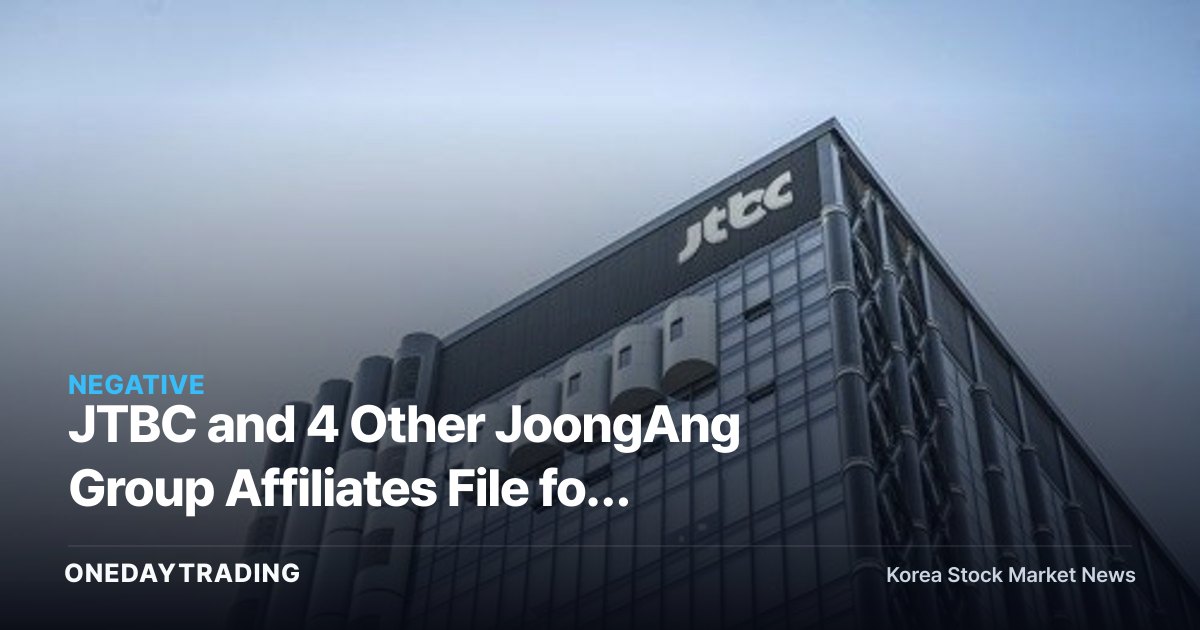
- Five companies — including the general-programming broadcaster JTBC, along with JoongAng Group affiliates and subsidiaries — have filed with the court to open rehabilitation (receivership) proceedings amid a liquidity crisis.
- In tandem with the rehabilitation filing, the credit ratings of the companies involved have been downgraded, worsening their funding environment further.
- With shrinking broadcast advertising compounded by a sharp gain (surge) in production costs, the financial strain across the media content industry has come to the surface.
What Changes
This filing goes beyond the cash crunch of a single company; it symbolizes the structural crisis facing Korea's broadcast media industry. General-programming channels have built up their content competitiveness since launch, but as the advertising market has shifted to digital platforms and global online video services (OTT) have ramped up their offensive, the revenue base of traditional broadcasters has been shaken rapidly.
Rehabilitation proceedings are a system that restructures debt and keeps the business running under court supervision. However, even if the proceedings are accepted and opened, a painful process follows — negotiations with creditors, asset sales, and workforce adjustments. The credit rating downgrade can push up corporate bond and borrowing rates, tightening the funding situation even further in the short term.
Because JoongAng Group has broadly operated broadcasting, content production, and media businesses, it is hard to rule out the possibility that this episode spreads into a business overhaul and asset cleanup across the group as a whole.
By the Numbers and Context
Broadcast advertising revenue has been on a downhill path for years, while the per-title production cost of dramas and entertainment shows has jumped sharply amid global competition. Content hits carry high volatility and do not guarantee stable cash flow, yet production costs are heavily front-loaded in nature, so a flop translates directly into liquidity pressure. The fact that all five companies seeking rehabilitation have been bundled together at once suggests that the group's internal funding capacity has reached its limit.
Beneficiary and Affected Stocks
- Contentree JoongAng: As the listed core pillar of JoongAng Group's content business, it is where the group's credit risk and funding squeeze can transfer most directly, weighing on investor sentiment.
- Studio Dragon: If the production-cost burden and content-profitability debate spread across the industry sector, valuation re-examination pressure could build.
- SM Entertainment and SBS: Exposed to the common negative catalyst of slowing broadcast advertising, raising concerns of a parallel pullback in investor sentiment.
- CJ ENM: A competitor's restructuring could open up opportunities to secure top production talent and content rights, raising the potential for a medium- to long-term relative benefit.
Risk Check
- The group's business continuity hinges heavily on whether the rehabilitation proceedings are opened and how aggressive the debt restructuring is.
- A further credit rating downgrade could accelerate rising borrowing costs and capital flight.
- If the advertising market's recovery is delayed, confirming a bottom in earnings across the media industry sector will take longer.
- The risk that concerns over parallel distress in the broadcast and content industries spill over into a sector-wide discount.
Bottom Line
The media credit risk originating from JoongAng Group is clearly a near-term burden on related content stocks, but if the restructuring becomes an opportunity to clear out the production-cost bubble and excessive competition across the sector, it could turn into a chance for long-term realignment for the quality content companies that survive.
This article is content automatically summarized and analyzed based on the original news report. View original (Yonhap News)