
3-Line Briefing
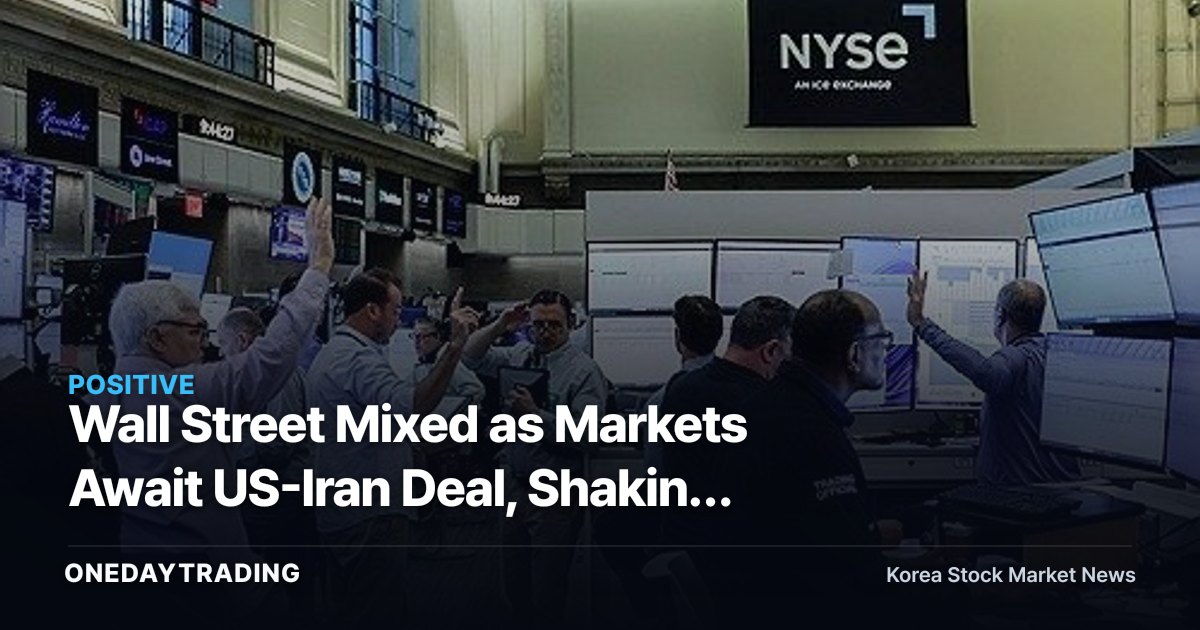
- Wall Street's three major indexes opened mixed as markets awaited the possibility of a deal between the United States and Iran.
- The key point isn't the index moves themselves, but how the Middle East risk premium pushes and pulls valuation multiples across industry sectors via oil prices and interest-rate expectations.
- In the Korean market, airlines and transport stand to benefit from expectations of lower costs, while refiners and energy names face a mix of inventory valuation effects and uncertainty over oil price direction.
What Changes
A mixed open on Wall Street means the market hasn't yet placed a firm bet in either direction. If a US-Iran deal materializes, the variable investors will watch first isn't the stock index but the price of oil. If the risk of a Middle East supply disruption recedes, the risk premium built into crude prices should shrink. The next link in the chain is interest rates. Falling oil prices lower inflation expectations, and lower inflation expectations cap the upside for long-term rates. When rates come down, growth and tech stock valuations get some breathing room.
For Korean investors, the exchange rate is the second filter. If oil prices stabilize, the burden on Korea's import prices and trade balance eases. That can work to reduce pressure toward won weakness. That said, the fact that Wall Street opened mixed signals that the market hasn't yet settled on how strong the deal will be, how far sanctions relief will extend, or how quickly oil supply will recover. If prices move first and actual supply catches up later, short-term rallies and pullbacks could alternate.
Refining stocks can't simply be read as: falling oil prices are a negative catalyst, rising oil prices are a positive catalyst. A sharp drop (plunge) in crude prices can generate inventory valuation losses, but if product demand stays firm and refining margins hold up, the earnings hit is limited. Airline stocks, by contrast, see falling oil prices flow straight into their cost structure — this is a sector where cost weighs more heavily than revenue in driving near-term results. That's why, even on the same Middle East headline, Korean Air and S-Oil could see their stock prices move in opposite directions.
Numbers and Context
The source article offers two clear facts: Wall Street's three major indexes opened mixed, and the market is waiting on a US-Iran deal. The less numerical detail a news item has, the more caution its interpretation demands. What needs to be confirmed now is whether the word "deal" will actually translate into higher oil supply, or whether it remains just a sentiment-driven story about easing geopolitical tension.
Breaking the sequence down: easing Middle East risk lowers the oil price premium. Falling oil prices shake inflation expectations and cap the top end of interest rates. As rate pressure eases, growth stock multiples get support, but energy stocks may see their earnings estimates revised downward. What the market has already priced in is deal expectations. What it hasn't priced in yet is the actual scope of sanctions relief and the pace of supply recovery.
Winners and Losers
- Korean Air: Jet fuel cost burdens could ease. Oil price stability shows up in operating costs before it affects passenger demand.
- Asiana Airlines: Its cost structure makes it highly sensitive to falling oil prices. However, its financial structure and merger-related issues mean oil prices alone can't fully explain its stock moves.
- S-Oil: Falling crude prices can lead to inventory valuation losses. On the other hand, if refining margins hold steady, the downside impact is cushioned.
- SK Innovation: For its refining segment, both oil prices and refining margins need to be considered together. Because its business mix includes batteries alongside energy, its stock reaction is more complex than that of a pure refiner.
- GS: The value of its refining subsidiary is tied to the direction of oil prices. Dividend appeal is a defensive factor, but earnings estimates could wobble during periods of a sharp drop (plunge) in oil prices.
Risk Check
- Even if a deal is announced, it could take time for sanctions relief to translate into higher oil exports.
- If falling oil prices are read as a signal of economic slowdown, the positive catalyst for airline and consumer stocks may fail to spread into a broader market-wide positive catalyst.
- If dollar strength persists, the benefit of stable oil prices won't fully translate into won-denominated cost savings.
- For refining stocks, refining margins matter more than the oil price itself. If product spreads roll over, even stable oil prices weaken the case for holding these stocks.
Bottom Line
Expectations for a US-Iran deal could serve as a catalyst for restoring risk appetite in the Korean market, but the real investment call depends on confirming whether falling oil prices lower interest rates and the exchange rate, or instead cut into energy sector earnings estimates first.
This article is automatically summarized and analyzed based on the original news report. View original (Yonhap News Agency, Securities)