
At a Glance
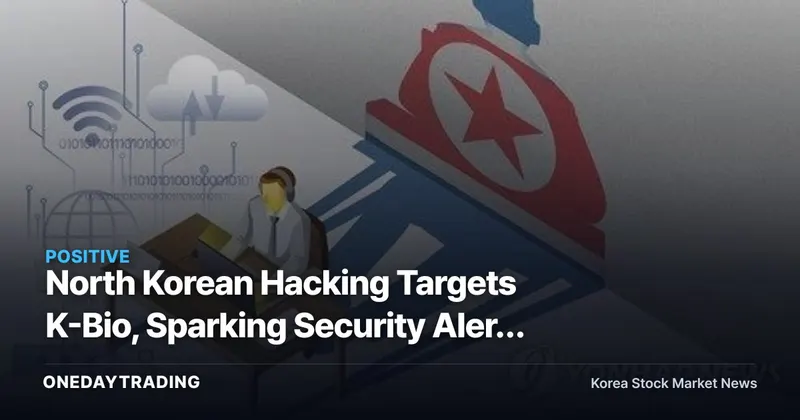
Evidence has emerged that North Korea is carrying out sweeping cyberattacks targeting domestic pharmaceutical and biotech companies under its so-called "health revolution" policy. New drug research data, clinical trial information, and manufacturing know-how — the core assets of K-bio — are reportedly being targeted for theft. For companies, this makes expanded security investment unavoidable, while it opens up new demand for the information security industry.
Why It Matters Now
In the pharmaceutical and biotech industry, high-value intellectual property such as new drug candidates, clinical data, and process technology forms the core of competitiveness. If such information leaks externally, years of R&D achievements can be undermined in an instant — making this far more than a simple IT incident, but a matter directly tied to corporate value.
North Korea-linked hacking groups have traditionally targeted the financial sector and cryptocurrencies, but a recent shift toward expanding into health and biotech targets has been observed. This is interpreted as an attempt to simultaneously secure health technology and foreign currency amid sanctions. State-sponsored threats tend to be more persistent and sophisticated than typical cyberattacks, making them far harder to defend against.
As a result, pharmaceutical companies have little choice but to increase investment in upgrading their security systems, opening new demand for information security firms. The potential for stronger government policy to protect core technologies is another variable that could affect the industry as a whole.
FAQ
- Why are biotech companies being targeted: New drug data and process technology are high-value information assets, and combined with the intent to acquire health technology, they make an attractive target.
- Has the scale of damage been confirmed: The key point is that attack attempts have been detected on a broad scale; the specific scale of leaks at individual companies requires further confirmation.
- What is the impact on investment: Rising security demand is a positive catalyst for information security stocks, while affected companies may face reputational and legal risk burdens.
- How does this differ from ordinary hacking: State-sponsored attacks tend to be advanced persistent threats that lie dormant for long periods while precisely tracking targets.
Related Stocks (Tickers) and Sector Impact
- Information security sector: A direct beneficiary as pharma-biotech firms expand security investment, driving demand for solutions and monitoring services.
- AhnLab: As a leading domestic security company, it could draw attention amid rising demand for threat response.
- Security firms such as Wins and SECUI: Expected to benefit from increased demand for network defense and intrusion prevention.
- Large-cap pharma-biotech stocks (tickers): Samsung Biologics and Celltrion face the task of managing short-term reputational risk alongside strengthening the protection of confidential data.
- Policy theme: If regulations to protect core technologies are strengthened, adoption of security solutions could spread across the broader industry.
Investment Considerations
- There is a time lag before expectations for security demand translate into actual orders and revenue, so caution is needed against short-term expectations overheating.
- Hacking-related issues can trigger temporary theme-driven volatility, so it's important to separate this from fundamentals when making judgments.
- For affected companies, stock price volatility could increase as further details on the fact and scope of any leaks are disclosed.
- As reports on state-sponsored threats are confirmed gradually, trading based on unconfirmed figures should be avoided.
Overall Outlook
In an optimistic scenario, security investment across the pharma-biotech industry and beyond expands structurally, strengthening the medium- to long-term earnings base of information security companies. If backed by government policy to protect core technologies, the base of demand could broaden further. However, there is a risk that expected benefits may not fully materialize if security budget execution is slow or if the threat turns out to be a one-off issue. For affected companies, restoring trust and demonstrating data protection capabilities will be key, and investors are advised to distinguish between short-term, theme-driven reactions and actual improvements in profitability.
This article is automatically summarized and analyzed content based on the original news report. View original (Yonhap News Agency, Industry)