
The heart of this issue is not a payment glitch at one particular service, but a structural gap: when a domestic card is approved at an overseas merchant, an additional identity-verification step such as OTP or ISP is, in practice, missing. From an investment standpoint, this is a factor that could stimulate demand for payment authentication and fraud detection (FDS) solutions, while at the same time acting as a cost and reputational risk for card issuers, who bear the cost of reimbursing fraudulent use. In other words, the same piece of news splits into a potential catalyst for the security and authentication sector and a management burden for card issuers.
Three-Line Briefing
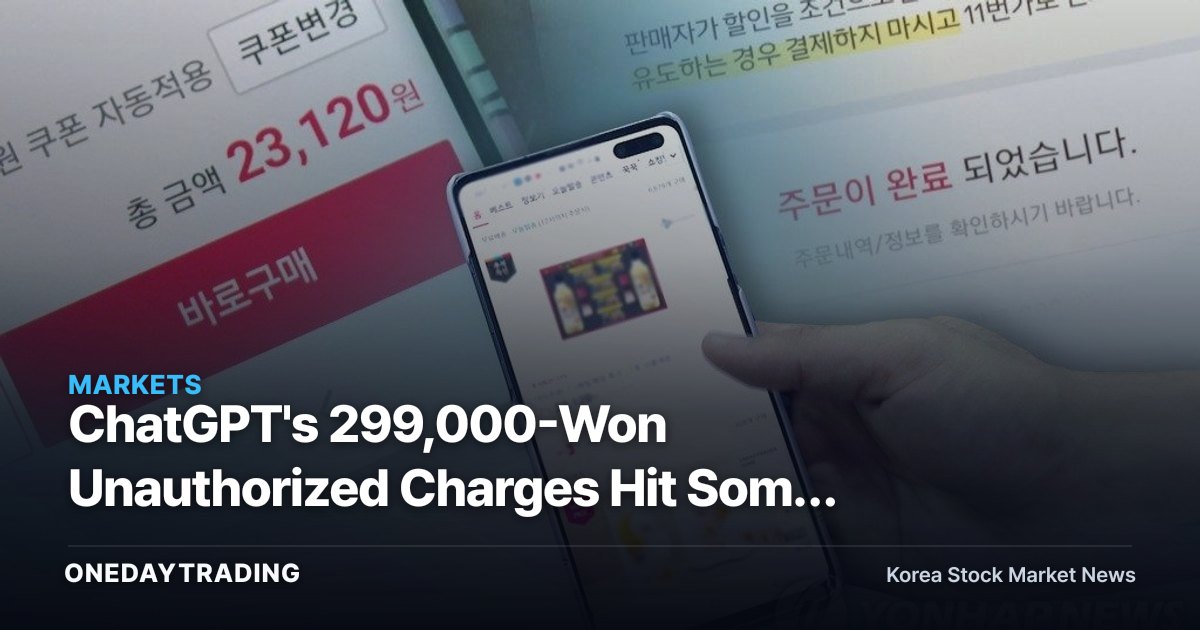
- Numerous card-alert cases were reported online in which 299,000 won — known as the ChatGPT subscription fee — was approved without authorization in some 800 instances.
- The key point is that the overseas payment-approval process does not require the kind of additional identity verification used domestically, meaning a payment can clear with only the card number and expiration date.
- If calls to strengthen payment authentication grow louder, demand for authentication and security solutions could rise; however, with no clear directly benefiting listed stock, the impact is limited.
What Changes
Domestic online payments have made additional verification — ISP, simple-payment passwords, OTP and the like — routine, but overseas merchant payments follow the rules of card networks (Visa, Mastercard, etc.), so domestic verification procedures do not automatically apply. This means that if card information leaks through any channel, approval can be obtained relatively easily on an overseas payment screen.
When numerous unauthorized charges with the same amount and the same merchant name are caught all at once, as in this case, the limitation is exposed: even if the card issuer's fraud detection system responds with after-the-fact blocking and refunds, it cannot stop the initial approval itself. This is a phase in which regulators and card issuers have growing incentive to consider strengthening alerts for overseas payments, separating limits, and expanding verification.
Through the Numbers and Context
The reported scale of the unauthorized charges is cited at 299,000 won per transaction across some 800 cases. The fact that the per-transaction amount is identical suggests circumstances pointing to a deliberate targeting of a specific payment pattern rather than random attempts. That said, card issuers as a rule do not hold members liable and provide refunds once fraudulent use is confirmed, so the bigger issue is trust in the verification system rather than actual losses to consumers.
Beneficiary and Affected Stocks
- Security and fraud detection (AhnLab): An environment in which demand for payment and account security expands could increase discussion of adopting FDS and endpoint security solutions.
- Identity verification and electronic signatures (Raonsecure, Korea Information Certificate Authority): The more the introduction of additional verification at the overseas-payment stage is discussed, the more these are classified as a potential beneficiary group for authentication technology demand.
- Electronic payment gateways (PG, such as KG Inicis): If payment-security regulations are tightened, the burden of system investment coexists with an opportunity for security differentiation.
- Card issuers: This is the side where the cost of reimbursing fraudulent use and handling complaints, along with reputation-management burdens, could weigh in the short term.
Risk Check
- This issue is strongly consumer-protection and security in nature, so there is no guarantee it will lead to new orders or policies that translate directly into security companies' earnings.
- Overseas-payment verification is governed by global card-network rules, so the path to benefits for domestic solution companies is long and uncertain.
- Security stocks tend to show large theme-driven swings, so there is a risk that a news reaction leads to a sharp gain (surge) followed by a pullback.
- OpenAI is unlisted, so there is no direct investment link to the service operator.
One-Line Conclusion
Once the gap in overseas-payment verification becomes a public topic, the structural opportunity of security and authentication demand comes to the fore; but until orders or policies that prove direct benefit are confirmed, the reaction may remain merely theme-driven, so this is a matter to approach while checking whether it actually connects to revenue.
AhnLab Through Real-Time Data
AhnLab's latest closing price is 55,600 won (0.00% from the previous day), and the signal light combining foreign and institutional investor supply-demand (order flow) with news and momentum is 🟡 Neutral · Wait-and-See. With positive and negative signals mixed, this is a zone to watch.
- ▼ Trend Alignment — short- and mid-term downward alignment (today +0.0% · 1 week -3.0% · 1 month -7.9%)
- ▼ 52-Week Position — near the 52-week bottom, 2%
- ▲ News Flow — 4 positive catalysts vs 0 negative catalysts — positive bias
Recent related news is favorable, with 4 positive catalysts and 0 negative catalysts.
※ Price and foreign/institutional investor supply-demand (order flow) data are provided by Korea Investment & Securities (KIS), as of the time of publication.
This article is content automatically summarized and analyzed based on the original news. View original (Yonhap News)