
3-Line Briefing
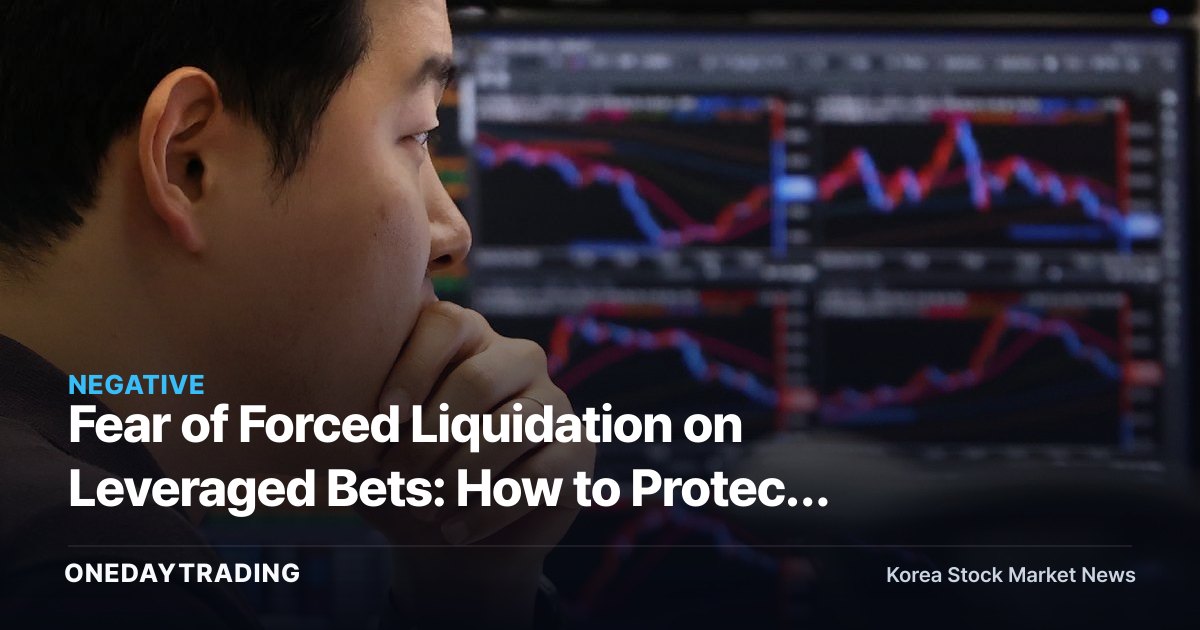
- As the KOSPI approached the 9,000 mark before plunging, investors who bought on margin loans now face the fear of forced liquidation.
- Forced liquidation is the procedure in which a brokerage involuntarily sells off shares when the collateral ratio falls below the threshold—locking in losses and triggering further declines.
- Checking your collateral ratio, partial step-by-step repayment, and avoiding unsettled-payment trades are the key lines of defense, while brokerages' margin-loan balances and fee structures move in tandem.
What's Changing
When the index climbs steeply, margin-loan balances swell alongside it. Because investors can deploy positions larger than their own capital, gains are amplified in a rising market—but the same leverage magnifies losses in a falling one. When volatility spikes, the accounts that wobble first are precisely the leveraged accounts filled with margin loans and unsettled-payment trades.
The crux is the maintenance collateral ratio. Brokerages typically require a maintenance ratio of around 140%, and when valuations shrink rapidly and breach this line, a margin call is triggered. If the investor fails to deposit cash within the deadline or sell part of the holdings to restore the ratio, the brokerage forcibly sells the shares near the opening price on the next business day. This is forced liquidation, and because the shares are dumped without regard to price, it is a structure in which retail investors lock in losses at the most unfavorable price.
With unsettled-payment trades, the shorter deadline is the problem. If the shortfall is not covered by the settlement date, this too leads to forced disposal. Ultimately, the starting point of defense is checking your own margin and unsettled-payment exposure and collateral ratio every day, and preemptively trimming part of your position when signs of a sharp index drop appear, securing a cash buffer.
Reading the Numbers and Context
When margin-loan balances are at high levels and the index swings close to double digits over a short span, forced-liquidation volume concentrates on specific stocks (tickers) and moments, deepening the decline. It must also be weighed that borrowed money accrues margin interest on an annualized basis, so the longer a position is held, the larger the rebound needed just to break even.
Beneficiary and Casualty Stocks
- Kiwoom Securities: A flagship retail brokerage with a large share of individual margin-loan balances, exposed simultaneously to margin-interest income and forced-liquidation risk.
- Mirae Asset Securities and Samsung Securities: Interest income tied to margin and unsettled-payment trades contributes to earnings, but in a plunge their provisioning and valuation burdens grow.
- NH Investment & Securities: A large-cap brokerage stock sensitive to swings in brokerage activity and margin-loan balances, directly affected by a volatile market.
- Asset managers tied to leveraged and inverse ETFs: As volatility widens, trading value rises, so benefit and volatility risk coexist.
Risk Check
- The vicious cycle in which a sharp index drop triggers forced liquidation, and that volume in turn spurs further declines.
- The risk that, if the collateral ratio cannot be restored, forced selling at the opening price locks in losses at the worst possible price.
- The cost burden in which accumulating margin interest raises the break-even point the longer a position is held.
- Short-term forced disposal and cascading supply of shares as unsettled-payment settlement deadlines arrive.
One-Line Conclusion
Leverage is a powerful tool in a rising market, but in a volatile market it comes back as the blade of forced liquidation. Managing your collateral ratio in advance and controlling your leveraged-bet exposure leaves room to weather the crisis, yet both brokerage earnings and individual accounts carry the risk of heightened short-term volatility.
This article is content automatically summarized and analyzed based on the original news report. View original (Maeil Business Newspaper, Securities)