
Why China’s Anti-Dumping Investigations Matter Now
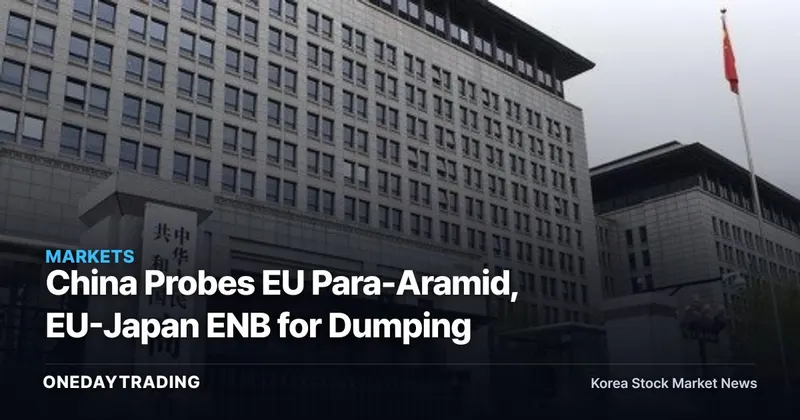
China’s Ministry of Commerce launched anti-dumping investigations on 2026/11/06 into para-aramid filament from the EU and ethylidene norbornene (ENB) from the EU and Japan. Investors should first distinguish between launching an investigation and imposing tariffs. What has been confirmed is the start of a process to examine prices, volumes, and the impact on Chinese industry; no final determination has been made on whether tariffs will be imposed or at what rates.
For the chemical sector, the key message concerns scope rather than direction. Two different products came under investigation on the same day, and Chinese authorities plan to examine not only import and export activity but also production and sales performance and manufacturing costs. Rather than rushing to identify corporate winners and losers, investors should first assess whether the grounds for the investigations hold up against the actual data.
What China Is Investigating in EU Para-Aramid and ENB
The anti-dumping investigations were initiated in response to petitions filed by Chinese companies in the relevant industries. China’s Ministry of Commerce said it reviewed the petitioners’ eligibility, the products under investigation, comparable products in China, and the impact of the imports on domestic industry before determining that the requirements for opening the investigations had been met.
Authorities will use questionnaires, sampling, hearings, and on-site inspections. The review will cover the companies’ import and export activity, production and sales performance, and manufacturing costs. In other words, the process will not reach a conclusion based on import statistics alone; it will assess prices and volumes alongside the condition of Chinese industry.
Both investigations are scheduled to conclude before Nov. 6 next year. The investigation period may be extended by six months under exceptional circumstances. Although a deadline has been provided, the available information does not indicate whether provisional or final anti-dumping duties will be imposed or what the rates would be.
China’s Evidence on Prices and Import Volumes
According to petition materials reported by Yonhap News’ securities desk, import prices for EU para-aramid filament fell by more than 50% from 2023 through the first half of this year. The scale of the price decline is a key basis for opening the investigation, but the publicly available information does not disclose import volumes or prices for individual companies under investigation.
China’s Ministry of Commerce said ENB imports from regions including the EU increased by a cumulative 27.35% from 2023 to 2025 and rose 56% year over year in the first half of this year. The distinction is that prices are the central issue for para-aramid, while volume growth is at the forefront for ENB. The ultimate determination will depend on how these figures relate to the production and sales performance and manufacturing costs of comparable products in China.
EU-China Trade-Remedy Dispute Over Chemical Products
China’s Ministry of Commerce said the EU has launched 16 trade-remedy investigations against China so far this year, nine of them involving chemical products, or about 60%. According to the Chinese side, the EU has also opened anti-dumping investigations into Chinese furfuryl alcohol and polyvinylidene fluoride (PVDF).
China’s Ministry of Commerce claimed, “Compared with the number of EU trade-remedy investigations initiated against China, China has consistently maintained a prudent and restrained approach to trade remedies.” It added that the EU should confront economic and trade issues directly and address concerns through dialogue and negotiation rather than protectionism. This is China’s position and does not represent the final outcome of the investigations into the two products.
Transmission Channels and Limits for the Chemical Sector
- Para-aramid filament: The investigation focuses on import prices for EU products, which fell by more than 50% from 2023 through the first half of this year, and their impact on Chinese industry. Without company-level volumes and dumping margins, the profit impact on any individual stock (ticker) cannot be determined.
- ENB: Imports from regions including the EU increased cumulatively and continued to rise year over year in the first half of this year. The investigation will assess these volume changes alongside the production and sales performance and manufacturing costs of the companies concerned.
- Chemical-product trade environment: Because China separately highlighted the number of EU investigations into Chinese chemical products, investors should distinguish individual product reviews from the broader bilateral trade-remedy dispute. The opening of an investigation alone is not yet sufficient to identify winners and losers.
What Korean Investors Should Monitor Next
- Scope of investigation: Determine which companies and transactions are included in the questionnaires and sampling reviews.
- Price and cost verification: Monitor how the decline in para-aramid import prices is assessed against the manufacturing costs of the companies concerned.
- Link between volumes and sales: Watch whether the increase in ENB imports is shown to have affected the production and sales performance of comparable products in China.
- Decision details: Distinguish among the scheduled deadline before Nov. 6 next year, any six-month extension under exceptional circumstances, and decisions on whether provisional or final duties will be imposed and at what rates.
The Key Turning Point Before Any Tariff Decision
If the investigations establish a link between changes in import prices and volumes and their impact on Chinese industry, the case for discussing trade-remedy measures will strengthen. Conversely, if that link is not sustained by the review of production and sales performance and manufacturing costs, interpretations that anticipate the outcome based only on figures cited at the initiation stage will lose credibility.
What the market still cannot readily price in is whether tariffs will be imposed, the applicable rates, and each company’s exposure. The next turning point will not be whether share prices move in anticipation, but the import and export activity and production and sales performance that China’s Ministry of Commerce may disclose during the investigations. Additional figures will strengthen the basis for an assessment, while any change in scope or outcome will require investors to revisit their calculations.
This article was automatically summarized and analyzed based on the original news report. View the original article (Yonhap News securities coverage)