
At a Glance
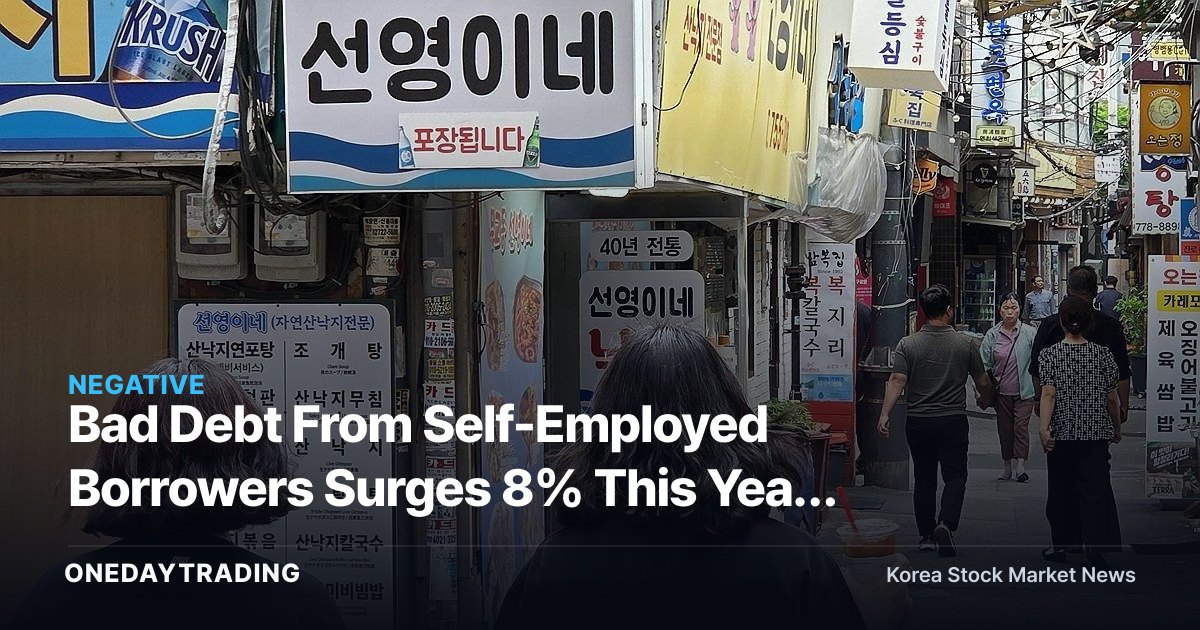
As steeply rising interest rates collide with weak domestic demand, the volume of loans that self-employed borrowers have been unable to repay to financial institutions has risen by about 8% so far this year. Delinquencies are climbing especially sharply among self-employed borrowers aged 60 and over, setting off warning signs over distress among vulnerable borrowers.
Why It Matters Now
The debt burden of self-employed borrowers is a structural issue that goes beyond individual debt, affecting both the soundness of the financial sector and the broader domestic economy. Loans that ballooned during the COVID period are turning into an interest burden amid high rates, while shrinking consumer spending simultaneously cuts into revenue — a double bind in which repayment capacity weakens on both fronts at once.
Elderly self-employed borrowers are especially vulnerable to economic shocks, as a high share of them launched livelihood-driven businesses after retirement. A rapid rise in their delinquencies suggests that the resilience of households and the self-employed sector is weakening, beyond mere cyclical fluctuation. This is the backdrop against which the provisioning burden on financial regulators and banks, along with discussions of expanded policy financing, could come into full focus.
If delinquencies keep rising, financial institutions will have to set aside more loan-loss provisions, weighing on bank profitability. Conversely, if expectations for government debt restructuring and rate cuts spread, hopes for an easing of that burden could form as well — so the direction warrants close attention.
Frequently Asked Questions
- Why have self-employed delinquencies risen? Because high rates have increased the interest burden while weak domestic demand has cut revenue, eroding repayment capacity on both fronts at once.
- Why are the elderly at greater risk? A high share run livelihood-driven businesses and have limited additional income sources, leaving them with little buffer to absorb economic shocks.
- What is the impact on the financial sector? A rising delinquency rate leads to larger loan-loss provisions, weighing on the profitability of banks, savings banks, and card companies.
- What would it take to resolve this? A shift to rate cuts, a recovery in domestic demand, and policy support such as debt restructuring for vulnerable borrowers would all need to come together.
Impact on Related Stocks and Sectors
- Banks and Financial Holding Companies For names such as KB Financial Group and Shinhan Financial Group, a rising delinquency rate increases the provisioning burden, but the high-rate environment itself is favorable for interest income — so the impact cuts both ways.
- Savings Banks and Card Companies With a high share of vulnerable borrowers, they could take a direct hit from widening distress among the self-employed.
- Domestic Retail and Consumer Stocks A contraction in self-employed activity leads to weaker commercial districts for small business owners, a negative for consumer-related sectors across the board.
- Construction and Real Estate This could feed into retail vacancies and a slowdown in the rental market, so indirect effects are expected.
Points to Watch When Investing
- The delinquency rate itself is a strongly lagging indicator, making it hard to gauge the actual peak in distress.
- For financial stocks, the provisioning burden and expanding interest income work against each other, so it is hard to label the news as simply a positive catalyst or negative catalyst.
- Announcements of policy financing and debt-restructuring measures could heighten short-term volatility.
- You need to check the direction of interest rates alongside domestic demand indicators to read the trend accurately.
Overall Outlook
If a shift to rate cuts coincides with a recovery in domestic demand, the repayment capacity of self-employed borrowers could improve and concerns over the soundness of the financial sector could ease. However, structural distress centered on the elderly is unlikely to be resolved in the short term, so the provisioning burden and the risk of weaker consumer spending may weigh on the market for some time. With financial stocks, it is worth taking a balanced approach that separates short-term volatility from medium- to long-term soundness.
This article is content automatically summarized and analyzed based on the original news report. View original (Yonhap News Securities)