
At a Glance
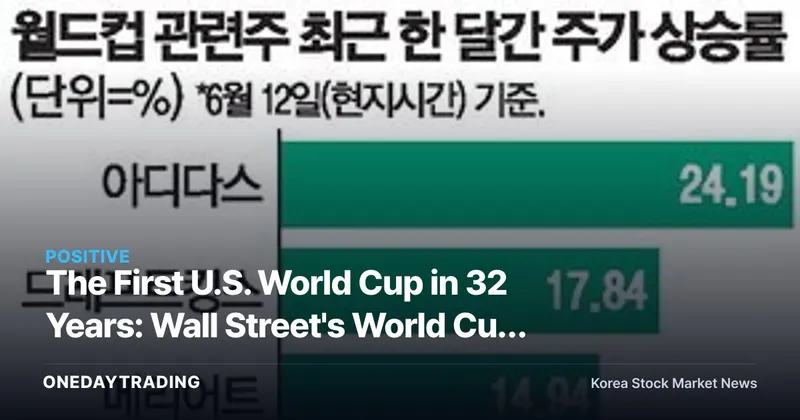
With the 2026 FIFA World Cup set to be held in the United States for the first time in 32 years, global investment banks (IBs) are rolling out a string of so-called World Cup beneficiary stocks. Hotel chain Hilton and beverage company Coca-Cola are among the headline names being cited, and their shares have been trending higher. Analysts read the current phase as one where short-term, event-driven momentum overlaps with expectations of a structural pickup in consumer spending.
Why It Matters Now
The World Cup is a major global event that, over the course of roughly a month, generates enormous tourism, lodging, dining, and media spending in the host nation. The U.S. in particular has matches spread across multiple cities, so demand for air travel and hotels is widely dispersed, and with visitors staying for longer periods, the spillover effect on consumption is seen as substantial.
For Hilton, expectations of higher occupancy rates and revenue per available room during the tournament are being priced in, while Coca-Cola is expected to benefit from greater brand exposure and beverage sales on the back of its long-standing sponsorship relationship with FIFA. Wall Street is increasingly inclined to front-load this event momentum into its earnings estimates and recommend increasing exposure to the related names.
That said, World Cup effects tend to see pre-tournament expectations priced into shares early, with momentum fading quickly once the event ends — so the timing of entry and profit-taking is also being highlighted as critical.
Frequently Asked Questions
- Why are Hilton and Coca-Cola the headline beneficiaries: Because the revenue links are clear and direct — hotels capture visitor lodging demand, while beverages benefit from tournament sponsorship and expanded consumption.
- Can Korean investors access these names: Both are large-cap stocks (tickers) listed on U.S. exchanges and can be traded through an overseas stock account.
- Is there any impact on Korean stocks: Consumer-related industry sectors such as airlines, travel, food and beverage, and sporting goods can expect indirect benefits.
- How long does the effect last: It tends to be concentrated around the opening and is largely a short-term, event-driven phenomenon, with momentum weakening after the tournament ends.
Related Stocks and Sector Impact
- Hotels and lodging (Hilton): Direct benefits are expected from higher room demand and rates in host cities.
- Beverages and consumer goods (Coca-Cola): Strong expectations for expanded brand revenue from FIFA sponsorship and rising sales during the tournament.
- Sporting goods: Companies ramping up soccer marketing, such as Nike, stand to gain from increased demand for jerseys and gear.
- Airlines and travel: Carriers with heavy exposure to U.S. routes, such as Korean Air, could see indirect benefits from rising visitor demand.
- Media and advertising: Broadcasting and platform industry sectors could benefit from higher broadcast rights and advertising rates.
Key Risks to Consider
- Event expectations may already be priced into shares, so investors should be wary of the risk of buying at the top.
- Shares could retrace quickly as momentum fades once the tournament ends.
- Exchange rate movements directly affect returns on overseas stock investments, so they should be monitored alongside everything else.
- Because the World Cup effect is a short-term theme, it should be weighed against each company's underlying earnings and valuation.
Overall Outlook
In an optimistic scenario, large-scale visitor demand and expanded consumption translate into improved revenue and earnings across hotels, beverages, airlines, and media, with strength in the related stocks (tickers) carrying through before and after the tournament. On the risk side, however, volatility could rise depending on expectations already being priced in, momentum fading after the event, and variables tied to exchange rates and the global economy. A reasonable approach is to recognize that this is fundamentally a short-term event theme and to pursue phased entry centered on stocks (tickers) with solid earnings foundations, while pairing that with a profit-taking strategy.
This article is content automatically summarized and analyzed based on the original news report. View original (Maeil Business Newspaper, Securities)