
Three-Line Briefing
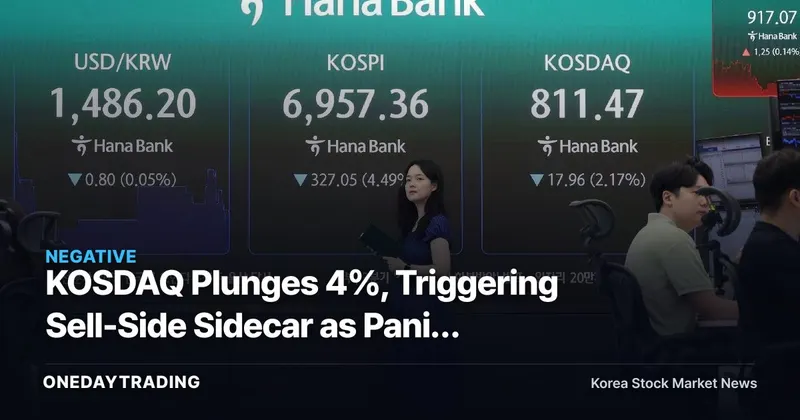
- The KOSDAQ index plunged as much as 4% versus the previous close, triggering a sell-side sidecar following one on the KOSPI.
- The measure suspends the effect of program sell orders for five minutes, underscoring that this sharp drop is an index-wide issue rather than one confined to individual stocks (tickers).
- The next indicators to watch are whether the decline is reversed after the sidecar is lifted, and the scale of forced liquidation (margin calls) stemming from KOSDAQ margin lending.
What's Changing
The KOSPI broke down first, and the KOSDAQ followed. The order matters. Had the KOSDAQ wobbled on its own, it could be explained by a concentration in a particular theme or a stock-specific negative catalyst. But the fact that the sell-off originating in the KOSPI spread to the KOSDAQ suggests that a risk-off market sentiment running through the entire index is dominating the market. A sell-side sidecar is typically triggered automatically when the KOSDAQ150 futures price falls sharply versus the previous closing price and the spot index's decline holds at a certain level, suspending the effect of program sell orders for five minutes. In effect, the market hit its own brakes.
What remains to be seen is whether this decline is a correction already priced in, or the start of a new risk not yet reflected in prices. A sidecar is a device that halts the decline — not one that reverses its direction. If the decline narrows once program selling resumes five minutes later, this is likely to end as short-term panic. But if the decline instead widens, the market will likely read this sharp drop as a signal of a trend reversal.
The KOSDAQ is structurally more vulnerable than the KOSPI. With a high proportion of retail investors and heavy use of margin lending in trading, once the index falls beyond a certain threshold, a vicious cycle can easily form in which forced liquidations add further selling pressure. How much forced-liquidation volume emerged during this 4% plunge is a variable that needs to be checked before the next trading day's open.
Reading the Numbers in Context
A sell-side sidecar isn't a measure that gets triggered just any day — in a session with a mild price change rate, it rarely gets triggered at all. The fact that both the KOSPI and now the KOSDAQ have triggered a sidecar means today's decline was steep enough for program-trading algorithms to accelerate selling on their own. The shorter the time it took for the index to fall 4%, the more likely automated sell orders amplified the decline — in which case, supply-demand (order flow) concentration, rather than an actual shift in fundamentals, explains a substantial portion of the drop.
Stocks to Watch: Winners and Losers
- EcoPro BM and EcoPro: As large-cap KOSDAQ stocks (tickers) by market capitalization with a high proportion of outstanding margin loans, they are among the first exposed to additional forced-liquidation selling during a sharp index decline.
- Alteogen and HLB: Large-cap biotech stocks (tickers) whose valuations are built on expectations for clinical trials and technology licensing deals tend to rank high on the sell list in a risk-off market.
- KOSDAQ150 futures inverse-linked products: Funds betting on further downside may pour in, causing trading value to spike in the short term.
- Brokerage industry sector: Rising volatility is a short-term positive for brokerage commission income, but concerns over margin-loan defaults could surface at the same time, making the direction mixed.
Risk Check
- The sidecar only suspends the effect of program sell orders for five minutes — it does not reverse the decline itself. A further sharp drop immediately after it is lifted cannot be ruled out.
- If additional forced-liquidation volume from KOSDAQ margin lending builds up before the next trading day's open, the decline could continue.
- It is still unclear whether this sharp drop reflects the unwinding of a concentrated theme trade or a valuation correction across the entire index.
- Checking whether this move is in sync with global equity markets will help determine whether this is purely a domestic supply-demand (order flow) issue.
Bottom Line
A sidecar is a device to halt panic — not a reason for optimism. Whether sell orders pile back in once the five-minute pause ends, or bargain-hunting buying steps in, will determine the true character of this sharp drop.
This article is automatically summarized and analyzed content based on the original news report. View original (Maeil Business Newspaper, Securities)