
At a Glance
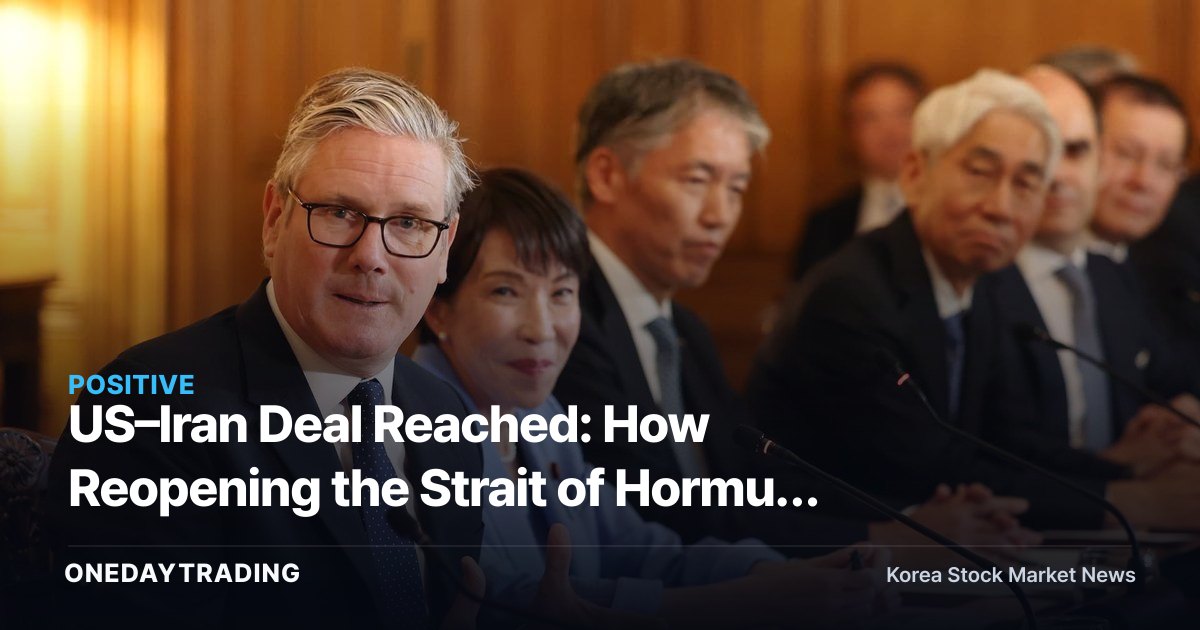
After intermittent negotiations and armed clashes since late February, the United States and Iran have reached an agreement. Major European nations have hinted at the possibility of easing sanctions on Iran and called for the normal reopening of the Strait of Hormuz—a development that is rapidly reducing uncertainty across global energy and commodity markets.
Why It Matters Now
The Strait of Hormuz is a critical chokepoint through which a significant share of the world's seaborne crude oil passes. Whenever tensions rise along this route, a so-called geopolitical premium gets added to global oil prices. If the agreement eases tensions and reopens the channel for Iranian crude exports, supply concerns should diminish and downward pressure on oil prices could intensify.
Korea relies on imports for the vast majority of its crude oil. When oil prices stabilize, it improves import inflation, the trade balance, and transportation costs across the board. That said, there are still many variables around the pace of implementation and the actual scope of sanctions relief, so the market is watching the follow-through more closely than the wording of the agreement itself.
In particular, this is not merely diplomatic news—through the macro variable of oil prices, it has knock-on effects on inflation, interest rates, and corporate cost structures, making it directly relevant to investment decisions.
Frequently Asked Questions
- What happens to oil prices? If sanctions relief and the reopening of Hormuz materialize, global oil prices are likely to face downward pressure on expectations of increased supply.
- Is this good for the Korean economy? As a crude oil importer, Korea benefits broadly from stable oil prices, which ease inflation and cost burdens.
- Is it a positive catalyst for every stock (ticker)? No. It is a cost-saving positive catalyst for airlines and shipping, but refining stocks may be exposed to inventory valuation losses and swings in refining margins.
- Are there any risks? If implementation is delayed or falls through, oil prices could surge sharply again, making for high volatility.
Impact on Related Stocks and Sectors
- Airline stocks For Korean Air and Asiana Airlines, fuel accounts for a large portion of costs, so falling oil prices raise strong expectations for improved profitability.
- Shipping stocks Companies like HMM could see lower operating cost burdens and greater operational stability as the Hormuz route normalizes.
- Refining stocks S-Oil, SK Innovation, and GS could face short-term pressure from inventory valuation losses and shifts in refining margins if oil prices plunge sharply.
- Inflation and domestic demand Stable oil prices lead to broader easing of inflation, which works favorably for domestic demand and consumer sentiment.
Points to Watch When Investing
- With an agreement, implementation matters more than the announcement. Until the scope and timing of sanctions relief are finalized, the direction of oil prices remains uncertain.
- The Middle East situation can change abruptly at any time, so betting excessively on a single piece of news is risky.
- Airlines and shipping stand to benefit while refining cuts both ways, so investors should differentiate the direction of impact by sector.
- The exchange rate and the risk of a global economic slowdown must also be factored in to gauge the actual profit and loss for each stock.
Overall Outlook
On the optimistic side, if sanctions relief and the reopening of Hormuz proceed smoothly, stable oil prices combined with easing inflationary pressure would create a favorable environment for transportation stocks such as airlines and shipping. On the other hand, if the agreement is delayed or Middle East tensions reignite, oil prices could rebound sharply, expanding volatility not only in refining stocks but across the broader market. Ultimately, the key is tangible progress in implementing the agreement, and investors would be wise to emphasize sector-by-sector differentiation and risk management rather than making one-sided bets.
This article is content automatically summarized and analyzed based on the original news report. View original (CNBC)