
3-Line Briefing
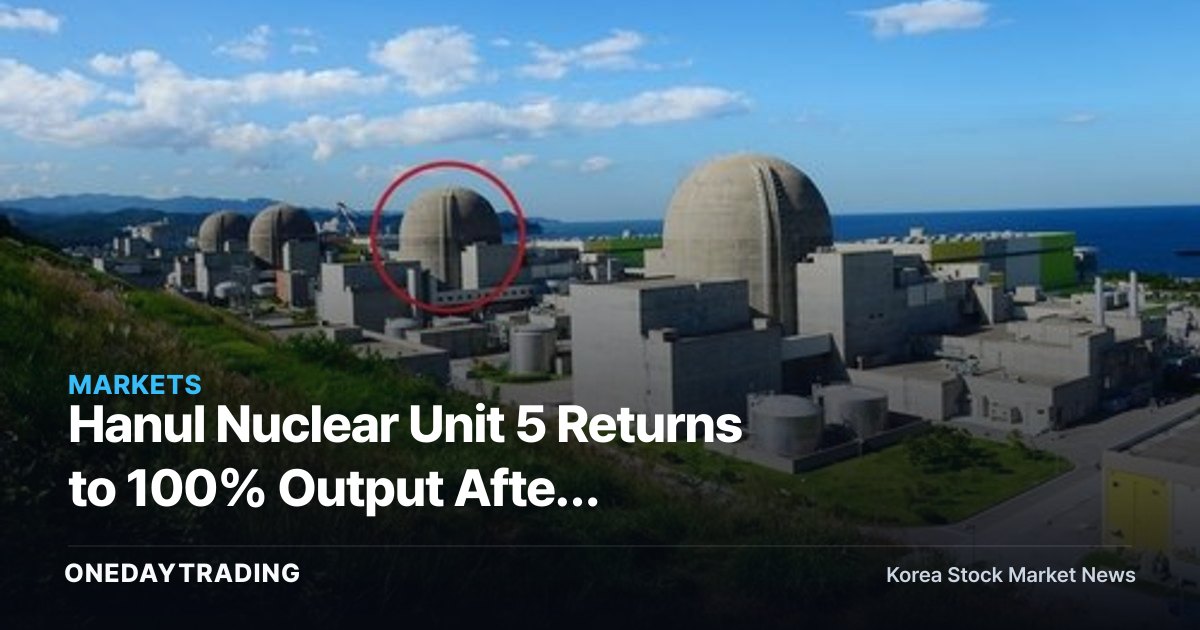
- Korea Hydro & Nuclear Power's Hanul Unit 5 (pressurized water reactor type, 1,000 MW class) at the Hanul Nuclear Power Site has completed planned preventive maintenance and reached 100% of its rated output.
- The unit entered maintenance on February 26 and rejoined the power grid after roughly four months of inspection and servicing.
- The return of a single large-capacity reactor is a routine operational event that supports stable baseload power supply ahead of the summer peak-demand season.
What's Changing
The key takeaway is that a single large 1,000 MW-class nuclear reactor has ended a roughly four-month hiatus and resumed generating power. Planned preventive maintenance is a safety inspection and refueling process that reactors must undergo at regular intervals, during which the unit's output falls to nearly zero. The return of Unit 5 therefore means that the generating capacity that had been sitting idle is once again filling the grid.
On the power supply-demand side, nuclear is a baseload source with low fuel costs and steady output. While a large unit is offline, that gap is filled by relatively higher-cost generation sources such as liquefied natural gas (LNG) and coal. Unit 5's return to 100% output therefore works to lower the overall cost of purchasing and producing electricity, providing a modest positive for generators' cost structures.
By the Numbers and Context
Uljin in North Gyeongsang Province, where the Hanul Nuclear Power Site is located, hosts a dense cluster of pressurized water reactors and is regarded as a core hub of domestic nuclear generation. A single 1,000 MW-class unit can, on a simple conversion, supply electricity for a substantial number of households, and whether one unit is running is meaningfully reflected in nationwide nuclear utilization statistics. With the government maintaining its policy of expanding the share of nuclear power, the overall utilization rate is determined by the cumulative effect of individual units completing maintenance and returning to output.
Beneficiary and Affected Stocks
- KEPCO: As the parent company of KHNP, an increase in low-cost nuclear generation is favorable for easing the burden of electricity purchase costs.
- Doosan Enerbility: As a domestic supplier of primary nuclear reactor equipment, it has high business exposure to the nuclear operation and maintenance cycle.
- KEPCO E&C: As a core company in nuclear plant design and engineering, it stands to be an indirect beneficiary of the normalization of nuclear operations.
- KEPCO KPS: As a company specializing in nuclear plant maintenance and repair, it is directly tied to planned preventive maintenance volumes.
- Woojin Inc.: As a company involved in nuclear instrumentation and control maintenance, it is grouped under the maintenance-cycle theme.
Risk Check
- This announcement is a routine completion of maintenance for an individual unit and is not, in itself, a major catalyst that would sway earnings or order intake.
- Nuclear utilization rates are sensitive to changes in government energy policy and safety regulations, so the outlook can swing with the direction of policy.
- KEPCO's earnings are driven more by the scale of electricity tariff hikes and international fuel prices than by generation costs.
- Nuclear equipment stocks' share prices are more sensitive to overseas export and new-build momentum, so domestic operational news alone may produce limited movement.
Bottom Line
Hanul Unit 5's return to 100% output is positive in terms of stable baseload power supply and generation costs, but as a routine event marking the end of regular maintenance, its immediate impact on related stocks is limited, and policy, fuel prices, and tariff variables should be examined alongside it.
This article is content automatically summarized and analyzed based on the original news. View original (Yonhap News, Industry)