
At a Glance
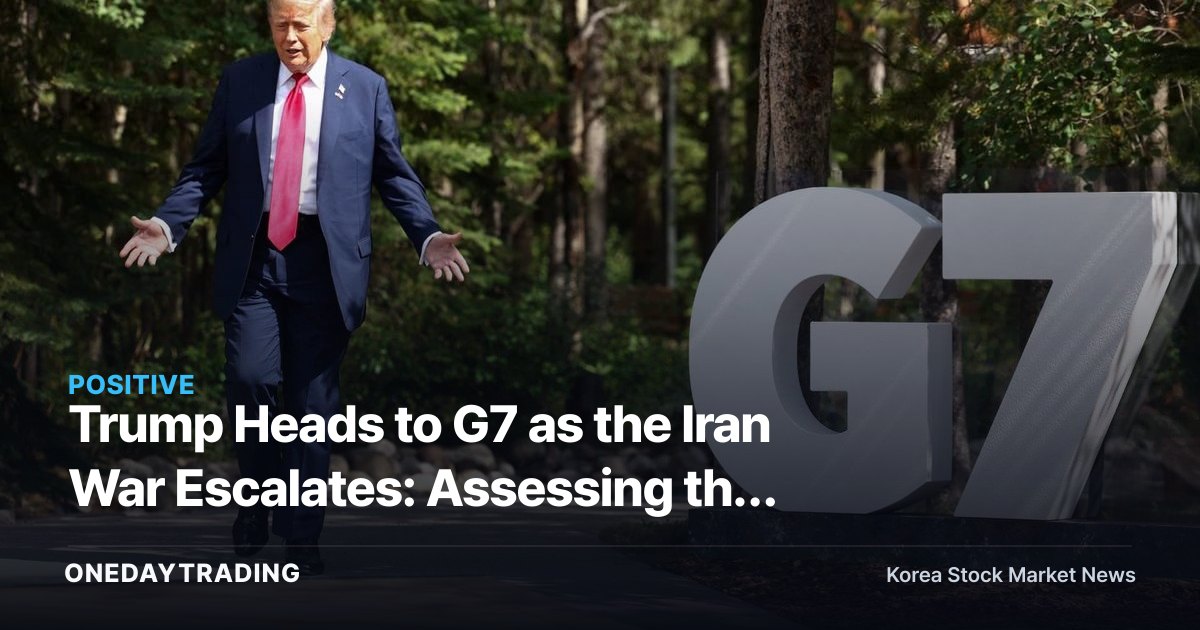
U.S. President Trump is heading to the G7 summit in France as the Iran war captures the world's attention. The summit is also expected to take up Russia's invasion of Ukraine—still escalating in Eastern Europe—as a major agenda item.
The geopolitical risk of two wars unfolding simultaneously is a variable that directly affects international oil prices and defense demand, and it could amplify the volatility of refining and defense stocks on the Korean market as well.
Why It Matters Now
Military tensions surrounding Iran translate directly into concerns over the stability of key crude transit routes such as the Strait of Hormuz. As uncertainty over the global crude supply chain grows, international oil prices come under upward pressure—which represents a margin opportunity for the refining and energy sector while simultaneously acting as a cost burden for the airline and transportation sector.
The prolonged Russia-Ukraine war is likewise a factor structurally lifting global weapons demand. As major European nations maintain their push to increase defense spending, export opportunities for Korean defense firms are expanding. Should the G7 leaders discuss additional sanctions or military aid measures, optimism toward the related sectors could come back into focus.
That said, summits are heavily declarative in nature, and whether concrete agreements emerge remains uncertain—so the short-term share-price reaction is likely to hinge on the actual negotiation outcomes and shifts in the crude oil market's supply-demand (order flow).
Frequently Asked Questions
- What impact will this summit have on oil prices — If Iran-related tensions intensify, international oil prices could see a short-term sharp gain (surge) on fears of supply disruption, but a pullback may follow if negotiations make progress.
- Is this a positive catalyst for Korean defense stocks — A prolonged war and increased European defense spending are medium- to long-term positives that point to expanding Korean defense exports.
- Which sectors stand to lose — Higher oil prices raise the cost burden for transportation sectors with a large fuel-cost share, such as airlines and shipping.
- What is the impact on the overall index — Heightened geopolitical uncertainty can stoke risk-off sentiment and raise market volatility in the short term.
Affected Stocks and Sectors
- Defense — Two simultaneous wars and increased European defense spending structurally expand weapons demand and strengthen export momentum.
- Refining and Energy — Refining margins are expected to improve if international oil prices rise, though the effect is limited if accompanied by a demand slowdown.
- Airlines and Transportation — A representative loser, as rising oil prices translate into a heavier fuel-cost burden.
- Crude Futures and Commodities — Supply-instability fears widen price volatility for WTI and Brent crude.
- Chemicals — A rise in the price of naphtha, a key feedstock, could add to cost pressures.
Points to Watch When Investing
- Summit outcomes may amount to nothing more than declarations, so chasing the rally on optimism alone is risky.
- An oil-price surge may be a short-term, event-driven move, so investors should confirm whether actual supply disruptions occur.
- Defense stocks may already be in a zone where optimism is priced in, making it necessary to check valuation burdens.
- Geopolitical news is highly volatile, so phased positioning and risk management are important.
Overall Outlook
In the optimistic scenario, geopolitical tensions stimulate both stronger oil prices and expanding defense exports at the same time, allowing the refining and defense sectors to show relative strength. In the risk scenario, by contrast, progress in negotiations or an easing of tensions could quickly reverse oil prices, while broader market volatility driven by risk-off sentiment weighs on stocks. Ultimately, the key lies in how the wars actually unfold and how crude supply-demand (order flow) shifts—and rather than over-betting on a specific sector, diversification and a phased approach are advisable.
This article is auto-summarized and analyzed content based on the original news report. View Original (CNBC)