
Key Takeaways
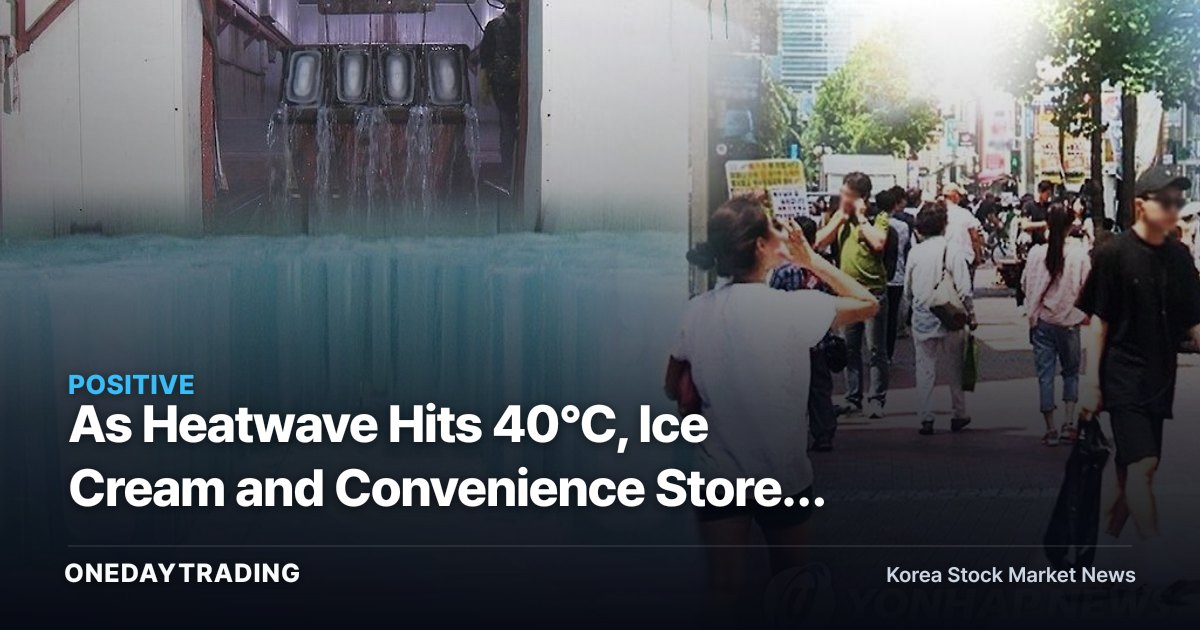
As a record-breaking heatwave pushes temperatures to around 40°C day after day, ice cream makers and convenience store chains are riding a seasonal wave of demand, while delivery platforms and the rider ecosystem are moving in the opposite direction, facing mounting safety-management costs. The same heatwave is boosting revenue on one side and inflating costs on the other — an asymmetric dynamic that is reshaping the industry landscape this summer.
What Happened
As heatwave advisories continue day after day, demand for ice cream and chilled beverages has surged, putting ice cream makers and convenience stores into a peak-season sales expansion phase. At the same time, delivery orders are also seeing a seasonal boost — but the catch is that the riders driving this boom are working in the thick of the extreme heat. Delivery platforms, local governments, and franchise operators are rolling out safety measures one after another, including rest areas to prevent heat-related illness among riders, adjusted delivery hours, and support with water and cooling supplies.
This is not merely a public-relations gesture — it is a variable that genuinely affects the bottom line. Rider safety-management costs are likely to be borne by delivery platforms or franchise headquarters, or passed on to consumers and franchisees through delivery-fee hikes. In other words, the increase in delivery demand created by the heatwave does not flow straight through to profit — it comes bundled with an offsetting factor in the form of safety-management costs.
Background and Context
Ice cream and beverage consumption is a textbook example of a weather-sensitive industry sector, directly tied to temperature. Convenience stores, with their high accessibility, see faster turnover at chilled and frozen sections the hotter it gets — meaning that as a heatwave drags on, visit frequency and immediate-consumption product sales tend to rise more than average spending per visit. Delivery riders, on the other hand, work while moving outdoors, making them the group most directly exposed to extreme heat, and heat-related illness as an industrial safety issue has recurred every summer, translating into a recurring social cost burden for platform companies.
Impact on the Market and Stocks (Tickers)
- Binggrae: With a high share of revenue from ice cream, the company stands to directly benefit from higher sales volumes if the heatwave persists.
- Lotte Wellfood: With both an ice cream business and a processed-food business, the company is positioned to benefit from expanding demand for frozen foods in summer.
- BGF Retail: Given the nature of convenience store retail, both chilled/frozen beverage and ice cream sales and store visit frequency tend to rise together during a heatwave.
- GS Retail: Operating both a convenience store business and a delivery service, the company faces both rising delivery demand and rider safety-cost burdens at the same time.
Investor Checkpoints
- Investors should watch next quarter's earnings releases to confirm whether the summer peak-season sales growth at ice cream makers and convenience stores actually shows up in the data.
- Tracking the duration and intensity of heatwave advisories via Korea Meteorological Administration announcements can help gauge how long the peak season will last.
- Next quarter's cost structure should be checked to see whether delivery platforms' and franchise headquarters' rider safety-management costs translate into delivery-fee hikes or higher selling, general, and administrative expenses.
- If government measures on heat-related industrial illness or discussions on tightening labor regulations for the delivery industry intensify, fixed-cost burdens for delivery platforms could increase — related policy timelines are worth monitoring.
Outlook
In the optimistic scenario, the longer the heatwave persists, the clearer the seasonal benefit becomes for ice cream makers and convenience stores through higher summer peak-season sales. That said, since this seasonal effect recurs every year, it may already be partly priced in by the market, and a risk remains that if the heatwave ends earlier than in previous years, the base-effect comparison could turn into a disappointment instead. For the delivery industry, the key question is whether rising rider safety costs remain a temporary response expense or harden into structural upward pressure on delivery fees and labor costs. If the latter proves true, the revenue gains from the delivery boom created by the heatwave may not translate into profit growth.
Binggrae: Real-Time Data Snapshot
Binggrae's most recent closing price is 67,800 won (0.00% versus the previous session), and the signal light combining foreign investor/institutional investor supply-demand (order flow) with news and momentum is 🔴 Caution. Foreign investors and institutional investors are net negative, so caution is warranted right now.
- ▼ Двойная distribution