
Key Takeaways
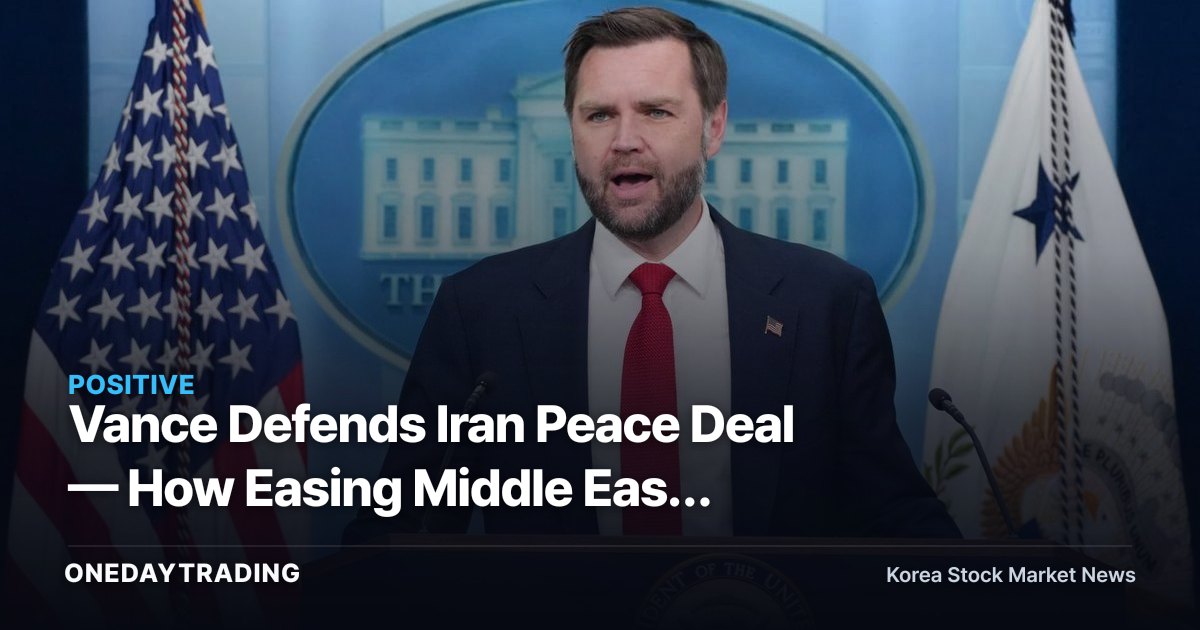
U.S. Vice President JD Vance defended the Trump administration's Iran peace deal, making clear that Iran can only access frozen assets and funds if it fully complies with the terms of the agreement. The core structure is that the U.S. ties the funds to compliance without making preemptive concessions, and the market reads this as a signal of easing Middle East geopolitical risk.
For Korean investors, the essence of this issue lies not in the deal itself but in the variables it would change — namely, the geopolitical risk premium embedded in oil prices and the uncertainty surrounding the Strait of Hormuz. Given that Korea's economy imports all of its crude oil, easing Middle East tensions affects a wide range of industry sectors through the channels of import inflation, freight rates, and jet fuel costs.
What Happened
Vice President Vance emphasized that the U.S. is not giving Iran a single penny for free, stating that Iran's only path to receiving resources and funds is full compliance with the terms of the agreement. This is a defensive argument mindful of criticism that the deal is a one-sided concession to Iran, meaning the release of funds is tied to compliance and verification.
The conditional-compliance structure suggests a phased, gradual easing of tensions rather than immediate effect of the deal. In other words, the resolution of geopolitical risk that the market hopes for is unlikely to arrive all at once and will more likely be reflected in stages as verification of compliance progresses.
Background and Context
Middle East geopolitics has long added a risk premium to oil prices. The Strait of Hormuz is a critical chokepoint for the world's seaborne crude oil transport, and tensions in the region are immediately reflected in Brent crude and freight rates. Therefore, if the deal surrounding Iran actually works, the geopolitical premium on oil prices would shrink, opening a path for the cost structure of Korea — which is highly dependent on crude oil imports — to ease.
Impact on the Market and Stocks
- Airline stocks (Korean Air, Asiana): Fuel costs make up a large share of operating expenses, so a drop in oil prices directly improves margins. If the oil premium falls as tensions ease, this is the most clear-cut beneficiary industry sector.
- Refining and chemicals (S-Oil, SK Innovation, GS): The impact is two-sided. A sharp drop (plunge) in oil prices raises the risk of inventory valuation losses, but stable input costs and a recovery in demand could support refining margins, so the direction is not straightforward.
- Shipping (HMM): If the safety costs and insurance premiums on the Hormuz and Middle East routes decline, the burden of operating costs eases.
- Defense (Hanwha Aerospace, LIG Nex1): Easing geopolitical tensions could be a near-term headwind to weapons demand momentum, so this sector is affected in the opposite direction from others.
- Export manufacturers (Hyundai Motor, Samsung Electronics): Stable oil prices and inflation improve global consumer purchasing power and risk appetite, creating a favorable environment for cyclical export stocks.
Investor Checkpoints
- Track daily oil price movements to confirm whether the geopolitical premium on Brent and WTI is shrinking. If oil prices hold up despite progress in the deal, it is a signal that the market places low confidence in compliance.
- The schedule of Iran's compliance with the terms and the U.S. verification announcements — since the release of funds is tied to compliance stages, the timing of official announcements is the real catalyst.
- Examine changes in fuel cost and freight rate items in the quarterly earnings of airline and shipping stocks. The key is whether the drop in oil prices translates into margins.
- Trends in Strait of Hormuz shipping and insurance premiums, along with sudden variables from the Middle East — if the deal wavers, the premium returns immediately.
Outlook
If the deal works in stages and Middle East tensions genuinely ease, the shrinking oil premium would be favorable for airline, shipping, and export stocks, and could lead to stable import inflation as a macro positive catalyst for Korea as a whole. However, if the compliance terms are not met or the deal founders amid political controversy, tensions would quickly reignite and the oil premium would return. The diverging directions across industry sectors — such as the inventory valuation variable for refining stocks and the weakening demand momentum for defense stocks — are also a reason to be wary of a single-direction bet.
This article is content automatically summarized and analyzed based on the original news. View Original (CNBC)