Key Takeaways
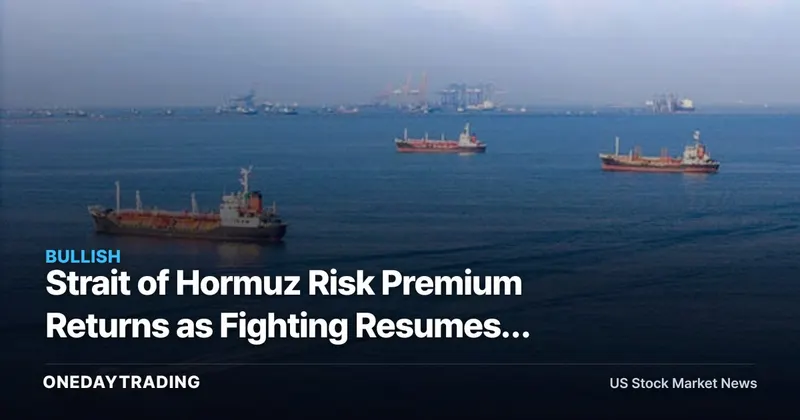
Renewed fighting has lowered the odds of a quick recovery at the Strait of Hormuz, the chokepoint through which a large share of seaborne crude and LNG transits. For investors, the read-through is a sticky oil risk premium rather than a one-day spike, which favors integrated majors and shippers while pressuring fuel-sensitive industrials and airlines.
What Happened
The market had been pricing in a rapid normalization of traffic through Hormuz. With combat flaring again, that base case is unwinding. The change is less about a single barrel removed from the market and more about duration: a conflict that resumes after a pause signals the disruption is structural, not transitory.
That distinction matters for how crude curves trade. A brief outage gets faded quickly; a prolonged threat to the strait pulls the front of the futures curve higher and can flip the market deeper into backwardation as buyers pay up for prompt, guaranteed supply over deferred delivery exposed to transit risk.
Background and Context
Hormuz is the single most concentrated maritime energy chokepoint in the world, with no fully equivalent bypass for the volumes it carries. Insurance, rerouting and tanker availability — not just the physical barrels — drive the cost. When passage risk rises, war-risk premiums on hulls climb and effective shipping capacity tightens even if no vessel is actually hit.
Market and Stock Impact
- ExxonMobil (XOM), Chevron (CVX): Integrated upstream exposure means realized prices rise with the crude curve; diversified barrels outside the Gulf cushion supply risk while pricing reprices higher.
- Occidental (OXY): Higher oil-price leverage on a debt-laden balance sheet amplifies both upside cash flow and downside if prices reverse.
- Tanker operators (FRO, TNK): Rerouting around risk lengthens voyages and tightens ton-mile supply, a direct tailwind to spot tanker rates.
- Airlines and transport (DAL, UAL): Jet-fuel and diesel costs rise as crude firms, squeezing margins for fuel-heavy operators with limited pass-through.
Investor Checkpoints
- Watch the front-month versus deferred crude spread for deepening backwardation as a real-time gauge of supply anxiety.
- Track war-risk insurance quotes and reported tanker reroutings — these move before headline crude does.
- Monitor any ceasefire or de-escalation signals; the premium can deflate as fast as it built.
- Check oil majors next quarterly realizations and shipping spot-rate prints for confirmation the premium is hitting earnings.
Outlook
The bull case for energy names rests on duration: the longer passage stays contested, the more the premium embeds into the curve and into producer cash flows. The risk runs the other way just as sharply — a credible truce, spare capacity from other producers, or demand softening could collapse the premium and leave late buyers holding inventory marked at peak prices. Position sizing here is a bet on how long the strait stays unsafe, not on the direction of the first headline.
📊 Analysis
Signal Bullish
Why A prolonged Hormuz disruption rebuilds the crude risk premium, lifting oil-price realizations for majors and tightening tanker capacity.
Tickers$XOM$CVX$OXY$FRO$TNK
This article was independently written by OneDayTrading from public reporting. Read the original (Seeking Alpha)