Summary
Early signs that the Strait of Hormuz is reopening have removed the most acute threat to global energy supplies, yet the damage from the conflict is already locked into the system. For investors, the key distinction is between a fading supply shock and a slower-burning economic toll that analysts say will take months to unwind. That gap separates oil producers, fuel-sensitive industries and the broader inflation trade.
The Full Story
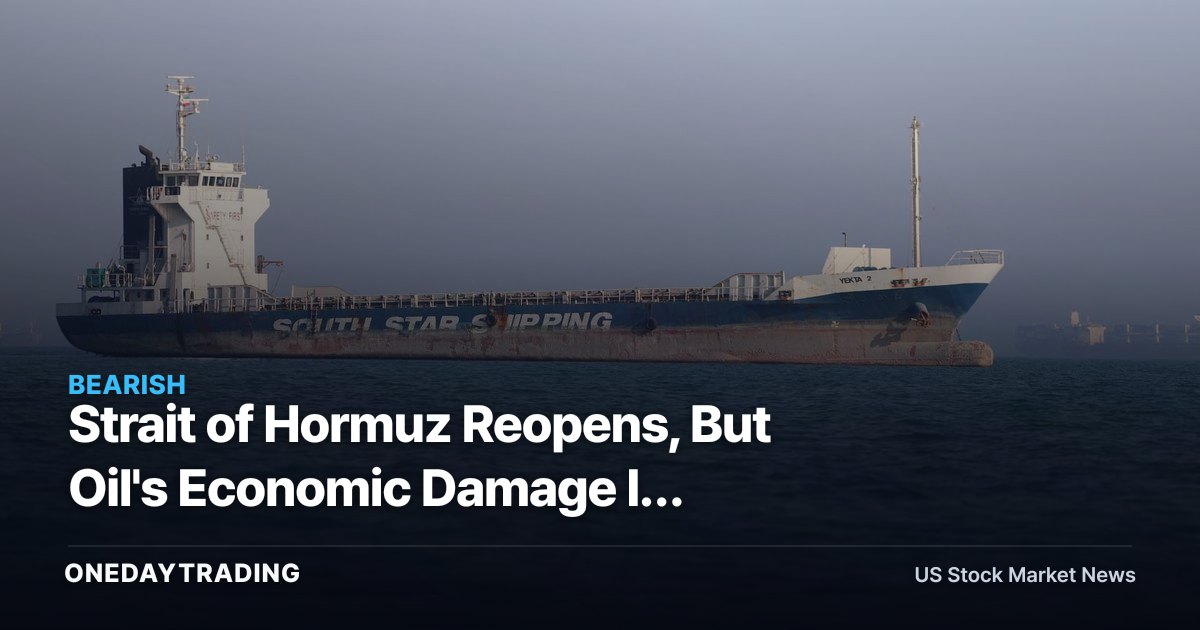
The Strait of Hormuz is the chokepoint through which a large share of seaborne crude and liquefied natural gas transits, so any threat to passage is priced immediately into global oil. The early reopening signal relieves the worst-case scenario of a prolonged blockade, which is why the most extreme risk premium can begin to deflate.
But analysts caution that relief at the chokepoint is not the same as a clean reversal. The damage from the war is described as already baked in, with the unwinding expected to take months rather than days. Higher freight and insurance costs, disrupted shipping schedules and elevated energy prices feed through supply chains with a lag, so the economic hit lingers even after tankers move again.
Structural Background
Oil is a cost input across nearly every sector, so a spike behaves like a tax on consumption and a margin squeeze on transport-heavy businesses. When a geopolitical premium builds, it lifts both crude and refined products; when it deflates, producers lose the windfall while fuel buyers slowly regain margin. The lag matters because hedges, contracts and inventory mean today's spot relief shows up in earnings only later.
Stock & Sector Ripple
- Oil majors (XOM, CVX, COP): A receding war premium pressures crude realizations, trimming the upstream upside that a sustained supply scare would have delivered to integrated and exploration-heavy names.
- Airlines (DAL, UAL, AAL): Jet fuel is one of the largest single cost lines; an easing in crude is a direct margin tailwind, though the benefit arrives only as elevated prices roll off.
- Tankers and shipping: Reopened passage normalizes routing, but the elevated insurance and freight costs that built during the disruption do not reset instantly.
- Broad market (^GSPC): A lower energy premium eases one upside risk to inflation, supporting the case for a steadier rate path that benefits rate-sensitive equities.
Bull vs Bear Scenarios
The constructive case: the acute supply threat is the part markets fear most, and its removal lets the energy-driven inflation impulse fade, helping consumer and transport names while reducing tail risk for the index. The cautious case: reopening is described only as an early sign, not a confirmed and durable resolution, and the months-long unwind of embedded costs means inflation and freight pressure persist even if crude cools. A renewed flare-up at the strait would re-arm the premium quickly.
Investor Action Points
- Track whether tanker transit through Hormuz actually normalizes in volume, not just headlines, before assuming the premium is gone.
- Watch crude prices and refined-product cracks for confirmation that the supply premium is deflating rather than pausing.
- For airlines and shippers, focus on the next earnings prints for fuel-cost guidance, since spot relief reaches margins with a lag.
- Monitor upcoming inflation data for evidence the energy pass-through is rolling off, which would shape the rate outlook.
📊 Analysis
Signal Bearish
Why Hormuz reopening deflates the war risk premium in crude, pressuring oil producers' realizations even as analysts warn the broader economic damage lingers for months.
Tickers$XOM$CVX$COP$DAL$UAL
This article was independently written by OneDayTrading from public reporting. Read the original (CNBC)